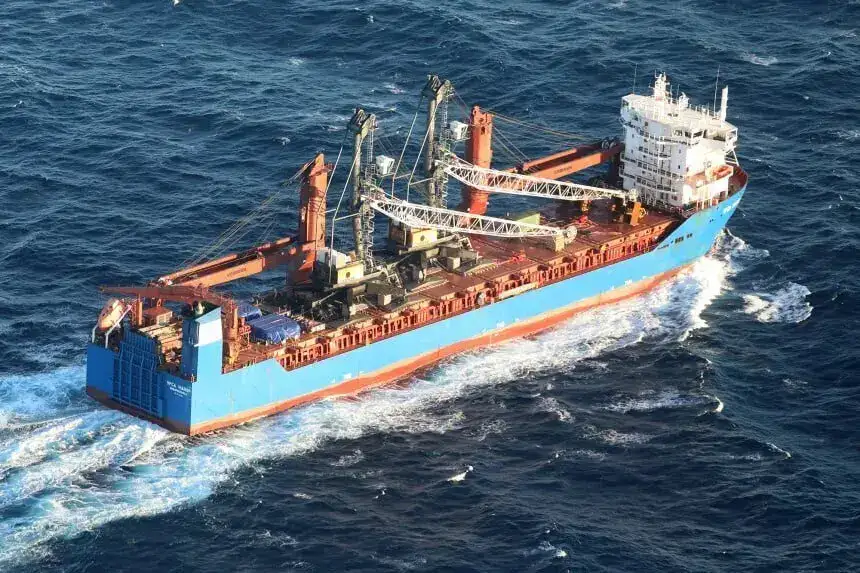
Who sank Russian cargo ship Ursa Major, was NATO involved, and was it torpedoed? The mystery around the Ursa Major cargo ship has raised global security questions. The vessel sank in December 2024 near Spain after explosions. Reports say the ship may have carried nuclear reactor components. Investigations point to military activity and possible sabotage. Governments have released limited information. The incident links to Russia, North Korea, NATO, and the war in Ukraine. This explainer presents the timeline, cargo claims, military tracking, and theories about the cause of the sinking.

Who sank Russian cargo ship Ursa Major, was NATO involved, and was it torpedoed?
Investigators have not confirmed who sank the Ursa Major. Spanish authorities examined evidence of explosions and a hole in the hull. Some reports mention the possible use of a supercavitating torpedo or a limpet mine. Russian officials called the event a targeted terrorist attack. Western governments have not confirmed involvement. The Pentagon declined to comment. No official proof links NATO or any country to the incident.
Who sank Russian cargo ship Ursa Major?
The identity of the party responsible remains unknown. The Spanish investigation says the ship suffered explosions that led to the sinking. Russian ship owners claim the vessel was attacked. Western officials described the case as unusual but did not offer an alternative explanation. With the wreck lying deep underwater and limited evidence available, the final cause of the sinking has not been confirmed.
The ship, its route, and early warning signs
The Ursa Major was a Russian cargo ship also known as Sparta 3. It had earlier supported Russia’s military operations in Syria. The vessel left Ust-Luga port on December 2 and later loaded cargo in St. Petersburg.
The ship’s manifest said it carried two large “manhole covers,” cranes, and empty containers. The official destination listed was Vladivostok in Russia’s Far East. However, investigators questioned why a ship would travel around the world between Russian ports when rail transport was available.
Time-lapse video of the loading showed containers placed inside the hull with space left below the “manhole covers.” The ship departed on December 11. Portuguese Navy aircraft and ships tracked the vessel as it sailed along the European coast. Two Russian military ships escorted it during the journey.
Explosions that led to the sinking
On December 22, the ship slowed while sailing in Spanish waters. Spanish rescue services contacted the crew, who said everything was fine. On December 23, the vessel changed course and sent an emergency signal. Three explosions occurred near the engine room on the starboard side. Two crew members died and the ship became immobile.
Fourteen crew members escaped using a lifeboat and were rescued by Spanish authorities. A Spanish military vessel reached the scene later that evening. Soon after, a Russian escort ship ordered other vessels to keep distance and requested the return of rescued crew. Spanish rescuers still boarded the ship and searched for survivors.
Nuclear cargo claims and Spanish investigation
Spanish authorities later said the Russian captain told investigators the cargo included components for two submarine-type nuclear reactors. He could not confirm if nuclear fuel was present.
The captain reportedly believed the ship would be redirected to the North Korean port of Rason. Investigators suspect the cranes onboard were meant to unload the reactors upon arrival. The Spanish government stated the wreck lies about 2,500 meters deep. Officials said retrieving the ship’s data recorder would be difficult and risky.
US aircraft and Russian ship activity after sinking
Flight tracking data showed US WC-135 nuclear detection aircraft flew over the wreck area twice. These aircraft collect nuclear debris samples. The US military did not reveal findings. A Russian ship named Yantar later visited the wreck site. Seismic signals recorded four explosions while it was present. Investigators suspect these blasts targeted the remains on the seabed.
Was NATO involved in attack?
Russian ship owner Oboronlogistics called the incident a targeted terrorist attack. The company said shrapnel and a hole in the hull were found. Western officials described the event as strange but did not confirm involvement. No government has publicly accepted responsibility. The Pentagon declined comment.
Was Ursa Major torpedoed?
Investigators examined the hole in the hull measuring about 50 by 50 cm. One theory says a supercavitating torpedo may have caused the damage. Such torpedoes are used by the United States, Russia, Iran, and some NATO allies. Another expert suggested a limpet mine placed on the hull may be a more likely cause. No final conclusion has been confirmed.
Possible nuclear technology transfer to North Korea
Reports say the ship may have carried VM-4SG submarine reactor components. Analysts say such technology sharing would be a major move by Russia. The claim gained attention after North Korea released images of its first nuclear submarine. Experts said reactors would likely be transported without fuel.
Political questions and missing evidence
Spanish lawmakers raised questions about the investigation. Some believe the ship’s black box may have been recovered by unknown parties. The lack of radiation warnings suggests no nuclear contamination was detected. Still, the cargo and cause of sinking remain unclear.
The unanswered mystery at sea
The Ursa Major sank hours after explosions and later blasts near the wreck. The ship’s cargo, destination, and cause of damage remain under investigation. Governments have released limited details. The truth may remain on the seabed.
FAQs
Q1. Who sank Russian cargo ship Ursa Major, was NATO involved, and was it torpedoed?
The sinking remains unexplained. Investigations mention explosions, possible torpedo or mine damage, and military interest. No country has accepted responsibility. NATO involvement has not been confirmed by any official statement.
Q2. What was Ursa Major carrying when it sank?
Spanish investigators say the captain claimed the ship carried components for two submarine nuclear reactors. It is unclear if nuclear fuel was onboard or if the cargo was heading to North Korea.