In an industry built on tradition and routine, McDonald's chief executive Chris Kempczinski has quietly reshaped the world's biggest fast-food chain with strategies few previous leaders ever attempted. For decades, McDonald's leadership focused largely on menu expansion, operational efficiency and global restaurant growth, with a formula built on selling more burgers, opening more locations and protecting the brand's iconic status.
Since taking charge in 2019, however, Kempczinski has taken a noticeably different approach. Instead of simply refining the old fast-food model, he has pushed the company towards a technology-driven future that treats digital platforms, data and loyalty programmes as core business engines, leading analysts to increasingly describe McDonald's as a technology-enabled retail platform rather than just a burger chain.

@peralonomics Why McDonald’s CEO shows the death of fast food. #mcdonalds #charlesperalo #chipotle #business #history
♬ original sound - Peralonomics
A CEO With a Different Background
Kempczinski's career path helps explain why his leadership style diverges from many of his predecessors. Before joining McDonald's, he worked at several global consumer brands, including Procter & Gamble, PepsiCo and Kraft Foods, where his roles focused heavily on brand strategy, marketing and consumer analytics.
That background meant he arrived at McDonald's with a broader corporate perspective rather than the traditional restaurant-operations mindset that defined earlier CEOs. He joined in 2015 as executive vice president for strategy, business development and innovation, became president of McDonald's USA a year later, and by November 2019 had been promoted to chief executive following the departure of Steve Easterbrook.
The Strategy That Changed the Company
Once in the top job, Kempczinski began implementing a strategic plan that placed technology at the centre of McDonald's growth. The initiative, known internally as 'Accelerating the Arches', focuses on strengthening the company's core menu items while modernising how customers order and interact with the brand, with digital ordering, delivery services and loyalty programmes forming key pillars of the strategy. Industry analysts say this represents one of the most significant shifts in McDonald's business model in decades, as the company increasingly generates sales through its mobile app, delivery platforms and personalised promotions rather than relying purely on foot traffic inside restaurants.
The Viral Video That Sparked Curiosity
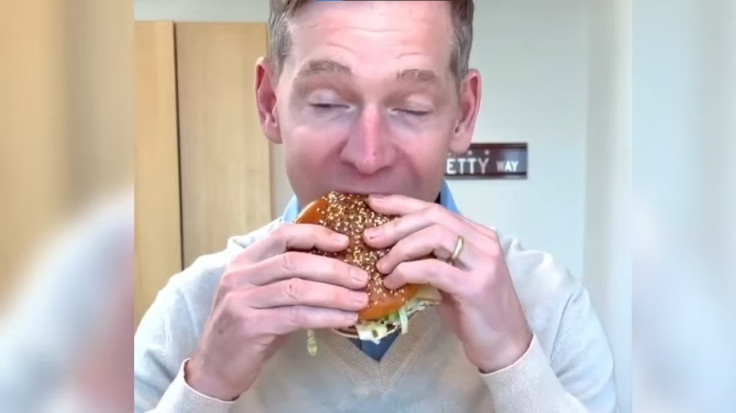
Public interest in Kempczinski recently surged after a promotional video circulating on social media sparked renewed curiosity about the McDonald's boss. In the clip, the CEO is shown sampling a McDonald's burger while discussing the company's products, at one point referring to the sandwich as a 'product', a corporate term that some viewers found unexpectedly formal.
The moment quickly drew attention online, with many users commenting on how different his tone felt compared with the energetic marketing style usually associated with fast-food advertising. The viral moment also revealed something about his leadership approach: his language reflects the mindset of a corporate strategist analysing consumer products rather than a traditional restaurant executive promoting menu items.
Running McDonald's Like a Modern Platform
Kempczinski's biggest departure from past leadership may be how he views the company itself. Rather than seeing McDonald's simply as a restaurant operator, he increasingly treats it as a global consumer platform powered by technology and data, leading to major investments in digital ordering systems, drive-through technology and artificial intelligence designed to improve efficiency.
The company has also expanded its loyalty programme, which now connects millions of customers directly to the brand through personalised offers and promotions, and analysts say this digital ecosystem allows McDonald's to gather valuable consumer insights while encouraging repeat purchases.
A Quieter Leadership Style
Another difference between Kempczinski and some past McDonald's leaders is his relatively low-profile public presence. While previous CEOs often appeared prominently in media interviews and corporate campaigns, Kempczinski tends to focus more on internal leadership and long-term strategy, reflecting a more analytical and measured communication style. That approach may lack the showmanship sometimes associated with global brand leaders, but supporters argue it suits the complex challenges facing modern multinational corporations.
Guiding McDonald's Through a Changing Industry
Kempczinski's tenure has also coincided with a period of rapid transformation in the global restaurant industry. The COVID-19 pandemic dramatically accelerated the shift towards digital ordering, drive-through service and delivery apps, while rising food costs and inflation forced many fast-food companies to rethink pricing strategies and operational efficiency. Under Kempczinski's leadership, McDonald's expanded its digital infrastructure and adapted quickly to those new conditions, and the company's strong performance in recent years suggests the strategy may be working.
A New Kind of Fast-Food Leader
Kempczinski may not fit the traditional image of a fast-food executive, but that difference appears to be precisely what defines his leadership. Instead of focusing solely on burgers and restaurant expansion, he is steering McDonald's towards a hybrid model where technology, data and brand loyalty play equal roles in driving growth. For a company founded more than seventy years ago, that transformation could determine its future competitiveness, and if his strategy continues to succeed, the Golden Arches may increasingly look less like a conventional fast-food chain and more like one of the world's most sophisticated consumer platforms.