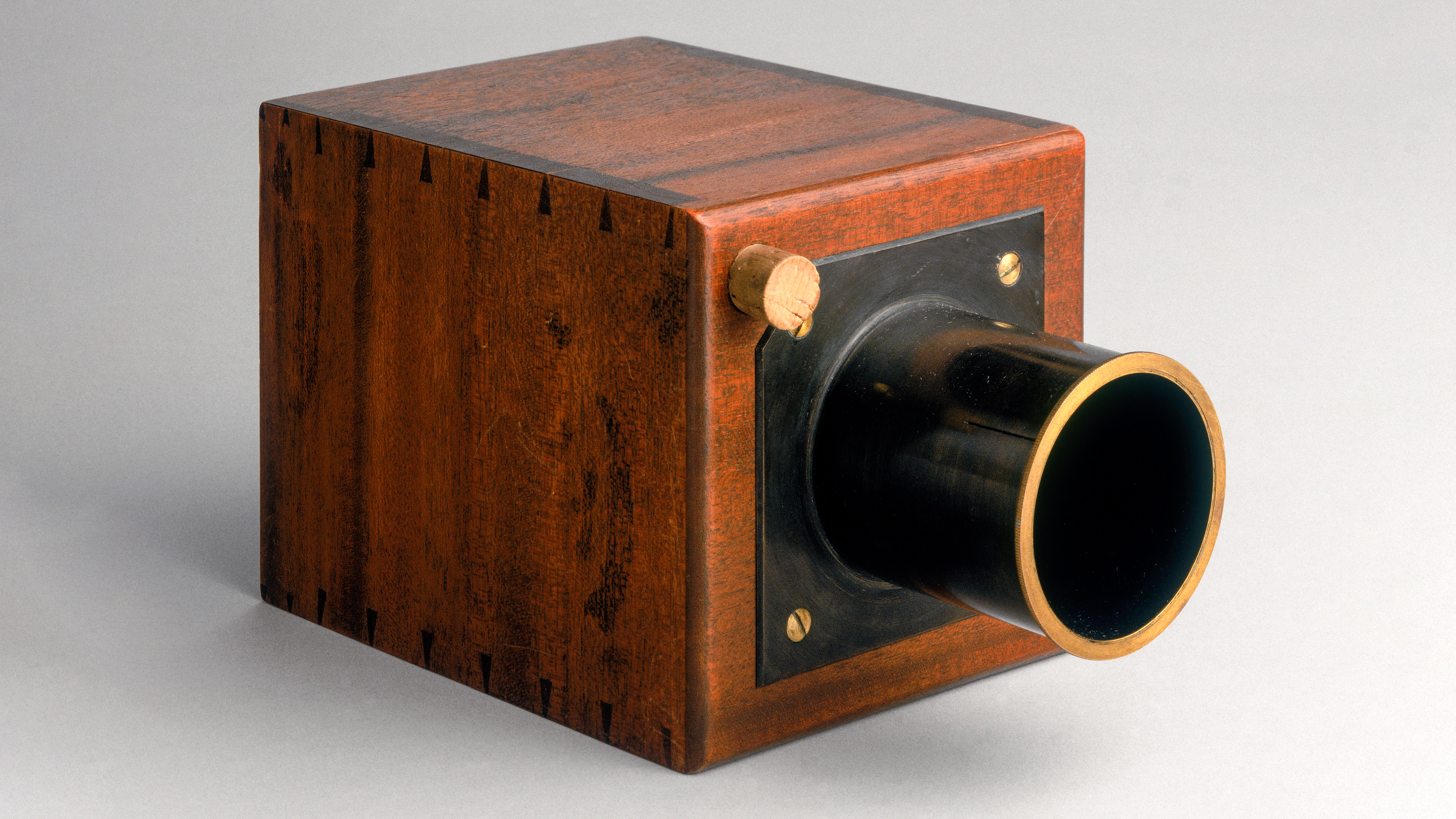
Daguerreotype photography was invented by the French photographic pioneer Louis Daguerre (1789-1851) and was made public in 1839. In the Daguerreotype process a picture made on a silver surface sensitized with iodine was developed by exposure to mercury vapour. Daguerre granted the right to make and sell daguerreotype cameras to a relative of his, Alphonse Giroux of Paris. Photography thus became available to the general public in 1839 and this was the first commercially available camera, which produced the first distinctive photographic positives. It took pictures 8.5 x 6.5 inches (21.6cm x 16.5cm), a size which became known as whole-plate when later cameras were built to take photographs a fraction of the size. (Photo by SSPL/Getty Images)
The invention of the camera is usually attributed to Frenchman Louis Daguerre - who was first to announce his invention in 1839, and gave his name to the first popular form of photograph – the Daguerreotype.
The invention of the Daguerreotype was officially announced by François Arago, secretary of the French Academy of Sciences on January 07 1839. Full details were revealed on 18 August that year. The news caused great public excitement.
Sign up to read this article
Read news from 100's of titles, curated specifically for you.