
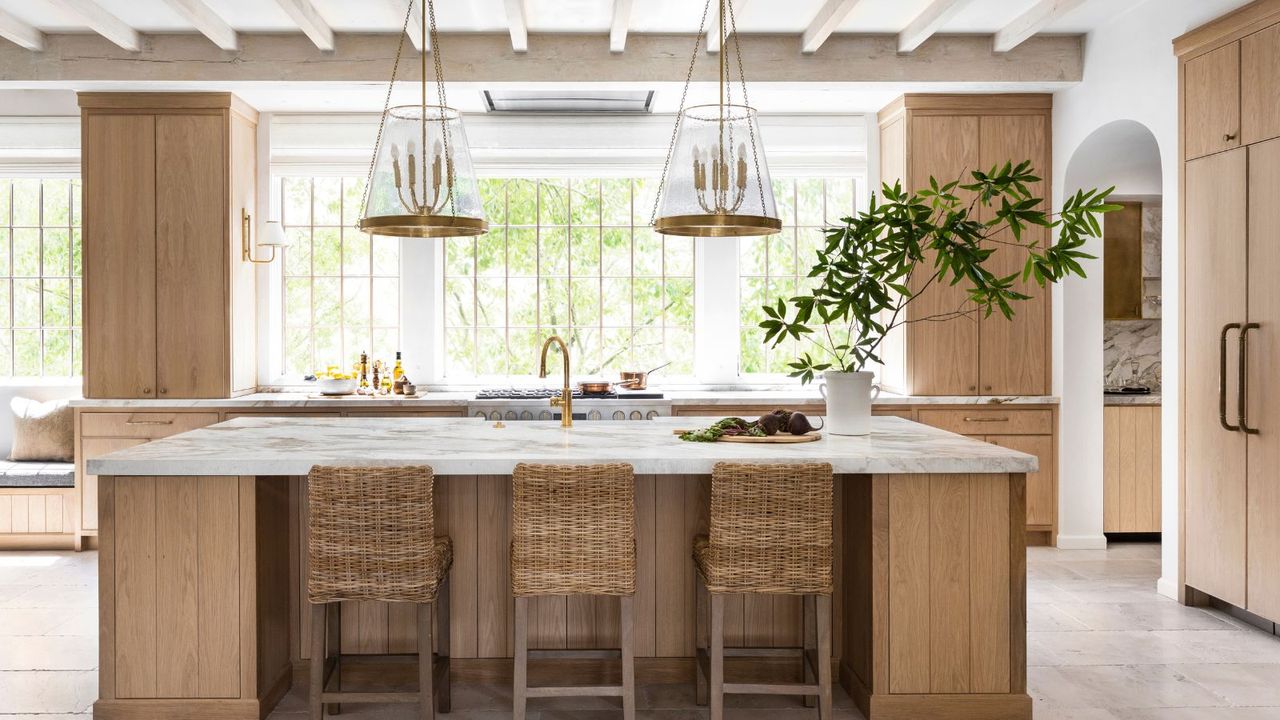
Wood is one of the most timeless materials you can introduce to your kitchen, and as more people are embracing oak cabinetry, it's got us thinking. What finish should you really be choosing?
When it comes to wooden kitchens and oak cabinets, there are three key finishes leading the race: white oak, natural oak, and honey oak. They all embrace the natural texture and grain of the wood, but offer a very different tone.

To find out which finish feels the most timeless, I've turned to interior designers who have tried and tested them all. Here's how you can choose the best finish, and which one is actually a forever choice.
Why They're the Most Popular Oak Finishes

Oak is widely considered one of the best materials for a kitchen thanks to its durability, and white, natural, and honey oak finishes give it an elevated finish, whether you like the neutrality of white oak, the intrinsic appearance of natural oak, or the bright warmth of honey oak.
'White, natural, and honey oak finishes stand out because they strike that perfect balance between warmth and versatility. Oak is an inherently beautiful wood with an incredible range; a rift cut can make it look very clean and tailored, while a plain or flat sawn grain offers a more expressive and textural appearance,' explains interior designer Becky Shea.
'In a kitchen, it brings a sense of warmth and approachability while still feeling elevated and timeless. It’s also incredibly durable, which makes it as practical as it is beautiful,' she continues.
The appeal of these three staple finishes is that they don't take away from the natural beauty of the oak. Instead, they simply enhance it in various tones to suit the look and aesthetic you desire for your kitchen.
How They Differ

The difference between these three most popular finishes is the tonality and how they are achieved. 'White, natural, and honey oak remain enduring choices because they each offer a distinct expression of warmth and familiarity within a kitchen,' says interior designer Marie Flanigan.
'White oak in particular has such quiet versatility; it can read soft and modern or warm and traditional depending on how it is finished, while honey oak brings a sunlit glow and a sense of nostalgia. What separates them is their undertone and depth, how they respond to light, and the way they either recede or become a defining feature in the space,' she explains of their differences.
What also separates them is the colors and finishes they work well with, as well as the styles of kitchen they fit into most seamlessly. 'What really separates the three is their tonality and how they interact with the overall palette of a space,' Becky notes.
'White and natural oak feel more versatile, and they pair beautifully with both light and dark tones and can lean either modern or classic. Honey oak, on the other hand, brings a bit more personality and warmth, and can play really well with richer, more unexpected color combinations,' she explains.
'Ultimately, it all comes down to the complete material story and how each element works together to create a cohesive whole.'
The Most Timeless Oak Finish

Whether you choose natural, white, or honey oak, it's clear why they prove so popular. But which should you choose for a truly timeless kitchen?
'I think natural oak is the most timeless. It has a clarity and honesty to it, and you always know how it will look and how it will wear over time. There’s also a flexibility to it; you can easily elevate or shift the tone down the road with a fresh stain, which allows the millwork to evolve with the space rather than feel fixed,' says Becky.
It's understandable why natural oak feels so timeless. Taking cues from nature ensures your space feels ingrained in the environment, and it's an ethos that can never really be considered dated. But for a lot of designers, white oak stands out as a favorite.

'For me, white oak feels the most timeless. I used it extensively in my own home, and its beauty lies in its adaptability; it never feels overly precious or overly casual, but instead settles into a space with an effortless ease,' says Marie.
And she's not the only one championing white oak. 'I love rift and sawn white oak. To me, it feels the most timeless. It is clean and understated. It works with many materials. It never feels trend-driven,' explains Michelle Palmer Murphy, principal at Demi Ryan.
Versatility also comes into play here. For Yena Jung of By Yena Designs, white oak offers greater versatility over time. 'White oak is best for a timeless kitchen that you want a neutral base for. You can later add in other colors to your kitchen, but keeping the cabinets neutral is something you never get sick of.'
How to Choose

Above all, the right oak finish for your kitchen comes down to personal preference. What's considered timeless in the greater design world might not be the finish that you will enjoy in your space for years to come. So, how can you make the right choice?
'I strongly believe it ultimately comes down to personal preference. Design is such a personal expression, and it’s important that someone feels genuinely connected to the finishes in their kitchen. It’s about creating a space that reflects how you live and feels aligned with your day-to-day experience,' says Becky.
In some cases, certain finishes can feel more aligned with particular design styles, which is worth keeping in mind when selecting a cohesive finish. 'Certain finishes do naturally align with different aesthetics. Lighter, more neutral white oak tones lend themselves to a serene, contemporary environment, while deeper or warmer stains can feel more classic and layered,' adds Marie.

The style and era of your property will also be a factor in the right wood tone for your space. 'Understand the context of your space. Is it a historic home, Mid-century, or new construction? Let the space inform your decision. Look for inspiration – see what finish has been used successfully in spaces similar to your own,' advises Kevin Kaminski of Kaminski + Pew.
'Look at the full space first. Consider everything – the floors, counters, and lighting. Undertones matter. I say to always try a sample in the room and make sure to view it throughout the day. Then choose what feels right for you, and go for it,' adds Michelle.
The verdict? Most oak finishes will create a timeless kitchen design, but designs usually gravitate towards white oak and natural oak for a classic look. There is a place for honey oak, but the warmer undertones can often feel a bit too orange in the wrong space, especially if your kitchen receives a lot of warm light.
But above all, the oak finish you choose for your kitchen should be about personal preference. Which finish do you like most, works best in your kitchen, and you can see yourself still loving for years to come? That's the true test of a timeless kitchen finish.
Love beautiful design ideas, expert advice, and inspiring decor trends? Sign up for our newsletter and get the latest features delivered straight to your inbox.