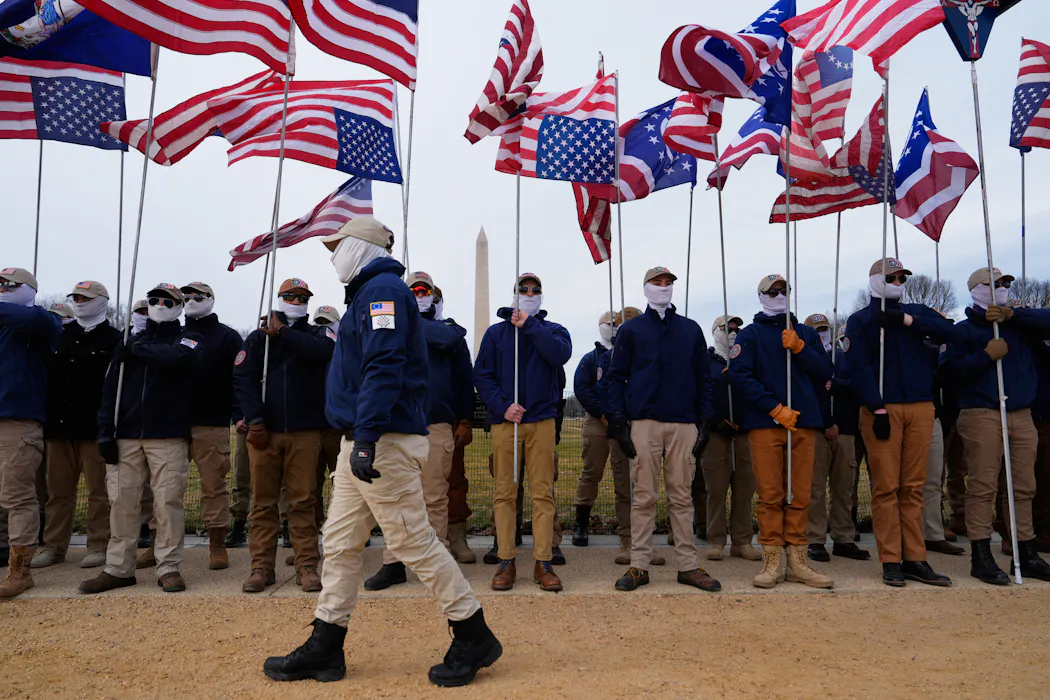
As Americans prepared to celebrate the nation’s 250th birthday on the morning of July 4, sobering images flashed across their phones and TV screens. Hundreds of masked men marched the streets of Washington carrying flags and chanting “Reclaim America!” It soon became clear from the logos on their identical baseball caps that the marchers were members of Patriot Front, a white nationalist group.
The march ended without incident. Still, it joined the 2017 “Unite the Right” rally in Charlottesville, Virginia, and the Jan. 6, 2021, attack on the U.S. Capitol – both of which culminated in deadly violence – as recent mass demonstrations with participants who openly embrace white nationalism. Members of a loosely organized movement that usually operates out of public view, white nationalists hold that shifting demographics pose an existential threat to the white race, which they view as culturally superior and deserving of power over other groups in the U.S.