
There are a few different things that all sports video games have in common with one another. Across sports games, you’ll find that all of them have some kind of franchise mode where you can take full control of a team and make all of the decisions for the organization. This includes controlling which players start games, the players on the roster, and sometimes even the location of the team itself.
When it comes to any of these franchise modes, one of the most enticing elements you normally look forward to digging into is the trading aspect. Getting some of the best players or your favorites from around a given league and acquiring them for your franchise is truly addicting and a major highlight of these modes.
However, not all trading systems in sports game franchise modes are created equal. Some games seem to make it easier to trade away and trade for players than other games. Today, we’ll be attempting to identify which games have the best and most realistic trade logic in their franchise modes, so you know what to expect when loading them up with a new team.
Which Sports Games Are Included?
For this article, we’ll only be reviewing sports games that allow you to effectively and easily trade players in a type of franchise mode. This means that even though you can technically trade players in EA FC/FIFA games, there’s not the same kind of trade logic that’s present in other games.
Speaking of those other games, the main games we’ll be talking about are Madden, MLB The Show, NBA 2K, and NHL.
So, we have our list of four sports games, and now we need to go over whether the trade logic in each game’s franchise mode is realistic or just straight up difficult.
Madden

Let’s begin with Madden, which is the longest-running sports game that we’ll be going over today. Naturally, you would think that this means Madden would have the most time out of any other game to iron out the trade logic in the long-standing Franchise Mode that’s become a staple of the series.
However, that’s not necessarily the case, as trades in Madden have become exceedingly outlandish, as long as you don’t put the trade difficulty setting on “very hard.” More often than not, the game will justify a trade due to a star player being in a contract year and not wanting to return to their current team in free agency.
While that does happen in real life, teams don’t give up their stars for pennies on the dollar. We can look at this example from a Redditor, where they were playing as the Carolina Panthers in Franchise. The New York Jets offered them Quinnen Williams plus a draft pick for Taylor Moton. This is a trade that would get any GM in the NFL fired on the spot in real life. In Madden, though, it’s very commonplace, even if you initiate the trade.
Madden also has a strange trade logic when it comes to draft picks. There’s a known method in the community where you can continually swap first-round picks, and eventually work your way to the first overall pick while giving up nothing on top of the picks you traded.
So, unless you turn the trade difficulty all the way up in Franchise, you won’t get a very realistic trading system in any current or past Madden game.
MLB The Show

Over the past few years, San Diego Studio developers have claimed to continually improve the trade logic in MLB The Show’s Franchise Mode. This came after numerous complaints from the community about how easy it was to steal star players away from other teams in exchange for weaker minor league players.
Well, while the developers have made strides to make the trade logic make more sense, it’s still not in a great place as of MLB The Show 25. Not only can you make trades that would never be done in the real MLB, but other teams will constantly trade away their top prospects for aging veterans throughout every season. Just by scrolling the activity screen in Franchise Mode, you’ll see major names traded away for complete unknowns, which completely unbalances the league in your playthrough.
We ran into a scenario in MLB The Show 25 where the Baltimore Orioles just kept trading their young stars, like Gunnar Henderson, Adley Rutschman, Jackson Holliday, etc., and were receiving low-rated prospects in the 60-70 OVR range. There was no realistic reason for the O’s to do this, as they were in line to compete in the AL East.
With this in mind, you can completely manipulate the trade logic and turn any team, regardless of their current OVRs, into a contender within year one of your franchise. Even the Colorado Rockies, with their poor farm system and subpar roster in MLB The Show 25, can be turned into perennial World Series winners just by executing trades that you think would never go through.
This puts MLB The Show as a whole in the bottom-tier of games with accurate trade logics.
NHL

The NHL is a league where trades don’t occur nearly as often as the other major North American sports. Players generally stick with their teams and don’t ask to be traded, while teams do some wheeling and dealing at the trade deadline and in the offseason, but usually nothing shocking happens.
The same can be said for NHL games, which makes the trade logic fairly easy to understand and predict. While trading draft picks can get a little dicey, especially when trying to trade with a rival team, you can often attach realistic draft picks to trades, and they will be accepted.
You’ll also find that NHL games make it simpler to understand player values than other games. Player values go up near the trade deadline, especially if they’re on a controllable contract and still in their prime, but decrease the older they get. Speaking of the trade deadline, Franchise GMs will often offer you more in trades at the deadline, which is very realistic and makes sense.
Overall, NHL games can get a little wonky when it comes to trading draft picks or assigning value to players in trades, but the trade logic is fairly simple to navigate when compared to other games.
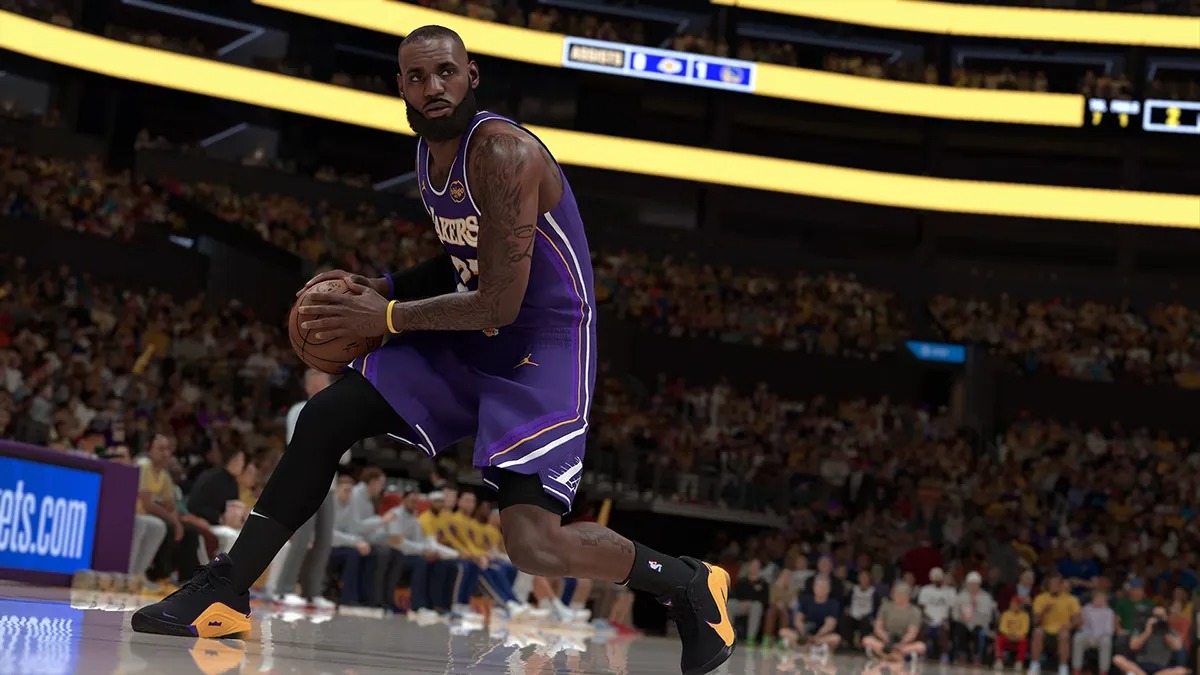
NBA 2K

Finally, we arrive at NBA 2K, and the trade logic can be broken down into a couple of basic elements. If you understand what these elements are, you can basically make any trade happen, regardless of whether it makes sense for both teams or not.
Trades in 2K follow a rating system that determines whether a trade is of equal value or not. This means that if you offer enough players and draft picks for another team’s star player, as long as the value equals out, the trade will usually go through. Even if you offer multiple players at the same position for a player at another position, the trade will still go through if the values line up. However, the AI in 2K’s Franchise Mode will often assign extra value to players just because they have a big contract, which can make things frustrating.
2K might have the easiest trade logic to understand, but that doesn’t mean it always makes sense.
The Verdict
After summing up every game and the trade logics in Franchise Mode, we have to say that NHL games have the best overall trading system. It seems to make the most sense in the grand scheme of things, and the AI across the league doesn’t make outlandish trades that upset the balance of a playthrough, and it offers a semi-realistic experience that mirrors the trading that actually goes on in the real NHL.
While no trade logic is perfect, NHL does the best job at streamlining the process for players compared to the other three sports franchises.
Now that you’ve heard our opinion, what’s your take? Let us know down in the comments below.