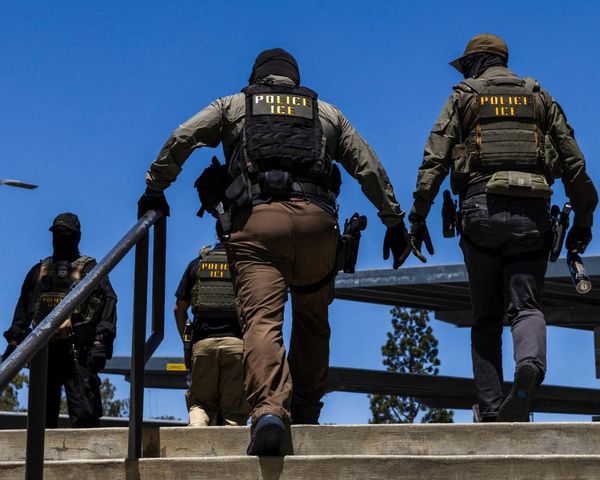
Last Thursday, a federal judge in San Francisco issued a temporary restraining order against President Donald Trump's unilateral deployment of the California National Guard to facilitate immigration raids in the Los Angeles area, saying that takeover was illegal and unconstitutional. Although U.S. District Judge Charles Breyer's order was stayed the same day by the U.S. Court of Appeals for the 9th Circuit, the question of whether Trump complied with the statute he cited to justify that deployment remains a live issue.
Trump could avoid that issue by instead relying on the Insurrection Act, which on its face gives the president alarmingly broad authority to deploy active-duty military personnel as well as National Guard members in response to domestic unrest such as the sometimes violent protests against Trump's immigration crackdown. Since Trump has indicated he might do that, now is a good time to consider why there is wide agreement that the Insurrection Act, which descends from legislation that Congress approved between 1792 and 1871, is outmoded and dangerously broad.
The current version of the Insurrection Act includes three sections. The first, 10 USC 251, applies "whenever there is an insurrection in any State against its government." In that situation, the president "may, upon the request of its legislature or of its governor if the legislature cannot be convened, call into Federal service such of the militia of the other States, in the number requested by that State, and use such of the armed forces, as he considers necessary to suppress the insurrection." Since this section envisions deployments only in response to state requests, it is not relevant to the current situation in California, where Trump has deployed about 4,000 National Guard members and about 700 U.S. Marines over the objections of local and state officials.