

Get all your news in one place.
100’s of premium titles.
One app.
Start reading
Android Central
Android Central
Technology
Nicholas Sutrich

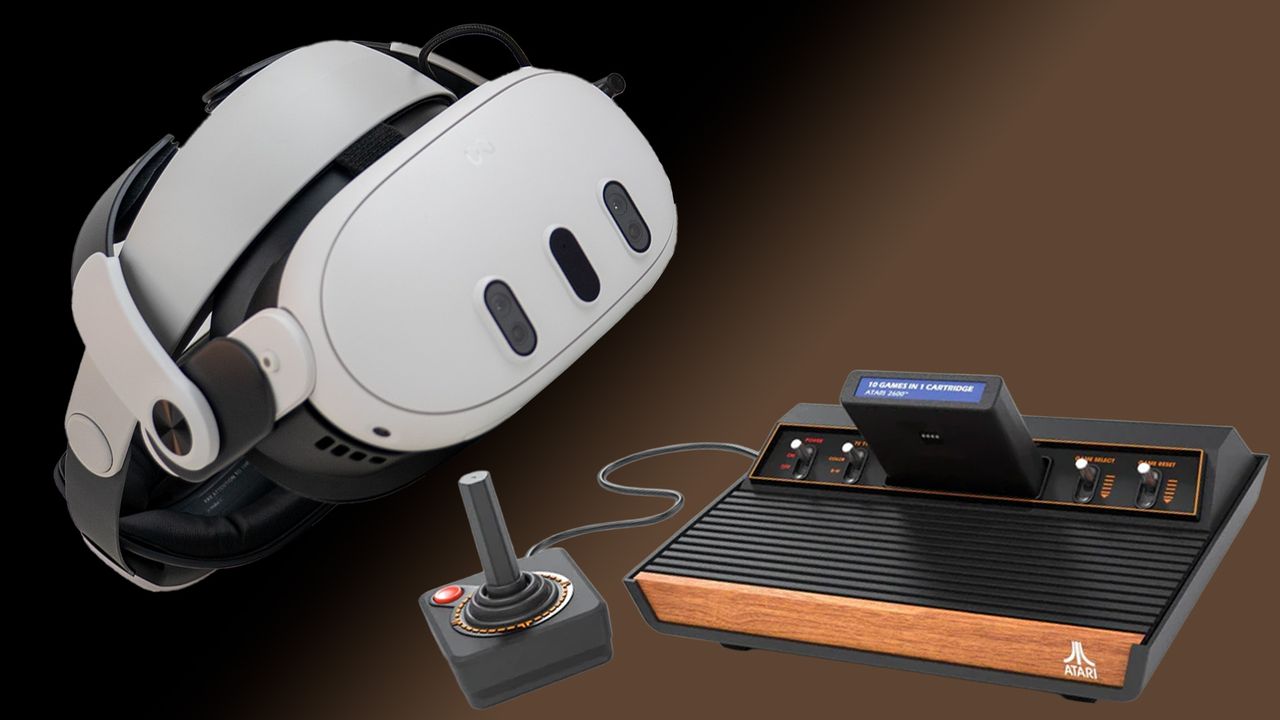
Whether Meta ends up as the Atari of VR is TBD, but the 2026 parallels to 1983 are becoming clearer for one big reason

A photo of a Meta Quest 3 taken by Nicholas Sutrich alongside a stock photo of an Atari 2600.
AC thVRsday

In his weekly column, Android Central Senior Content Producer Nick Sutrich delves into all things VR, from new hardware to new games, upcoming technologies, and so much more.

The video game crash of 1983 is legendary. Even if you weren't alive at the time (which I wasn't), you likely know that a perfect storm of overinvestment and poor quality games forced the entire video game industry into a deep depression. This phenomenon has long been studied and predicted to recur, and it's entirely possible that we just witnessed history repeating itself last month.

I'm specifically speaking about the ongoing challenges in the VR market over the past two years, as free-to-play games have turned Meta Quest's app store into a wannabe Google Play Store. A mixture of mismanagement and poor market conditions led Meta to close most of its studios in January. That led many to wonder if Meta was still interested in VR gaming, or if the Quest would be dropped in a toy box like Woody from the first Toy Story movie after Buzz — in this case, AI glasses — showed up.

While the market's dynamics in 1983 were wildly different from the video game market we all know and love today, the parallels between Atari's failures and Meta's handling of the Quest over the past few years are strikingly similar. Still, a small contingent of developers is seeing success, even if the swath of Gorilla Tag clones and Horizon Worlds slop continues to bury quality titles from would-be customers.

Simulating jobs

(Image credit: Owlchemy Labs)

One of VR's earliest success stories is the game Job Simulator, which is widely revered not only for its on-point humor but also for its uniquely interactive qualities and mechanics that have held up over a decade of changing VR ideals. It's since been installed over 6 million times, and its multiplayer successor, Dimensional Double Shift (DDS), just crossed over the 1-million installs mark only a year after it launched in beta.

But DDS is achieving success in a very different market than the one Job Simulator launched in. Back in 2016, the game debuted on Steam and PlayStation VR, two traditional gaming platforms that appeal to a very different set of gamers than the current Meta Quest crowd, which often defaults to mobile-style free-to-play games over larger, more ambitious offerings.

Owlchemy Labs CEO, Andrew Eiche, had quite a bit to say about the evolving market and where things are headed in an interview I conducted with him this past week. Despite some major setbacks with Meta's studio closures and strategy changes lately, Eiche had a surprisingly rosy outlook on the industry and where VR gaming is headed next.

(Image credit: Owlchemy Labs)

Speaking on the success of free-to-play games like his own Dimensional Double Shift, he told me the attraction wasn't just that it was free to jump in and play, but also its style. "If you look at the broader gaming landscape, there's a push towards play as play," Eiche told me. "We had a large push for many, many years towards competitive multiplayer games, and I think you're starting to see a little bit of a backlash."

While some people certainly enjoy the high-skill nature of competitive games, lots of people simply don't have the time to get good enough to compete. In many of these games, Eiche notes that players need to "play your role, or we're going to accuse you of throwing the game, and we're going to get very mad."

The communities for cooperative and "slop" genre games, such as R.E.P.O, Lethal Company, Dimensional Double Shift, and Among Us, are often distinct. Rather than push players to win at all costs, the goal is "I guess you could play the game if you want and we'll gently push you towards our goals," which is exactly what Dimensional Double Shift does. The point is to have fun with other people and enjoy the limited time you might have to play video games. Imagine that!

The perils of free-to-play

(Image credit: Another Axiom)

Meta's handling of the Quest's app store has been called into question many times over by gamers and developers alike. The switch to allowing pure shovelware to release alongside big-name titles like Batman: Arkham Shadow or Skydance's Behemoth has been critiqued to kingdom come, and rightly so, as it has caused a substantial drop in sales on the platform compared to two years ago when the store was highly curated.

Meta's shift to promoting Horizon Worlds content over paid experiences has pushed lifetime gamers away from the platform, and Gen Alpha's adoption of Quest as a more fun way to play has drastically shifted the audience to one that often chooses free-to-play content first.

While this is great for games like DDS, it's very bad for many others. Meta's CTO, Andrew Bosworth, has admitted that mistakes were made and that the company is working to turn things around, but it's too little, too late for many people.

(Image credit: Skydance Interactive)

Eiche has been around the VR scene for even longer than me, so, of course, I had to ask him what he thought about what's happened this year. "My theory is that, at the worst, this is 1983, and we're in our Atari moment where a company has potentially put out too many tendrils in too many places and moved a little too fast and now has to back up. Whether Meta ends up as the Atari of VR is TBD."

Unsurprisingly, Bosworth has a more positive take on the changes at Meta. "We're still investing more in content than anyone else. We're even investing in more content than I think we were even a year ago," he told viewers in an Instagram AMA on February 3, 2026.

There's certainly plenty of truth to Meta having invested more in VR than anyone else, but the degree to which the company is actually investing is anyone's best guess. We do know that Reality Labs spending isn't changing in 2026, despite Meta's studio closures, but the company is anything but transparent about how it spends its cash.

(Image credit: @Lunayian on X)

While there's plenty of debate about what the future of VR gaming looks like, many parties remain very positive about the future of VR hardware and experiences. Eiche says he's "very excited for the Steam Frame and Project Aura," two huge 2026 releases expected to alter the XR landscape for years to come.

Meta is also working on a substantially smaller, lighter headset that's reportedly going to be released next Spring. Rumors say they look like a pair of glasses rather than a VR headset and are called Project Phoenix, as pictured above. Boz briefly teased it on the February 3rd AMA, saying "not just the next one device, but the next two devices that we're [building] are very exciting."

The real question is whether Meta can fix the Quest store in time for an exciting new hardware release. "The way the store is structured has an enormous impact on what the games look like," Eiche told me, and he's very right. The current store design is just like a mobile app store and "drives prices to free and consolidates around a few large players with smaller teams finding success in bursts." Whether this or the Steam model is the real success in the end will be anyone's best guess.

Sign up to read this article
Read news from 100’s of titles, curated specifically for you.
Already a member? Sign in here
Related Stories
Top stories on inkl right now
One subscription that gives you access to news from hundreds of sites
Already a member? Sign in here
Our Picks
Fourteen days free
Download the app
One app. One membership.
100+ trusted global sources.