
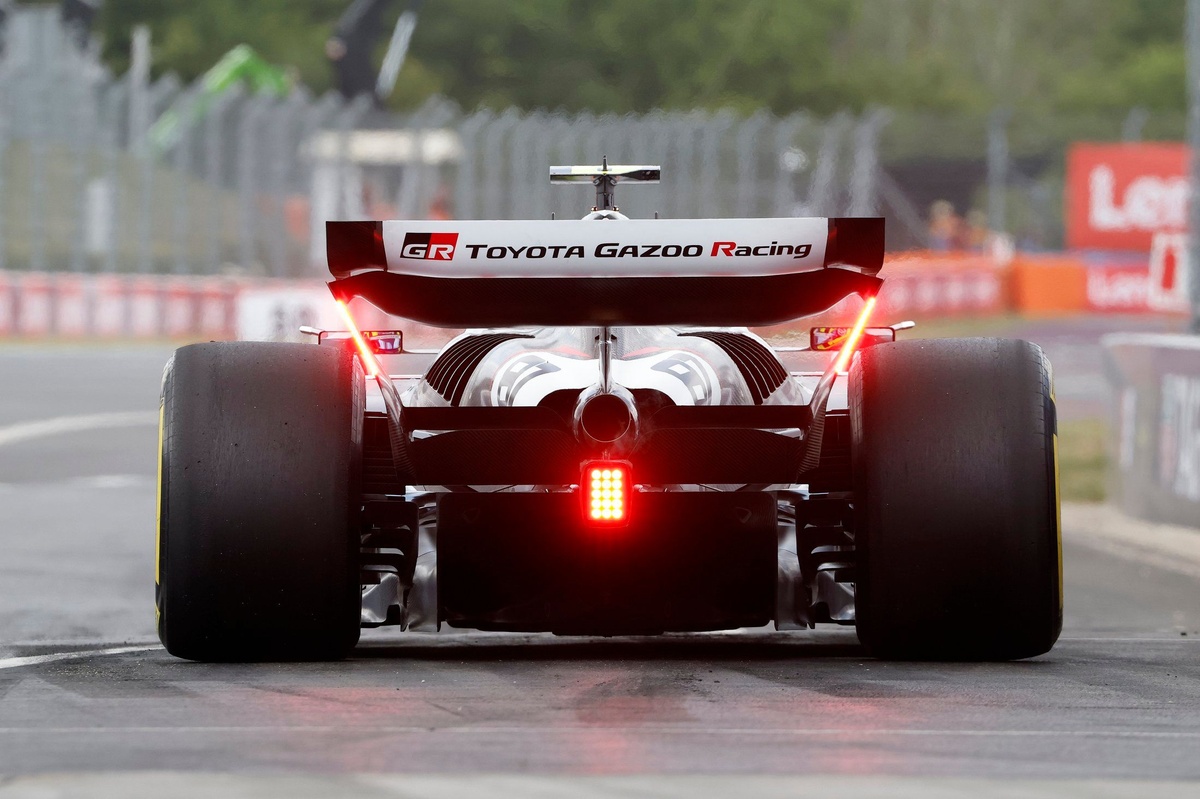
Last October, Haas and Toyota announced a partnership in which they would “Share Knowledge and Resources for Mutual Benefit”. A generous portion of corporate word salad, but lacking in substantive detail.
It soon became clear that one of the new partnership’s priorities was to develop a new driver-in-loop simulator, a critical piece of infrastructure Haas currently lacks. Not only do these enable competitors to arrive at a baseline mechanical setup before arriving at a track, they can also be used to evaluate alternatives while a race weekend is in progress.
And as F1 gears up to a new ruleset in 2026 featuring active aerodynamics, narrower cars and greater electrical power deployment from the powertrain, the simulator will become an essential driver coaching tool.
“It [power unit management] is so interlinked, much more so than up until now,” Haas team principal Ayao Komatsu told select media including Autosport.
“Driver operation has much bigger consequences, good and bad, because of the limitation on energy recovery and deployment. So it is very, very important.”