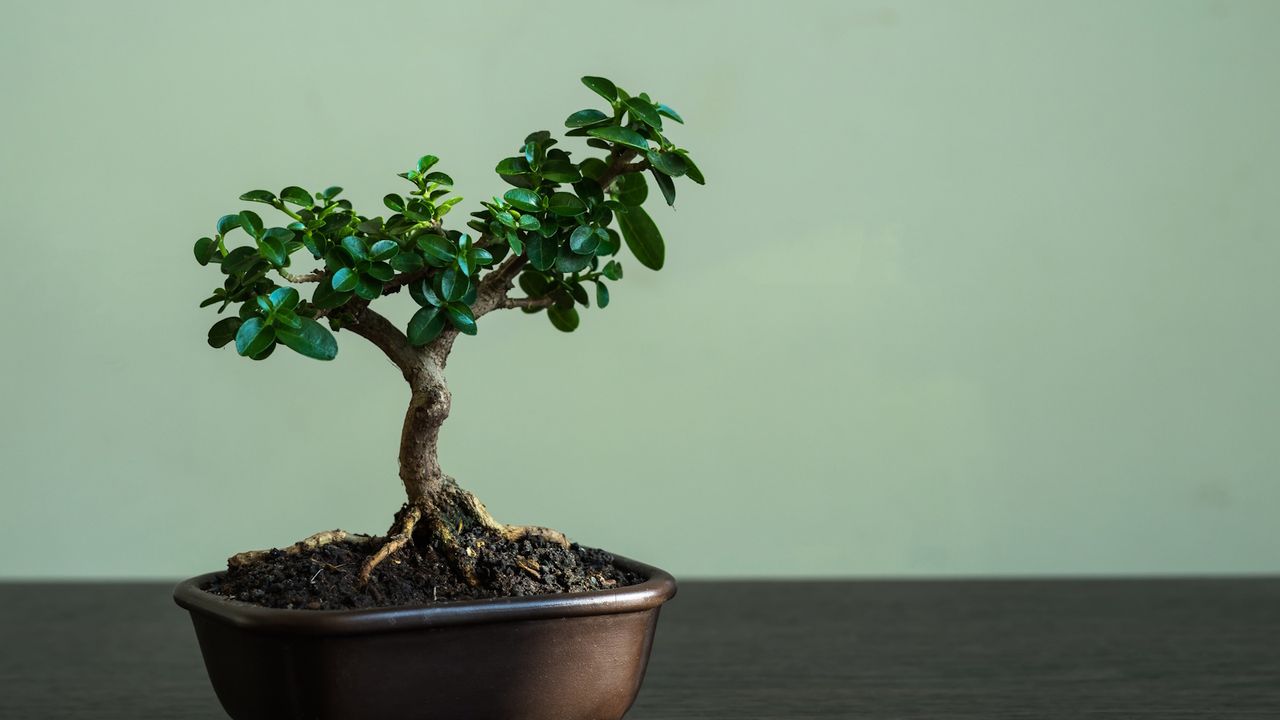
Not only are bonsai trees houseplants that double as living sculptures, but in the Feng Shui tradition, they also exude vitality and represent harmony and balance. But, Feng Shui experts say the only way to unlock this energy is knowing where to place a bonsai tree correctly.
There's no denying bonsai care is specific and takes time to master. That's why it's slightly different from other Feng Shui houseplants, requiring more attention and not being particularly low-maintenance. However, it's through meticulous attention to detail that one can unlock the mindfulness art of bonsai – placing it intentionally is one of the key factors in this.

Here, the experts impart their wisdom on where to place a bonsai tree to encourage both long-lasting growth and positive energy in the home.
What Do Bonsai Trees Represent in Feng Shui?

Bonsai trees are not traditional Feng Shui plants, but they have gained popularity for bringing a sense of balance and harmony, as well as encouraging disciplined practice.
'Because it mimics nature on a miniature scale, it evokes balance, mindfulness, and the essence of Earth Qi (Chi), the grounding, stabilizing energy in Feng Shui,' says Feng Shui practitioner Helen Plehn.
'They are often associated with the Wood Element, which supports growth, vitality, and upward momentum in your life,' she explains.
As well as its physical characteristics, there's much to be said about the art of bonsai.
Carefully pruning and shaping a bonsai tree (using special bonsai tools, available on Amazon) is a mindful, disciplined, and creative practice that can restore your feeling of balance.
With that being said, this will only be felt when a bonsai tree is placed in certain spots of the home. Here, Feng Shui experts advise.
This beautiful azalea bonsai tree has gorgeous pink blooms. It comes in a ceramic planter.
Where to Place a Bonsai Tree – According to Feng Shui

When deciding where to place a bonsai tree, there are a couple of things to consider.
In Feng Shui, experts urge you to look at the Feng Shui energy map (or Bagua). This outlines the different areas of the home and the energies they look after, so you can make intentional placements.
Secondly, consider the needs of your bonsai tree. Of course, there are lots of bonsai tree types to choose from, all with slightly differing requirements. However, for the most part, these trees do best in a room with bright light and average-high humidity to promote steady growth and retain leaves.
With this in mind, here are three of the best places for a bonsai tree, according to Feng Shui.
The East Corner – Health and Family
In reference to the Bagua, the east corner of the home (when standing at the front door and looking in) is the Health and Family area.
For Helen, this is where to place a bonsai tree for optimal results.
'Bonsai trees channel refined Wood energy, activating areas of your life that need nurturing attention and steady progress,' she says.
By placing it in the Health and Family area, bonsai's grounding energy can be harnessed and harmony can be encouraged.
The Southeast Corner – Wealth
'Southeast governs Wealth and Abundance, and Wood element plants like bonsai nourish this area,' says Helen.
The symbolism of discipline and the balance of bonsai can help bring good fortune, wealth, and growth in your life, making it a good choice for this productive area of the home.
The Home Office
In terms of a specific room, bonsai works well as an office plant.
This is, once again, thanks to its Wood energy, promoting upward growth and vitality, ideal for the room in which you work on your career and invest in the future.
Where to Never Place a Bonsai Tree – According to Feng Shui

Just like many other Feng Shui plants, bonsai does come with a warning:
'Bonsai trees are admired for their artistry and elegance, but from a Feng Shui perspective, they come with a caution label,' says Suzanne Butler, Feng Shui expert from Harmonising Energies Feng Shui.
'Bonsai are deliberately designed to stay small. Energetically, they can represent limitation, restraint, and stunted growth.
'For this reason, I generally don’t recommend bonsai for areas connected to growth, like the living room,' Suzanne says.
Likewise, Helen suggests avoiding the bedroom: 'It has too much upward energy and can be disruptive here.'
It would also be a Feng Shui houseplant mistake to place a bonsai tree where it will struggle to grow, because an unhealthy plant is one that blocks energy, disrupts balance, and brings about a negative feeling.
This means you shouldn't place a bonsai tree somewhere that is dark, in the path of a draft, or in a room with particularly dry air. These conditions can lead to dropping leaves and a lack of new growth.
If you are struggling to keep humidity levels up, try methods to increase humidity for indoor plants. For example, you can place your bonsai tree on this pebble tray (from Amazon).
FAQs
What's the Best Type of Bonsai Tree for Positive Feng Shui?
There isn't necessarily a best type of bonsai for Feng Shui. 'The symbolism comes from the practice itself rather than the species,' explains Suzanne Butler, a Feng Shui expert from Harmonising Energies Feng Shui. Instead, you should focus on what suits your aesthetic and will grow happily in your home. One of the easiest bonsai trees for beginners includes a juniper bonsai tree (available on Amazon).
To get the most out of your bonsai, read up on bonsai tree mistakes to avoid. A happy houseplant is one that will be the most uplifting in your home.
Shop Bonsai Essentials
This starter kit has everything you need to grow a Jacaranda bonsai tree, including seeds, tools, and a helpful guide.