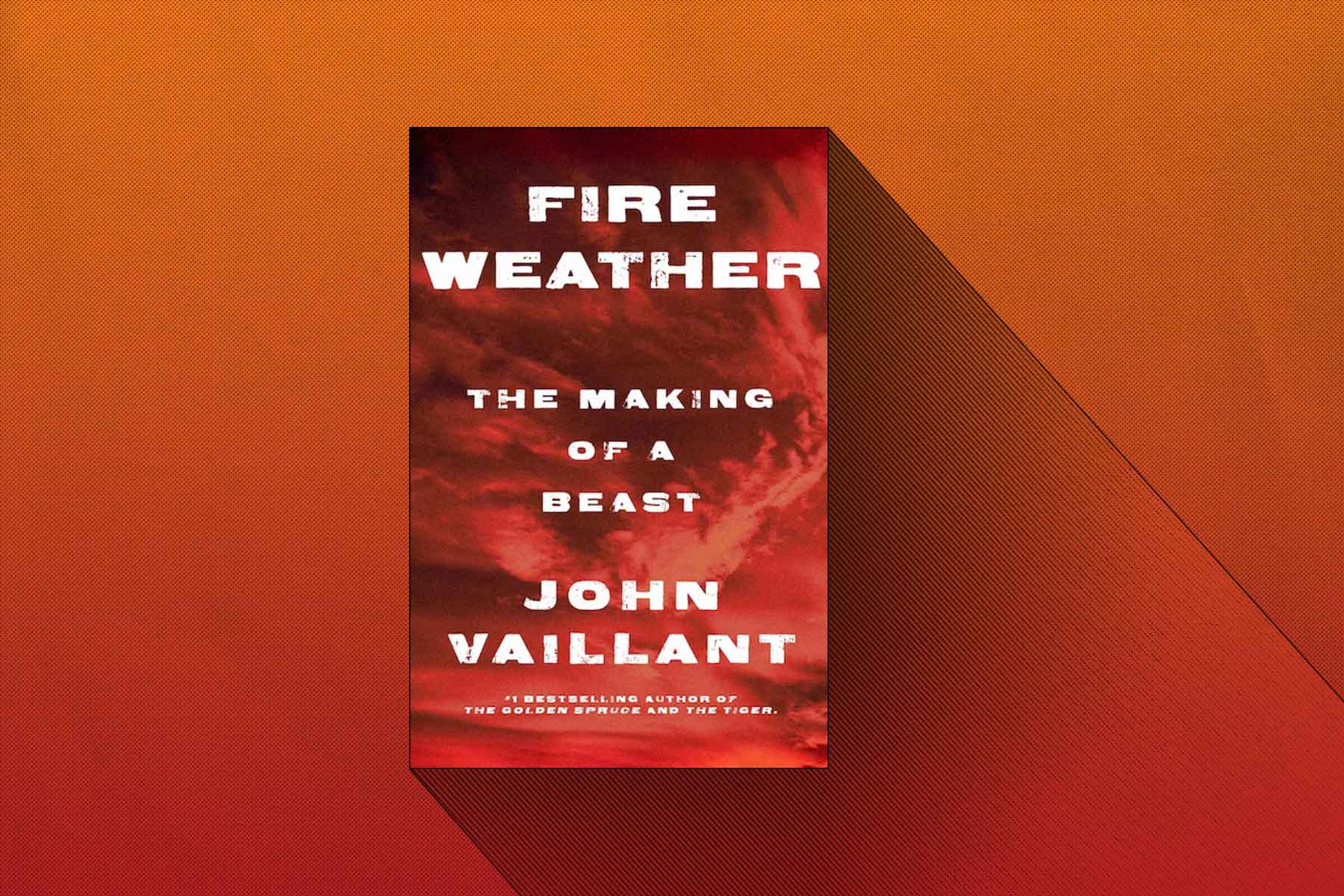
All forest fires have origin stories. Some start with a cigarette tossed from a vehicle or a campfire left untended, others with a lightning bolt striking a tree. But as John Vaillant argues in his new book, Fire Weather: The Making of a Beast, even the ones that can’t be traced back to human error, or arson, have our fingerprints all over the crime scene. While we don’t throw the match, we build the tinder, pump the oxygen, and set up the ingredients for a world primed to burn.
On the morning of May 3, 2016, the residents of Fort McMurray, a northern Alberta town known for the mass extraction of oil, experienced the apocalyptic outcome of every forest fire. What became colloquially known as “The Beast” burned across 579,767 hectares of land, incinerated thousands of homes, forced the evacuation of nearly 90,000 people, and became the costliest disaster in Canadian history at nearly $10 billion. Vaillant has always had an eye for the gargantuan. In 2005’s The Golden Spruce, it was big trees and big West Coast forest; in 2010’s The Tiger, it was big cats and big Siberian taiga. In Fire Weather, it is big machines, big industry, and big fire. Perhaps biggest of all is the hubris of Alberta’s oil industry: a fusion of ambition and greed that drives investors to spend “half a trillion dollars to date” on “the largest, most expensive, most energy-intensive hydrocarbon recovery project on Earth.”