
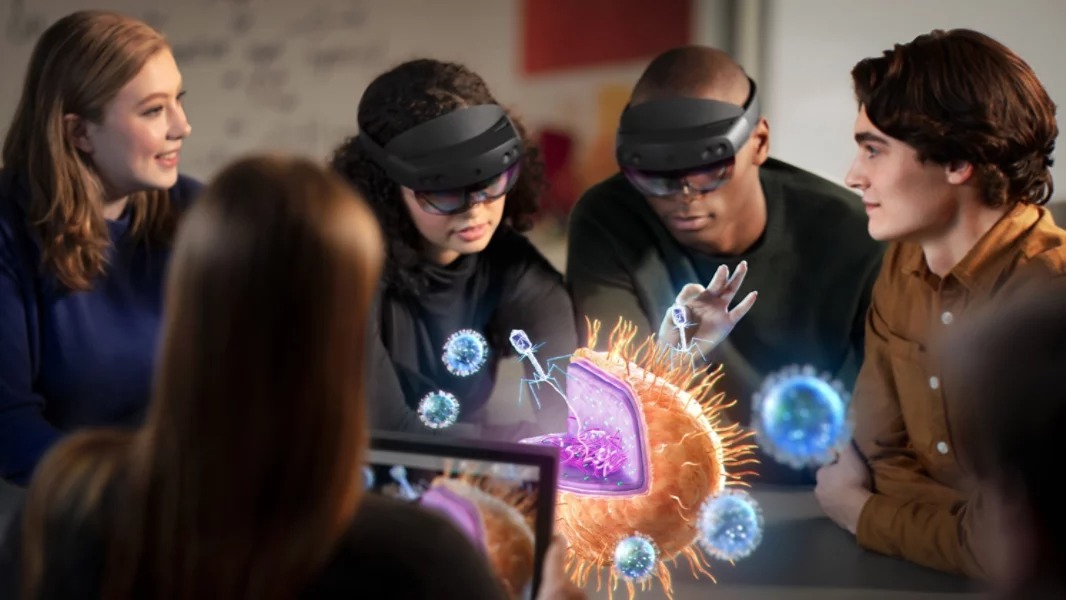
Once, a giant technology company released a headset that could magically project and manipulate realistic digital objects in midair. It could be used for a host of business applications, such as visualizing models and data, remote teaching and support of engine repairs, and even pre-visualizing surgeries. It cost more than $3,000. But, no, it didn’t look like a pair of goggles.
The company was Microsoft and the headset was the HoloLens, a mold-breaking effort for Microsoft the same way the Apple Vision Pro modified the Apple playbook. Unlike the Apple Vision Pro, which had been rumored for years, foreshadowed by Apple’s ARKit on iPhones, and hinted at by Tim Cook waxing enthusiastic about augmented reality’s potential, the HoloLens came out of nowhere. Microsoft’s work on Kinect provided only the faintest indication that the company behind Windows was ready to give us a taste of what could be computing’s future.