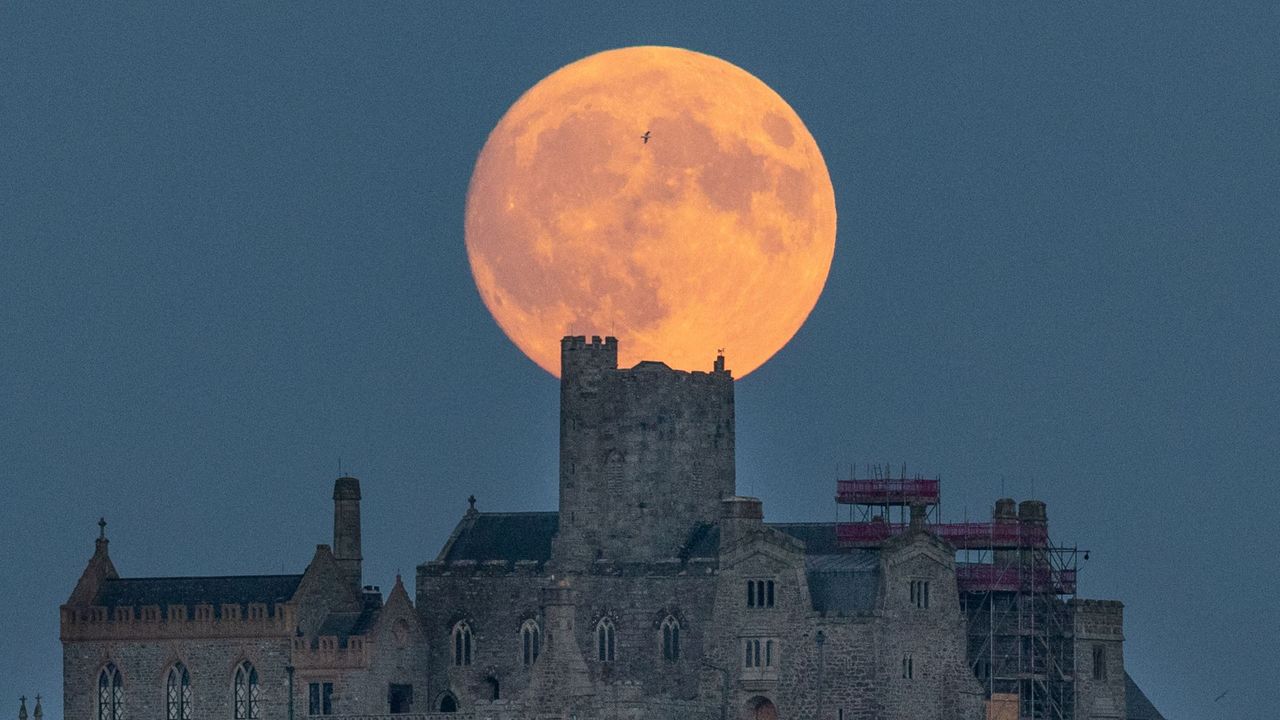
The heatwave might have people hiding from the sun, but the July Full Moon might have sky watchers and stargazers flocking outdoors to see the eighth full moon of the year.
July’s full moon is usually the seventh of the year, but May had two full moons - including a rare blue moon. The new full moon, called the Buck Moon, is expected to be a warm, summery orange or amber.

We’ve got all the details on how to see the July full moon, when it hits its peak and why it’s called the Buck Moon.
What is the Buck Moon?
The Buck Moon takes its name from the time of year when male deer - bucks - start to grow their antlers.
Rooted in Native American tradition, the moon’s names were given as a sort of calendar system, helping them to keep track of the seasons. Other names include the Wolf Moon in January, named for the surge in wolves hunting in the deep winter and the Strawberry Moon in June, named after the peak season for the fruit.
Other cultures have their own names for July's full moon, including the thunder moon for the summer storms that often occur, and the hay moon, named after the summer hay harvest.
A post shared by BBC Weather (@bbcweather)
A photo posted by on
Will the Buck Moon be visible in the UK?
Yes, you should be able to see the Buck Moon today - with a caveat. Per the Royal Greenwich Observatory, the full moon will appear at its fullest at 3.36pm today (July 29).
Because the moon will be just below the horizon at its peak, it’s likely you won’t get to see the Buck Moon at its fullest. However, you will still get to see it as the evening goes on.
Even if you miss the exact moment the moon becomes full, it will appear almost full on the nights immediately before and after sunset.
When is the best time to see the July Buck Moon?
For the most impressive view, head outside shortly after dark. As is always the case with celestial sightings, you’re guaranteed a better view if you head away from light pollution. Also, those with higher vantage points - climbing up hills, for example - should be able to get a clearer, fuller view
If you don’t get the best view of the Buck Moon tonight, the good news is there’s plenty more lunar activities set to take place in the coming weeks.
The Perseids meteor shower will take place until August 24, reaching their peak between August 12 and 13.
When is the next full moon?
If you’re keeping track of the full moons, the next are the:
- Sturgeon Moon on August 28 (5.18am)
- Harvest Moon on September 26 (5.49pm)
- Hunter’s Moon on October 26 (4.12am)
- Beaver Moon on November 24 (2.53pm)
- Cold Moon on December 24 (1.28am).