
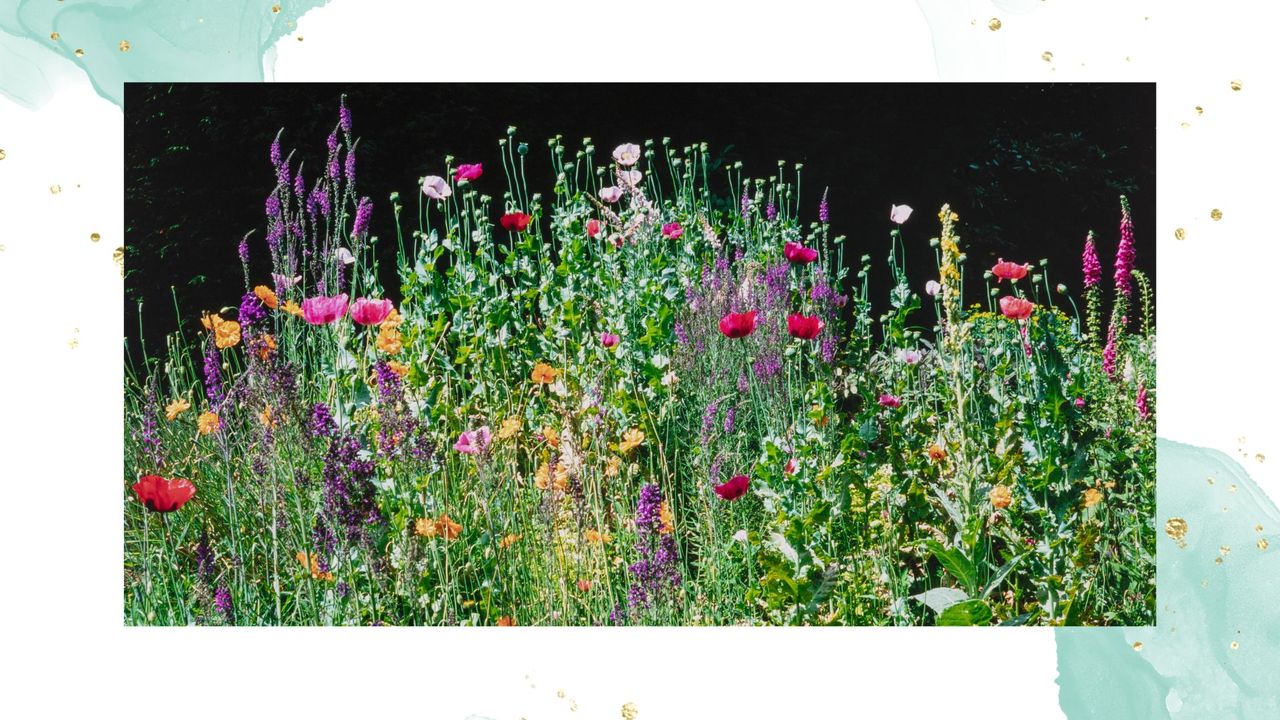
Looking for a way to transform your garden with little to no effort? Wildflowers are the answer. All you need to do is sow the seeds at the right time, and you'll be met with a charming flush of colour come the spring and summer time.
When it comes to transforming your garden on a budget, wildflowers are a great option as they pack a punch despite being some of the cheapest flowers around. We've seen continued popularity with wildflowers, from the wildflower garden border trend to the ever-growing meadowscaping trend; they're here to stay.

However, there are conditions to their success, and one of them is the timing of when to plant them. Which is why we spoke to experts about when the best timeframe is, as well as where in your garden they'll truly thrive.
When is the best time to plant wildflower seeds?
Wildflowers are among the most drought-tolerant plants and are extremely low-maintenance in your garden. They give a lot more than they need; however, you must sow them at the right time for ensured success.
"The best time to sow wildflower seeds is early to mid-spring, when the soil is starting to warm, days are getting longer, and there is likely to be some rain to keep the ground moist for good germination," explains Lucie Bradley, gardening expert at Easy Garden Irrigation.
"All these conditions help to improve germination rates so the wildflowers can become well established, with healthy root systems, before the hotter, drier summer months," she adds.
Shop planting essentials

Make wildflower planting easy with this varied mix of blue flax, marigolds, cornflowers, chamomile and more. Simply scatter on your flower beds and water.

This 10g packet of perennial wildflower seed covers up to 10m².

Encourage wildlife with your wildflowers. This specialist 'night-time mix' is formulated to appeal to nocturnal animals that live in the garden.
Where is the best place to plant wildflower seeds in your garden?
Whether you're looking to try out some sustainable garden ideas or simply want to incorporate a garden trend into your space, adding native flowers like these is an easy way to do it. There are certain places in your garden where they'll be happier despite their easy-going nature.
"While you would expect native wildflowers to grow anywhere in your garden as they are naturally more adaptable than cultivated plants, there are some places where wildflowers will flourish more than others," explains Lucie.
"If you are sowing a mix of wildflowers, the best place to sow them in your garden is somewhere where they will get full sun, with well-drained but nutrient-poor soil," she continues.

Lucie also recommends avoiding shady areas unless you have chosen specific wildflowers that prefer dappled light or darker spots, such as red campion, greater stitchwort or common dog violets. This is because usually, the wildflowers you would see growing in woodlands prefer shaded areas of your garden.
Many other plants are best for shade, and will lighten up even the darkest corners of your garden.
"If you are having to work with heavy clay soil when sowing wildflower seeds, you need to either break up the clay and improve drainage by adding sand or grit or organic matter like garden compost or well-rotted manure. You are then best to select wildflowers more suited to a richer, wetter soil like meadow buttercups, betony or sneezewort," adds Lucie.
FAQs
Can I just throw wildflower seeds around?
If you're on a time crunch, sorting your garden out or simply don't have time to be in the garden all day, you might be wondering if you can just scatter your wildflower seeds.
"Yes - and that’s the beauty of wildflower gardening! With seedballs, you literally scatter them where you want them to grow and leave the rest to nature. The clay and compost casing protects the seeds until conditions are right for germination, so you don’t need to plant them in rows or bury them," says Dr Emily Attlee, conservation scientist and co-founder of Seed Ball.
"Just scatter them on the soil surface, ideally spaced about 10 cm apart, water if it’s dry, and let the rain and sunshine do their work. It’s about simplicity and joy, not perfection,” states Dr Emily.
Do wild flower seeds come back every year?
With the help of overwintering and winter prep, there are several perennials you can have in your garden that will return each year. Are wildflowers included in that?
“Here’s where the storyline gets beautifully diverse. Wildflower mixes are often a blend of annuals and perennials, so some plants will bloom once and set seed, while others will return for many years. Perennials - like clover, yarrow, and oxeye daisy - establish deeper roots and happily come back each season, improving your wildflower patch with each year," explains Dr Emily.
"Annuals may self-seed and pop up again anyway, or you can scatter fresh seed next season if you want more colour. The key takeaway is that, once established, a wildflower area becomes ever more resilient and rewarding with minimal fuss,” she finishes.
So when you're wondering what flower seeds to sow in April, don't hesitate to sprinkle a few more wildflower seeds around.

Wildflowers aren't just great for low-maintenance gardening; they're also fantastic plants for pollinators. Especially if you find a wildflower mix with some of your area's native plants, wildlife will flock to your garden to enjoy the flowers just as much as you.







