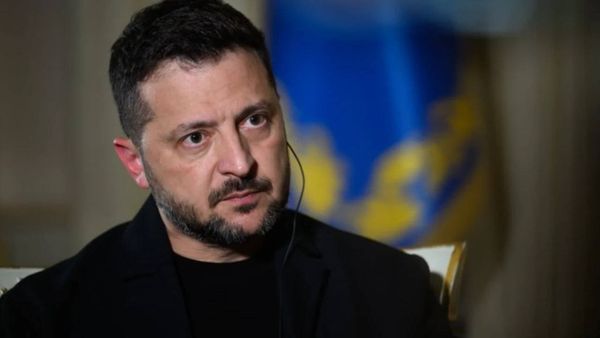
Sir Keir Starmer has announced under-16s will be banned from using “addictive” social media that is detrimental to children’s mental health and empowering bullies.
In response to a public consultation on the issue, the Government also plans to go further to address other potentially damaging features online.

Here is a summary of what is known so far about the ban, how it will work and reactions to the announcement.
– What has the Government said?
Sir Keir said he would not compromise on the “safety and happiness of our children” as he announced children under age 16 will be banned from social media in a “big moment for our country”.
The Government said it will also take “world leading” action on gaming and live streaming platforms so strangers will not be able to contact children.
Sir Keir admitted the ban was not “cost-free” as social media had brought benefits for young people.
– When will the ban be introduced?
The Government said powers in the Children’s Wellbeing and Schools Act will enable swift action, with secondary legislation to be used to introduce targeted protections without need for a whole new Act.
This means the Government is aiming for the first set of new regulations to be in effect by Spring 2027.
Ofcom will enforce the ban as the online safety regulator.
– What did the consultation say?
The public consultation on the issue, which closed on May 26, received about 116,000 responses, making it the second-largest in history.
Over 83% of parents who responded said social media risks outweigh the benefits for children – with 91% backing a minimum age of 16 before platforms can offer their services to children.
Almost two thirds (62%) of children who responded said restricting the high-risk features would make them safer online.
But 72% also said they were worried about feeling left out if restrictions came in.– Who is affected by the social media ban?
The Government has announced under-16s will be blocked from accessing social media, but options restricting some access for older children are under consideration.
Curfews for teenagers aged 16 and 17 could be introduced to stop scrolling late a night, with more detail to be provided next month.
Under the plans, there would be default restrictions for under-17s on “harmful functions such as livestreaming” alongside measures to prevent strangers from being able to connect with children.
– Which platforms will come under the ban?
The current list of social media platforms includes Snapchat, Tik Tok, YouTube, Instagram, Facebook and X.
The main YouTube app is also included, as are Reddit and Threads.
– And which platforms are excluded?
Messaging apps, educational tools and content, e-commerce and music streaming sites will remain outside the scope of the ban for under-16s.
The Government also does not intend to extend the access ban to messaging services such as WhatsApp and Signal.
YouTube Kids, Google Classroom and Lego Play will remain accessible to all because they are judged to not have problematic algorithmic features.
– How will under-16s be blocked from accessing banned sites?
An age verification process will be the key element preventing access to sites, with platforms required to use technology that accurately estimate or verify a person’s age, including through the use of face scans and requesting ID.
In addition, the communication watchdog Ofcom has been directed to conduct a rapid study to “harden age-gating systems” so they are more difficult to bypass than processes which rely on self-declaration.
Platforms including Tik Tok, Instagram and Snapchat will be required by law to deploy these barriers.
– Will under-16s be able to bypass age checks?
It is generally accepted that virtual private networks (VPNs) will be viewed as a way to bypass access restrictions.
However, the effectiveness of VPNs can be limited by the level of security implemented by social media companies.
– How have social media companies responded?
YouTube warned a blanket social media restriction could push children toward “less-safe services”.
A spokesperson said the company has invested in default protections for teenagers for over a decade and will continue to do so.
They said blanket bans push kids out of “curated, supervised, beneficial experiences” towards less-safe services.
– Where else is this happening?
Last December, Australia imposed a social media ban for under-16s.
The ban stops youngsters keeping or making new accounts for apps such as TikTok, Instagram, YouTube, Snapchat, X and Facebook.
Social media companies risk serious fines worth millions if they do not enforce the ban.
Some groups, including Unicef Australia, say there is a need to improve social media safety, not just delay access to children.
However, the Australian government said the ban was needed to protect the mental health and wellbeing of children and teens.
– Is the ban in Australia working?
Recent research by the Molly Rose Foundation found tech companies are failing to close down a majority of underage accounts.
Polling showed three in five Australian 12-15 year-olds with accounts on restricted platforms before the ban came into force still have access to one or more accounts.
The county’s internet regulator found 70% of surveyed parents said their children are still using the platforms which are included in the ban.
– What do bereaved families think?
Many families who have either lost children to suicide or due to issues such as online challenges have campaigned for a social media ban in the UK.
They believe large tech firms are making profits at the expense of the safety of children.
However, some are against a ban. Ian Russell, whose daughter Molly, 14, took her own life after viewing harmful content online, said over the weekend he was “dismayed” by reports the Government was introducing a ban.
He said he thought “sledgehammer techniques like bans” would only cause more problems.
He has previously said the Government should be enforcing laws already in place.
– What have the experts said?
Some experts have said that the evidence backing a ban is lacking.
Dr Junade Ali, fellow at the Institution of Engineering and Technology, said there is “insufficient scientific evidence” to attribute the post-2012 mental-health crisis to social media.
Professor Dennis Ougrin, from Queen Mary University of London, added: said major policies affecting millions of young people “should be driven by evidence, and we do not yet have that evidence”.
But others suggest evidence supports the ban.
Rafe Clayton, senior lecturer in media practice at the University of Leeds, said the Government was right recognise and act upon the worries of the population.– How will the ban be assessed going forward?
The Wellcome Trust has said that it will be funding nationwide studies to monitor the impact of the ban.
This will include whether there is an improvement in teenagers’ mental health, and if so why.
Research could also come up with new ways to support young people.
Dr Catherine Sebastian, head of evidence for mental health at Wellcome, said it is crucial that scientists closely observe what happens, “to inform future policy”.