
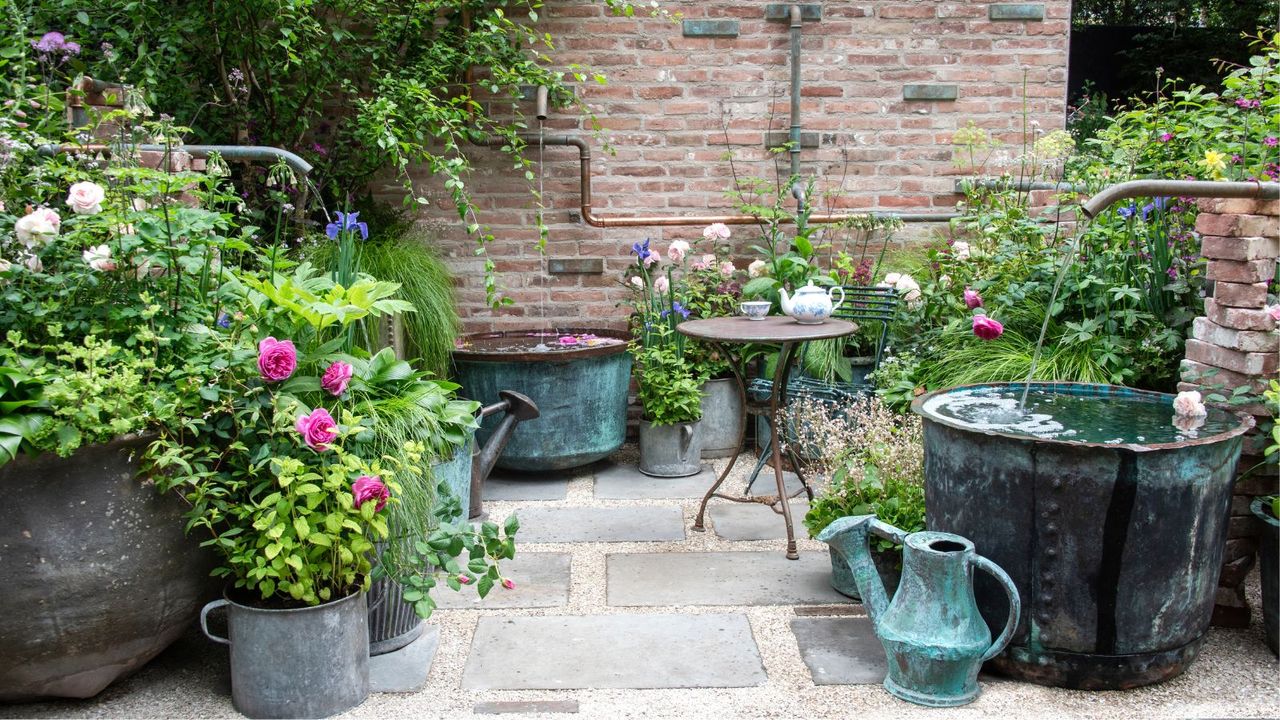
A classic wooden deck may be an essential component of garden design, but experts say that it has some competition. Recently, in fact, homeowners have been opting for a more eco-friendly choice: permeable paving.
Stylish, versatile, and particularly beneficial when it comes to water drainage, it's hardly surprising that permeable paving is becoming more popular. Whether you're looking to mitigate flood risks or you're just keen to be a little more climate-conscious, it's a brilliant alternative to a traditional garden deck.

So, if you've been thinking about upgrading your deck ideas this summer, permeable paving could be the answer. Below, experts reveal why it rivals more conventional choices, and how you can incorporate it into your own yard.
What is Permeable Paving?
While there are many different types of permeable paving, each one allows water to soak into the ground rather than flowing over the surface. The aim is to improve garden drainage while maintaining a sophisticated look.
'Flexible permeable pavers are an increasingly popular alternative to traditional garden decking,' says green infrastructure and stormwater expert Olivia Harris. 'Because water flows through permeable materials instead of pooling on the surface or running off, porous pavers help manage water more effectively.'
Homeowners in flood-risk areas strongly favor permeable pavers because they reduce the amount of water flowing into sewers. They do, however, require both a permeable grid system (like this one from Home Depot) and a permeable base (like soil or crushed stone) in order to be truly effective.
'Permeable materials in landscape design allow water to soak into the ground instead of running into the sewer system,' explain Catherine Trudeau and Paul Blanding, founders of The Outside Design Studio.
'In a permeable paver system, pavers are spaced with small gaps that are filled with clean, angular stone to let water pass through,' they continue. 'The base beneath it must also be permeable to allow water to flow through the entire system.'
Why is Permeable Paving So Popular?
While wooden deck effectively zones a lawn or patio, one of the biggest aesthetic benefits of permeable paving is that it can integrate with the rest of your space. In fact, the grid structures can be filled with gravel, turf, or even bark mulch.
'Porous pavers offer homeowners something that traditional garden decking can’t: seamless integration with the existing landscaping,' confirms Olivia. 'Grass-filled porous pavers blend effortlessly into lawns or gardens, while gravel-filled options provide a natural, textured look.'
Wood deck can, of course, lean either contemporary or rustic, depending on the materials you choose. (Teak wood – like these interlocking deck tiles from Wayfair – offers a sleek, modern feel, while pine decking boards, like these from Home Depot, guarantee rustic charm.)
It is, however, more difficult to achieve a seamless look with wooden boards, particularly in an awkwardly-shaped plot. In contrast, permeable pavers are far easier to customize.
'Some permeable paving systems can be installed in curved or custom configurations,' says Olivia. 'This helps the surface area to become an intentional component of your landscape design, rather than a visual interruption.'
Ultimately, permeable pavers strike an impressive balance between functionality and visual appeal.
'A lot of homeowners don’t realize how much runoff regular surfaces deal with until they start seeing puddling, erosion, and water collecting near their home,' reflects landscaping expert Dawn De Feo. 'Decorative gravel and permeable stone systems are perfect for fixing that, and they still looking high-end in a garden setting.'
Plus, there's no denying that permeable paving is one of the best approaches to sustainable garden landscaping. It's a brilliant way to help your yard retain moisture in the summertime, while reducing the build-up of ice in winter (since water soaks through the ground rather than accumulating on the surface).
'In areas that see sporadic or little rain, permeable pavers allow the water to seep back into the ground so that your yard retains it, as opposed to it gushing down into storm drains,' explains Aaron Brundage, Director of Operations at System Pavers.
'Because rain passes through the pavers, it lightly filters out containments, which is another environmental benefit,' he adds.
What to Shop

These grids cover a total area of 40 square feet. They're designed to be filled with limestone gravel, with a layer of angular crushed stone beneath.

Measuring 16 by 16 inches, these grids are a budget-friendly way to create a permeable paving system in your yard or driveway.

If you're wondering how to fill your paver grids, pea gravel is an ideal choice. It's highly permeable, and it also provides plenty of visual appeal.
Want to add more eco-friendly features to your yard this summer? Check out our top sustainable garden ideas.
And if you love inspiring garden ideas, outdoor advice, and the latest news, why not sign up for our newsletter and get the latest features delivered straight to your inbox?