
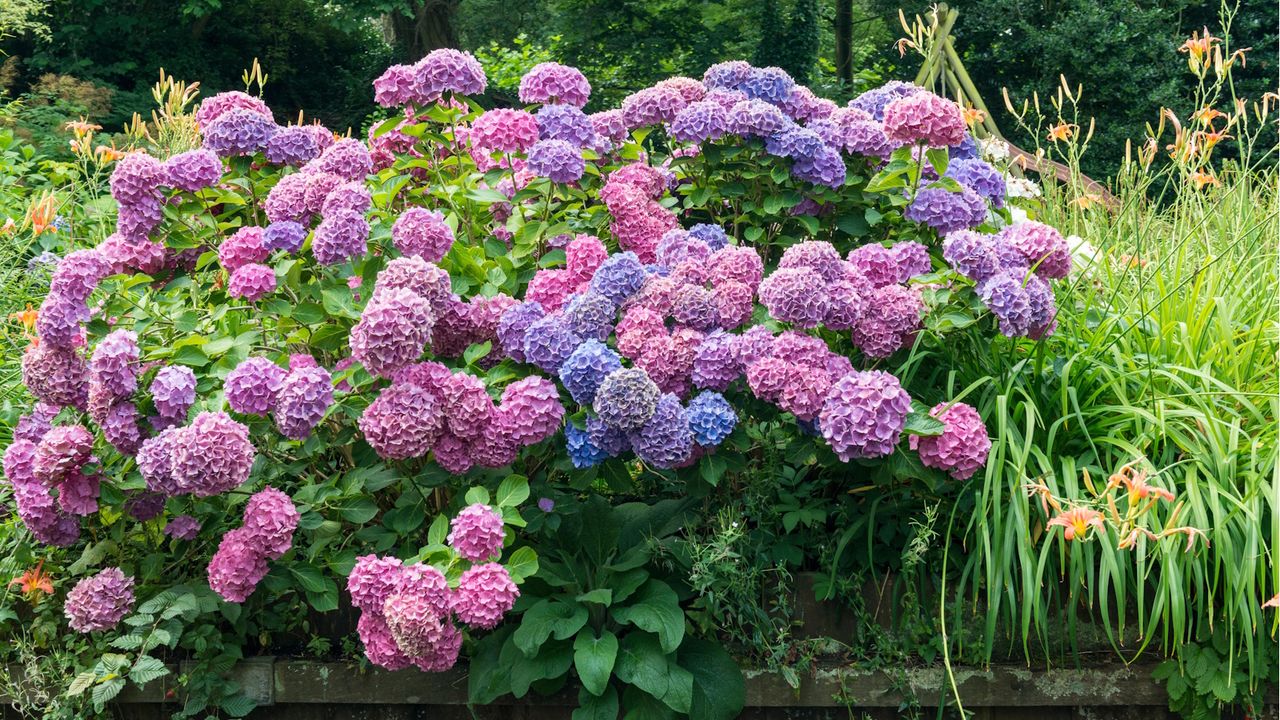
Hydrangeas are one of those shrubs we all love to have in our gardens but also slightly fear. It's no secret they have particular care (especially around pruning) and making the slightest of errors can sabotage their display. March in particular brings a set of challenges with these showy shrubs, as there's much to get done for a productive season ahead.
If you've been growing hydrangeas for some time, you'll know that spring is when they start to tease with new growth. In March, you need to do some essential pruning (but only for some types), increase watering, look for pests, and check soil health. Failing to do any of the above could result in less-than-impressive blooms, weaker plants, and problems that escalate beyond repair.

But, these tasks all need to be approached carefully and with the right method, which is why I've called on help of gardening experts. Here, they talk through what to do with hydrangeas in March with five key tasks.

What To Do with Hydrangeas in March
If you've only added hydrangeas to your yard recently, it might be helpful to read our guide on hydrangea myths debunked. This will help you get care right not only in March, but year-round.
1. Prune New Wood Hydrangeas

Hydrangea pruning is arguably the most confusing aspect of care for these shrubs, largely because when to do it differs greatly between different hydrangea varieties.
'Any hydrangeas that bloom on old growth should not be pruned in fall, winter, or early spring as that will eliminate the buds that will form flowers the following year,' explains landscape designer and gardening expert Caroline Ervin.
This would be a big pruning mistake to make, sabotaging flowers for oakleaf, mountain, bigleaf, and other old wood hydrangeas.
However, you can prune hydrangeas that bloom on new wood in very early spring. This includes smooth and panicle hydrangeas, like the much-adored 'Annabelle' hydrangea (you can purchase a starter plant from Nature Hills).
Pruning these hydrangeas now will give the shrubs a boost of energy, encouraging strong new, upright growth and larger flowers.
Use sharp, clean pruning shears (like these Fiskars bypass pruning shears on Amazon) to cut stems back to a strong pair of buds.
'You should also remove any dead or broken branches on all hydrangeas before spring growth,' says Caroline.
2. Apply Organic Fertilizer

Early spring is a great time to prepare hydrangeas for active growth with organic fertilizers, providing a boost of essential plant nutrients.
'Hydrangeas benefit from fertilization as the leaves just begin to emerge,' says Caroline.
'An organic, slow-release fertilizer will help the plants increase their bloom size and quantity, such as ones with 15-10-10 or 10-5-5 NPK plant fertilizer numbers (you can even use this rose feed from Amazon).
'A balanced organic fertilizer is fine, too, which will promote healthy growth of the plant but will not necessarily help increase the blooms,' Caroline explains.
You can also put down a layer of homemade compost and mulch to provide nutrients and aid moisture management for these thirsty shrubs.
'A light 2-3” layer of organic mulch like shredded bark, pine straw (from Amazon), compost, or leaf mold will help hydrangeas retain moisture,' Caroline says.
3. Gradually Increase Watering

Watering hydrangeas can be easy to get wrong.
These are moisture-loving shrubs that don't want to dry out. At the same time, too much water will cause root rot and the decline of the plant's health.
When March comes around, your hydrangeas are starting to wake up and require more watering to support the growth spurt they're about to put on.
'Begin watering hydrangeas in early spring when the leaves begin to emerge to make sure the plant has ample moisture to grow,' Caroline describes.
'Watering is important to encourage root growth, especially for newly planted hydrangeas. They typically need about 1” of water weekly through the growing season,' she adds.
Of course, it's important to note that environmental conditions will determine how often you need to water hydrangeas. If you're experiencing a particularly warm spring, for example. the soil will dry out more quickly.
That's why I always use my soil moisture meter (like this one from Amazon) to check my hydrangea's soil and identify when it's time to give it a top up.
4. Monitor for Pests

Spring garden pests are getting ready to come out by the time March rolls around. The best way to get on top of pest problems is identifying them early.
'In March, monitor hydrangea plants for pests such as aphids, spider mites, scale, and beetles which can all cause leaf damage and loss of sap,' Caroline advises.
'Also in early spring, some common hydrangea diseases may spring up, often triggered by cool, wet conditions.
'This includes powdery mildew, leaf spot, and Botrytis blight. Manage these issues with pruning to increase air circulation of the interior of the plant and avoiding overhead watering,' she advises.
There are plenty of natural pest control methods you can use to safeguard your hydrangeas, too, including placing marigolds (starter plants from Walmart) nearby as trap plants and deterrents.
5. Check Soil Health

To set your hydrangea up for a successful growing season, it's best to assess the soil health now and make any necessary amendments.
You can use a soil test kit (like this one from Amazon) to get an insight into available nutrients and pH level (remember, hydrangeas like lightly acidic to neutral soil types).
You can then improve your soil accordingly, for example with this pH down fertilizer from Amazon.
This is also a good time to check the structure of your soil. You don't want it to be compacted or waterlogged, which can cause drainage issues and rot your hydrangeas.
'Adding a layer of compost around the base of the plant helps maintain and improve soil structure,' says Siobhan Shaw, sustainable gardening expert.
'It'll provide gentle nourishment for strong growth and better blooms later in the season,' she adds.
FAQs
Can I Take Hydrangea Cuttings in March?
It is possible to take hydrangea cuttings in March, but these will be hardwood cuttings while pruning in early spring. There is another opportunity to propagate hydrangeas in early summer, where you can take softwood cuttings. The latter is usually preferred because softwood roots more easily and quickly.
If you're thinking about adding more hydrangeas to your yard this spring, read up on places you should never plant hydrangeas.
Love inspiring garden ideas, outdoor advice, and the latest news? Sign up for our newsletter and get the latest features delivered straight to your inbox.
Shop Hydrangea Growing Essentials
This liquid feed is a special blend to support hydrangea growth and blooming. Dilute with water to apply.