Get all your news in one place.
100’s of premium titles.
One app.
Start reading
Evening Standard
Evening Standard
Politics
Arielle Domb

What would happen if the London borough of Havering voted for independence?

An MP is campaigning for a major east London borough to leave the capital under a Reform UK government.

Havering, which includes Romford, Upminster and Collier Row, would get an “independence” vote on remaining part of the capital, Reform MP for Romford Andrew Rosindell has vowed.
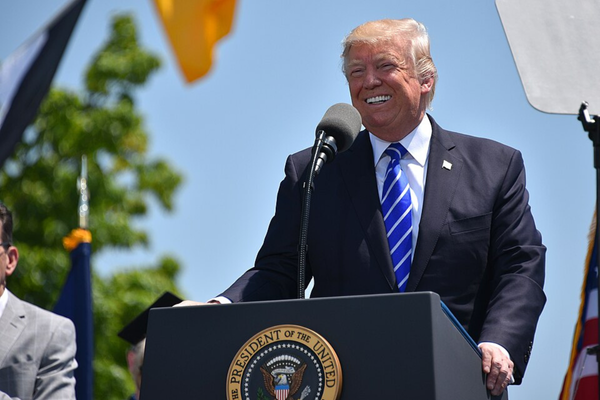
Independence would mean that Havering, which includes Romford, Upminster and Collier Row, would return to the English county to which it is a historic part.

Havering residents would get a choice to remain Londoners or rejoin Essex as a “self-governing unitary authority” if Nigel Farage were Prime Minister, Mr Rosindell said.

He told Reform UK supporters: “To change Havering’s status within Greater London and restoring our independence from City Hall will require legislation.

“So, the next Reform UK Government under Prime Minister Nigel Farage…will give Havering a choice, a choice to break free of the Mayor of London and become a self-governing unitary authority once again.”

Havering was created in 1965 under the London Government Act 1963, joining the areas of the former Romford Borough Council and Hornchurch Urban District, which were both once part of Essex.

Mr Rosindell has argued that under the Greater London Authority, Romford does not see enough policemen and police stations have closed, adding that constituents did not want to be a part of the Ultra Low Emissions Zone (ULEZ) and have opposed “planning interference” from the mayor.

What would independence mean in practice?

Mr Rosindell said that Havering’s independence would put local residents in charge of decision-making. He said: “Havering will get back control over the development of our town centre.

“We will rid ourselves of Ulez, which has been dividing up families and communities.

“Most importantly, it will ensure that policies decided for the people of this borough are made by the people of Havering. No more dictatorship from the Mayor of London or City Hall.”

But Havering Residents Association says that the situation is more murky.

A spokesperson told The Standard: “[Mr Rosindell] fails to explain to residents the devolution deal and local government reorganisation taking place in Essex, the fact Thurrock Council has an excessive budget deficit, that there are multiple housing developments taking place in Essex, that we would lose access to the MET Police, London Ambulance Service, outer London Weighting, London Travel Pass, access to top London health provision, GLA grant funding and access to successful collaborative working with London Councils.

“All this on top of still being controlled by a Mayor and still having to contribute centrally through a precept.”

The residents association does not think that independence would address Havering’s most pressing needs.

“MP Andrew Rosindell has consistently voted against Fair Funding for Havering in Parliament, and failed to maximise on the opportunities London has to offer.

“His focus should be on the best interests of Havering, and the big issues around housing, cost of living and the well-being of Havering Residents. Moving to Essex would not change those needs.”

In a statement issued to The Standard, Mr Rosindell responded: “The comments below are sadly wholly inaccurate and are frankly scaremongering from the Havering Residents Association.

“None of the things being said are true. Simply by listening to my speech, you will soon pick up that we were a unitary authority before 2000 and none of the services mentioned were lost to the people of Havering.”

Could independence actually happen?

According to Tony Travers, a professor in practice and associate dean of the LSE School of Public Policy, a London borough becoming independent could happen in theory.

“The government's in the middle of a major reorganisation of local government outside London,” he told The Standard.

“It's only a matter of time before civil servants say: ‘Oh, the London boroughs are too small.’”

However, Travers emphasised that it’s not clear what independence would look like in practice. “There'd be quite a lot of consequential knock-on issues,” he said. “It sounds easy, but it wouldn't be.”

For instance, “Would they stay inside the Metropolitan Police? Or were they going to Essex police?”

He continued: “If [Havering] moved into Essex, chances are it would then be the tiniest district in Essex.”

“So I think that then be an issue... Would it stay on its own, or would it get absorbed into the bigger Essex unitary?”

One significant consideration is that over 60s would loose their free travel in Greater London.

However, like Brexit, Tony Travers said that “Hexit” may not actually have a major impact on locals’ everyday lives.

“It wouldn't affect most people you know, in the way that Brexit... hasn't radically affected all our lives. It has affected them, but not in ways you can directly see and feel.”

Sign up to read this article
Read news from 100’s of titles, curated specifically for you.
Already a member? Sign in here
Related Stories
Top stories on inkl right now
One subscription that gives you access to news from hundreds of sites
Already a member? Sign in here
Our Picks
Fourteen days free
Download the app
One app. One membership.
100+ trusted global sources.