
Get all your news in one place.
100's of premium titles.
One app.
Start reading
The Conversation
The Conversation
Nicole Boivin, Professor, Max Planck Institute of Geoanthropology

What would an ancient Egyptian corpse have smelled like? Pine, balsam and bitumen – if you were nobility

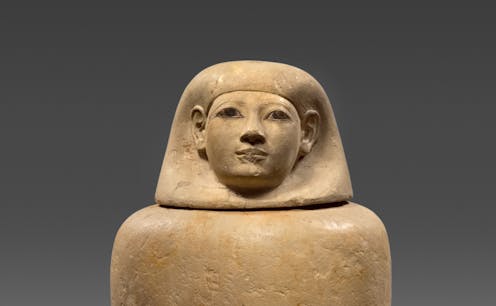
Museum August Kestner, Hannover. Photo: Christian Tepper.

In 1900 – some 22 years before he discovered the tomb of Tutankhamen – British archaeologist Howard Carter opened another tomb in the Valley of the Kings. In tomb KV42, Carter found the remains of a noblewoman called Senetnay, who died around 1450 BCE.

More than a century later, a French perfumer has recreated one of the scents used in Senetnay’s mummification. And the link between these two events is our research, published today in Scientific Reports, which delves into the ingredients of this ancient Egyptian balm recipe.

Sign up to read this article
Read news from 100's of titles, curated specifically for you.
Already a member? Sign in here
Related Stories
Top stories on inkl right now
One subscription that gives you access to news from hundreds of sites
Already a member? Sign in here
Our Picks
Fourteen days free
Download the app
One app. One membership.
100+ trusted global sources.







