-
The Fed fund futures forward curve is showing no change in rates is expected to be announced Wednesday afternoon.
-
However, the curve has shifted since last month, now projecting two rate cuts over the latter part of 2026, with only three meetings remaining.
-
The ripple effect of this could be a break in US stock indexes and a strong US dollar, the latter to battle inflation caused by the US president's Middle East War and increased domestic consumer taxes.
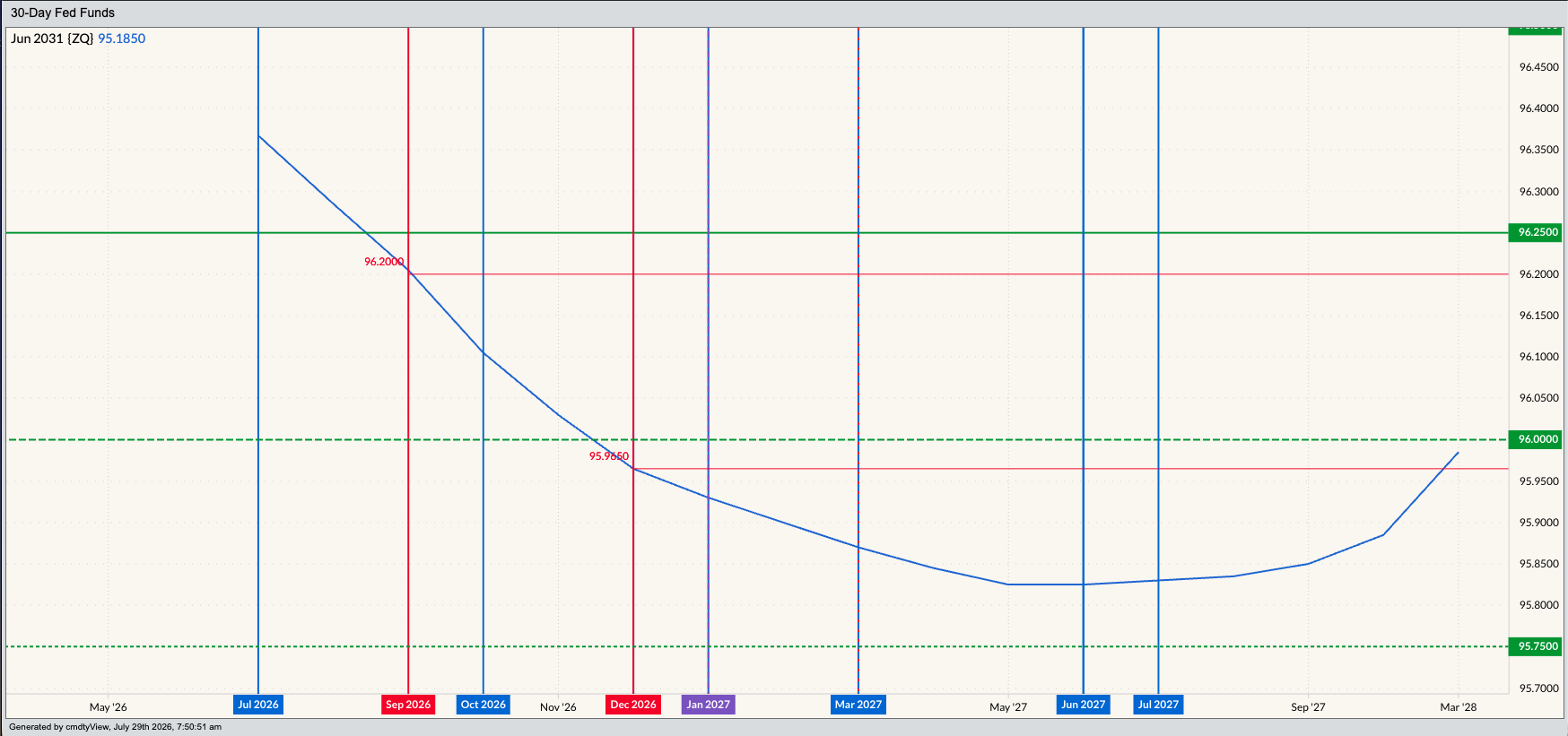
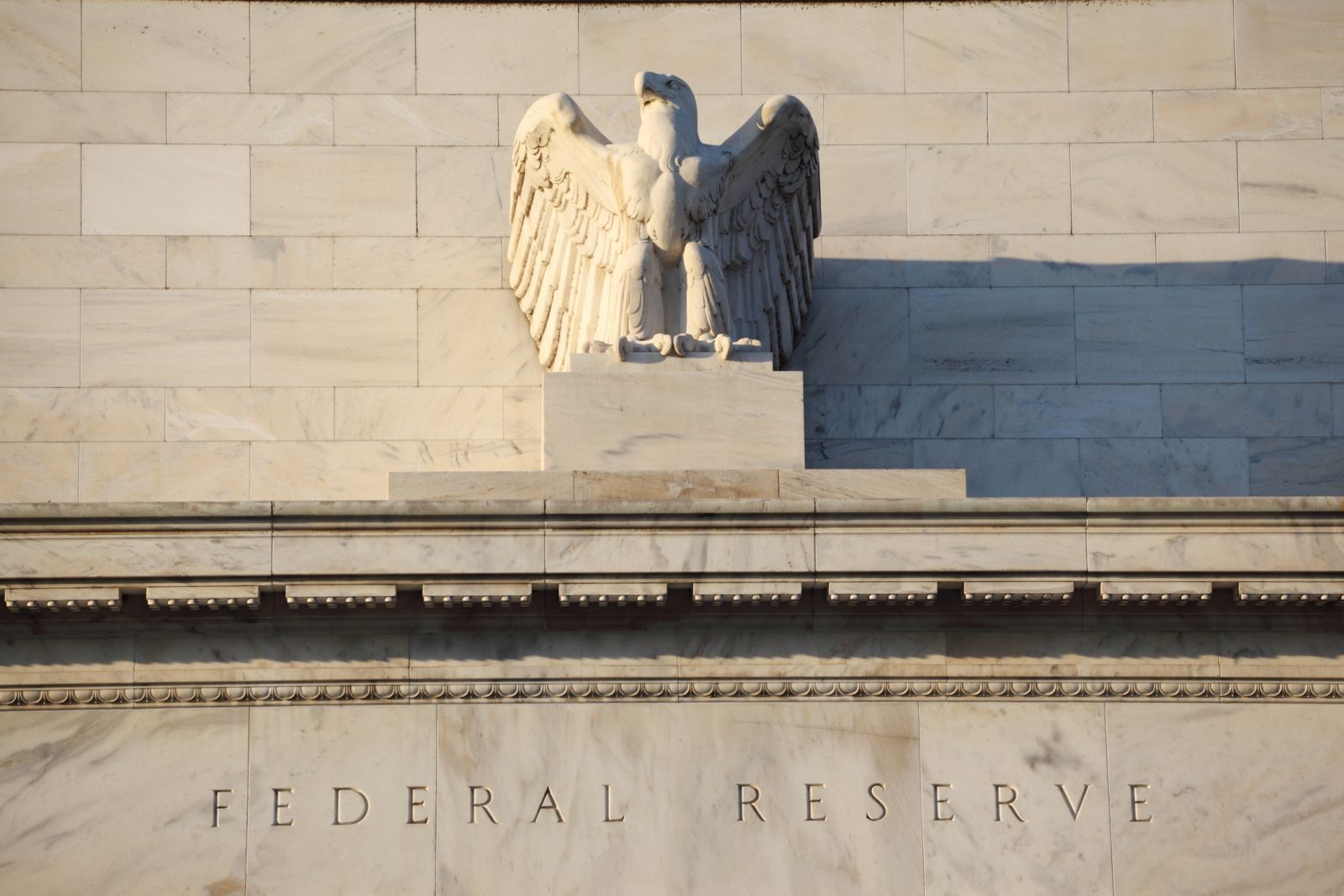
There isn’t much drama as we approach the end of the 2-day Federal Open Market Committee meeting Wednesday. Chairman Warsh is scheduled to make the Fed’s interest rate announcement at 14:00 (ET), unless he is told to make the White House announcement instead. Assuming for a moment the Fed Chairman will pretend to be independent once again, the market is anticipating no change in rates this time around. A look at the Fed fund futures market early Wednesday shows us these prices and expected rates (1% - futures price):
- July: 96.3675 = 3.6325%
- August: 96.285 = 3.715
- September (ZCU26) : 96.205 = 3.795%
- October: 91.105 = 3.895%
- November: 96.03 = 3.97%
- December (ZQZ26) : 95.965 = 4.035%
A couple things to keep in mind:
- There is no Fed meeting scheduled for August or November
- The current range of the Fed fund rate is 3.5% to 3.75%
Given the current range and futures prices, we can see the market is expecting:
- No change in rates at the conclusion of the July meeting (Wednesday, July 29)
- A 25-basis point rate hike at the conclusion of the September meeting (September 16), given the expected rate is above the high end of the current range and putting the new range between 3.75% and 4.0%
- Another 25-basis point hike at the conclusion of the December meeting (December 9).
Recall from my June FOMC piece that the Fed fund futures forward curve showed one expected rate hike during 2026, at the end of the December meeting. If we go back to late April, the last Fed meeting chaired by Jerome Powell, we see the forward curve was telling us:
- No rate change was expected through at least August 2027
- The market had no idea what was going to happen with the US president’s new puppet – I mean Fed Chairman.
What’s changed since April? Inflation, most notably in fuel and food, but also in just about any category one wants to discuss. To that we can add the latest threat of tariffs against 60 countries, as well as cheese from the moon. (I’m thinking of the old Wallace and Gromit cartoon with that one. Because if the current situation doesn’t remind you of a cartoon…Well…I don’t know.)
What could the ripple effect of two rate hikes over the latter part of 2026 be? First and foremost, it is logical to expect US stock indexes to come down. Recall from the end of June both the S&P 500 and Nasdaq completed bearish technical reversal patterns on their monthly charts. And while technical patterns don’t mean much these days, if we pretend they do, it suggests both Indices had moved into major (long-term) downtrends. Additionally, the US dollar index would be expected to firm to combat the continued inflation caused by the US president's War on Iran and increased domestic consumer taxes (aka tariffs).
However, we also know the US White House is against all of the above, and since all decisions in the US are made by one person, the situation is likely to play out differently than what markets are showing us Wednesday morning.