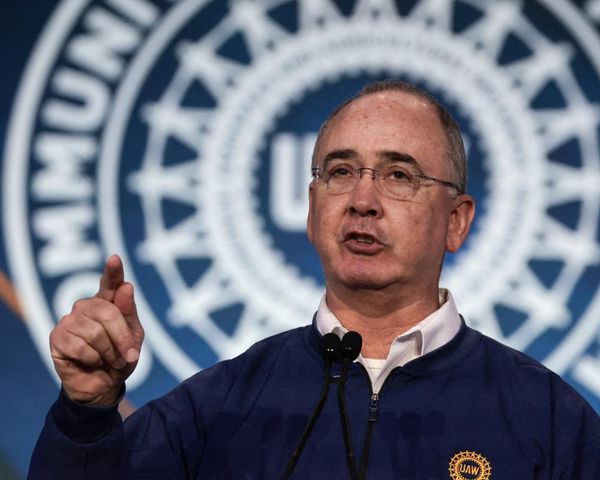
Andy Burnham is promising "the most significant change moment in our politics for 40 years".
He is vowing to deliver the “biggest devolution of power in modern times”, to undo what he sees as the damage of “four decades of neoliberalism,” and to unleash the largest council homes building programme in the post-war period.
As he prepared to meet the King to be invited to form a Government after Sir Keir Starmer’s resignation, the former Greater Manchester Mayor’s rhetoric has set sky-high expectations.
On his return from Buckingham Palace, Mr Burnham is set to deliver a speech in Downing Street setting out his domestic priorities.
But there are few details yet of how he will deliver his blueprint for Britain when confronted by the torrent of hard choices in Government.
Here are some areas where his plans could have a major impact on London:
Taxes
Mr Burnham has signalled that he may raise the £12,570 threshold for starting paying income tax to ease the cost of living for millions.
But he has also hinted taxes could go up for wealthier households, saying his Government "might be having to ask for a little more" as it seeks to plough billions more in public spending to boost Britain’s regions.
Mr Burnham has previously backed replacing council tax and stamp duty with a new property levy which could land London with an extra £7.5 billion bill.
Alternatively he could lower the threshold for paying the “mansion tax” from £2 million to £1.5 million, cut the threshold for paying the 45p top rate of income tax, increase levies on banks, or introduce a form of wealth tax.
House prices
If Mr Burnham did press ahead with a new property tax, some reports suggest it could knock 20% off house prices.
House prices have already been falling in London for months and thoughts of further drops are likely to alarm many homeowners, especially with large mortgages.
However, property prices and rents in the capital are widely seen to be exorbitant and Mr Burnham argues his plans, centred on levelling-up England’s regions, will benefit London by stopping it “overheating”.
His case is that if there is less migration to London from the regions, as their economies pick, there will be less upward pressure on housing costs in the capital, less transport overcrowding and other strains on the city.
Job cuts
Mr Burnham’s bold ambitions to devolve power to regional mayors could see tens of thousands of jobs going from Whitehall.
Peckham MP Miatta Fahnbulleh, former head of the New Economics Foundation, has suggested central Government will be “far smaller” and play a more “strategic” role in future.
It is not yet clear how Mr Burnham’s plans will impact on private sector jobs, and some bosses are nervous given the damage inflicted on businesses by Chancellor Rachel Reeves’ £20 billion hike in National Insurance contributions for employers.
Inequality
Mr Burnham has vowed to govern for the whole of the UK but with a specific focus on helping left-behind communities.
After being re-elected to Parliament, he said he would be guided on this by his “Makerfield test”, named after the seat he had just won.
London, though, has the highest unemployment in the country, at 6.6%, according to the Office for National Statistics, compared to 5% in the North West, and 2.9% in the Wigan area which includes part of the Makerfield constituency.
At the same time the capital has huge wealth in what has been slammed as “grotesque” inequality.
It is not yet clear how levelling up London’s deprived communities will be part of Mr Burnham’s plans.
Rough sleeping
Mr Burnham pledged to end rough sleeping in London and other parts of the country in his first commitment as Prime Minister.
Speaking outside No10, after being invited to form a Government by the King, Mr Burnham said: “I will soon go through that door behind me and issue my first instruction to end rough sleeping in our country.”
He announced a further £340 million as a first step to getting homes for thousands of people living on the streets.
Transport
London Mayor Sir Sadiq Khan has warned Mr Burnham not to cut investment in London as he spends billions more to boost England’s regions.
Sir Sadiq stressed: “It's crucial that the new Labour leader invests in every part of the country.
“This includes London, which is central to delivering for the rest of the country.”
Bosses in the capital have also urged Mr Burnham to back airport expansion at Heathrow, Gatwick and Luton airports, as well as the Bakerloo Line and DLR extensions.
Housing crisis
As part of of Mr Burnham’s devolution of power, Sir Sadiq is set to get more power over housing and education.
The capital could see more radical action to get more council, affordable and other homes built.
As mayor, Mr Burnham championed improving conditions for renters in Manchester, signing an open letter a few years ago to the Government calling for a freeze on private sector rents.
Thames Water scandal
Mr Burnham is being urged to nationalise Thames Water which has hugely hiked bills for millions of customers in London, racked up huge debts, and paid out big bonuses and remuneration packages to executives.
But nationalising the stricken utility may leave the taxpayer having to pick up a bill of £20 billion.
So, the new Government may decide to put Thames Water into a Special Administration Regime to keep supplies flowing while a new buyer is sought, though even that could cost £2 billion.
Heathrow third runway
Mr Burnham warned eight years ago that expanding Heathrow could “suck more activity and investment into the capital and leave the North waiting even longer for its promised Northern Powerhouse”.
Former Transport Secretary Louise Haigh and Net Zero Secretary Ed Miliband, who are both expected to play key roles in his Government, have previously stressed that a bigger Heathrow must meet climate change and air pollution tests.