
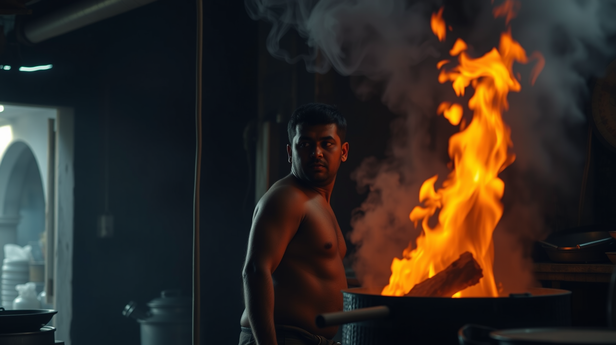
The Air Inside a Professional Kitchen Is Not Air
A halwais working a tandoor at full heat is inhaling combustion gases, particulate matter, and vaporised fat simultaneously. A dhaba cook frying on a tawa over a wood or LPG flame produces a mix of carbon monoxide, nitrogen dioxide, polycyclic aromatic hydrocarbons, and fine particulate matter, PM2.5 and smaller, that penetrates deep into lung tissue on contact. These are not trace amounts. A 2013 study published in the journal Thorax measured PM2.5 concentrations inside Indian restaurant and dhaba kitchens and found levels routinely exceeding 500 micrograms per cubic metre during peak cooking hours. The WHO's safe threshold is 15 micrograms per cubic metre for a 24-hour mean. Kitchen cooks are crossing that threshold before the lunch rush ends.