Get all your news in one place.
100’s of premium titles.
One app.
Start reading
Budget and the Bees
Budget and the Bees
Latrice Perez

What to Know About Recent FDA Alerts Involving Glucose Monitors in 2026

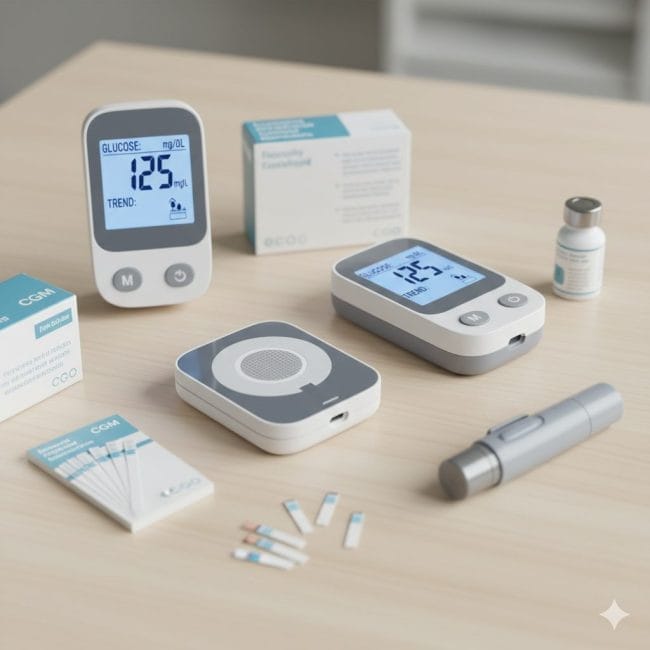
Glucose Monitors
Image source: Gemini

For millions living with diabetes, a continuous glucose monitor (CGM) is more than technology. It is a lifeline that provides safety in an unpredictable world. These devices allow you to sleep without fear and eat without complex math. However, high-level FDA alerts can vanish that sense of security instantly. False information from a monitor can lead to a serious medical emergency. This guide breaks down the 2026 recalls and alerts you must know to stay safe.

The FreeStyle Libre 3 Class I Recall

In early 2026, the FDA classified a recall of certain FreeStyle Libre 3 and Libre 3 Plus sensors as a Class I recall. This is the most serious level of warning. These sensors may provide “incorrect low” readings. Your device might report a blood sugar crash when your levels are actually stable. Treating a false “low” with unnecessary sugar can send your system into a dangerous tailspin. This issue has already been linked to 860 serious injuries and 7 deaths.

The manufacturer, Abbott, has identified the production lines responsible for these faulty sensors. Only a small percentage of units are affected, but you should not wait to act. Visit the Abbott verification portal and enter your serial number immediately. A three-minute check could prevent a hospital visit. If your device is flagged, dispose of it right away. Follow your health care team’s advice on switching to backup finger-stick monitoring until a safe replacement arrives.

The E-5 Error Code and Your Safety

Wearable monitors are not the only devices under scrutiny this year. The FDA has also raised concerns about how some blood glucose meters use error codes to signal dangerous readings. This includes certain TRUE METRIX models where an “E-5” code may indicate very high glucose levels. Users may not always recognize that a cryptic code indicates a medical crisis. People often try to re-test instead of seeking help, losing precious minutes while their body is in distress.

This alert highlights a gap between medical technology and user experience. A critical health warning should be easy to understand. If your meter shows an E-5 code and you feel unwell, do not just keep re-testing. Contact a health professional or emergency services immediately. Your symptoms matter more than a digital display. Talk to your doctor about what your specific meter’s error codes mean before an emergency occurs.

Building a Tech-Resilient Health Plan

These recalls prove that we cannot “set and forget” our medical technology. Alongside your health care team, you must act as the final quality control for your own care. Always keep a manual backup kit ready. This kit should include a lancing device, fresh strips, and a standard meter. Many people rely so heavily on CGMs that they let their manual supplies expire. Do not let a device issue cause you to lose control of your health.

The recent FDA alerts are a wake-up call for the entire industry. While monitors have revolutionized diabetes care, they still face manufacturing and technical risks. Verifying your devices puts the power back into your hands. You deserve reliable technology, but your vigilance is currently your best tool. Check your serial numbers tonight to ensure your equipment is safe.

Has your glucose monitor ever given you a reading that you knew was wrong? Your story could help another reader stay alert. Share your experience in the comments below!

What To Read Next….

The post What to Know About Recent FDA Alerts Involving Glucose Monitors in 2026 appeared first on Budget and the Bees.

Sign up to read this article
Read news from 100’s of titles, curated specifically for you.
Already a member? Sign in here
Related Stories
Top stories on inkl right now
Our Picks
Fourteen days free
Download the app
One app. One membership.
100+ trusted global sources.