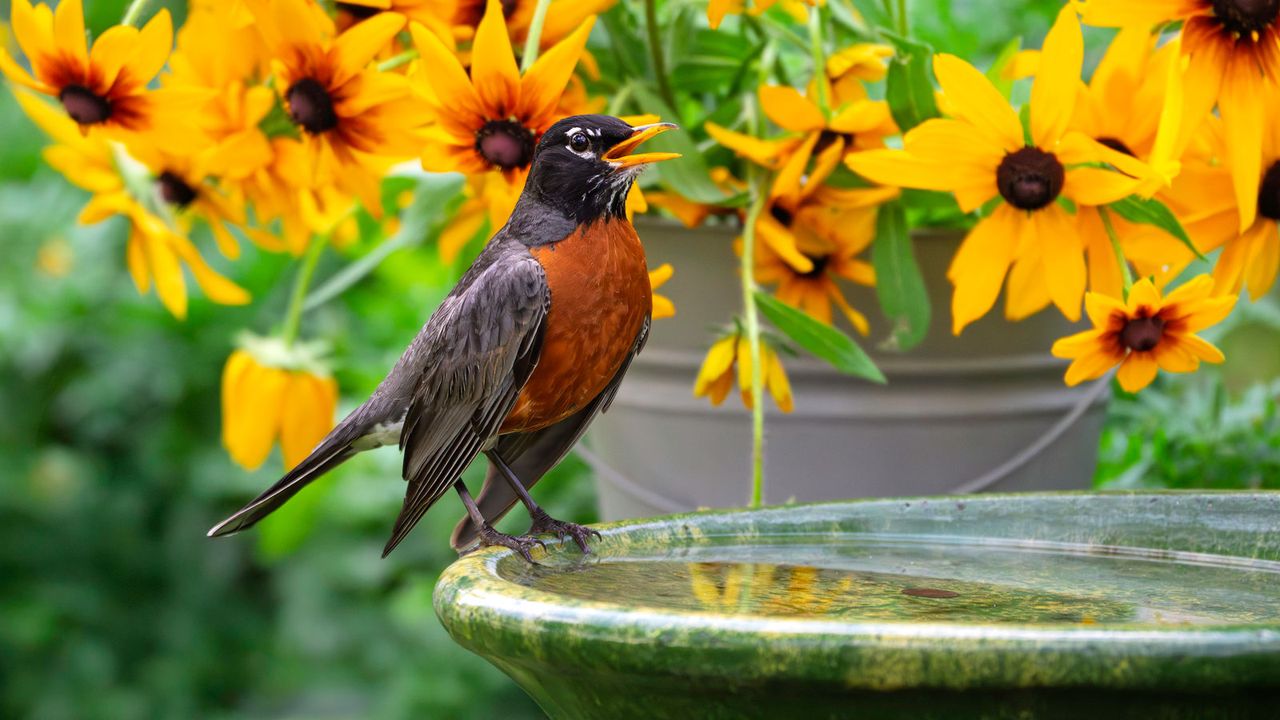
Visiting birds make life in the summer garden one of life's great joys. And access to clean water for drinking and bathing is one of the key ways you can look out for them. By late summer, this means regularly checking bird feeders, birdbaths and water features to ensure they are clean and safe for birds and other wildlife to use.
It's also important to avoid too much pruning of trees and shrubs around feeders and birdbaths in August, as you may disturb visitors. Plus, these plants for birds provide a shady retreat for wildlife on hot days, and often additional food sources.

We've rounded up expert tips and the best products to help keep on top of cleaning bird feeders and birdbaths, to make sure your feathered garden visitors are safe and happy. (A long, flexible bottle brush, such as great this Amazon find is your best friend, by the way.)
3 Important Ways To Help Birds In August
'Once you create a garden that welcomes wildlife, you quickly realize that maintaining their water and feeding stations is another part of caring for the garden,' says wildlife expert Siobhan Shaw. 'Over time, my garden has developed its own special little ecosystem. It has become home to a myriad of birds and insects, and we even have a family of praying mantises living here.
'Late summer is an especially important time to pay attention because extreme heat can make water disappear quickly, and cause algae and grime to build up faster. Clean water stations aren’t simply decorative additions to the garden. They can become important resources for the wildlife that has made your garden its home.'
For Siobhan, wildlife gardening isn’t about putting out a birdbath or feeder and walking away. Once the birds, bees, insects and other creatures begin using the garden, they’ve become part of its community.
Keeping their water and feeding stations clean is simply part of being a good garden steward. Now find out how you can help birds in August in your own garden.
1. Clean Bird Feeders Once A Week
If birds love to visit your garden feeders but you don't clean them regularly they can soon become hotspots for disease, especially in extreme heat conditions. It’s vital to keep on top of cleaning feeders to help birds stay healthy, so you should clean your bird feeders at least once a week.
It's a crucial part of feeding garden birds to get right, especially during the heat of summer when bird food spoils faster. 'Make sure feeders are clean and safe,' says bird expert Monika Sangar, author of The Science of Avian Nutrition, available from Amazon. 'If you need to wash the feeders, make sure you don't use any products, just water. They need to be completely dry before refilling too as moisture can cause seeds to grow mold.'
Always keep bird food as dry as possible by choosing feeders that prevent rain getting in.
Clean away any old food or droppings that may have accumulated beneath feeders too as these can attract rodents. It's also a good idea to move your feeders around regularly to prevent unpleasant build-up beneath them. If you have several feeders position them in different places in the garden to avoid debris piling up.
What to Shop

This bird feeder cleaning set includes 19 flexible nylon brushes in different sizes, with various lengths and thicknesses to make scubbing those hard to reach corners easier.

The durable, sloped roof is designed to shield the seed compartment from rain, ensuring the birdseed stays dry and fresh for a safe, healthy feeding environment.

A long bottle brush such as this one will make it a lot easier to reach the ends and corners of bird feeders, and its durable handle makes it easy to grip.
2. Keep Bird Baths and Water Stations Clean
Another key part of helping birds in summer is keeping bird baths and water stations clean. By late summer, they can develop a significant buildup of algae and grime. Resist the temptation to simply top up the water when it gets low. Instead empty them out, clean and refill with fresh water.
'Birds can quickly make clean water dirty by bringing in dirt, droppings, food, and feathers,' says Monika. 'And in late summer, when the weather is still warm, old water can produce algae, and attract mosquitoes, bees, and other wildlife, which increases the rate at which the water gets dirty.' Mosquitoes reproduce quickly in even the smallest amounts of water.
Monika advises changing the water in bird baths every day (or at least checking them every day) to make sure it's safe and clean. 'My approach is simple: empty it, clean it, rinse it and refill it regularly. In extreme heat, I keep an especially close eye on anything holding water and clean it whenever it needs it rather than waiting for a particular day of the week.'
'I use soap and vinegar along with a good bristle brush to remove the build-up, followed by a thorough rinse before adding fresh water,' says Siobhan. 'A sturdy brush makes it much easier to get into the corners to remove algae and grime off the surfaces.'
As well as drinking birds love to bathe. 'Watching them splash around, wash up and then ruffle and shake their feathers under the water is one of the joys of having a wildlife-friendly garden,' says Siobhan.
If you don't have one already try making a bird bath by simply repurposing everyday household objects, or go big by creating a wildlife pond for garden birds to enjoy.
What to Shop

The kit includes three brushes specifically designed for effortless bird bath cleaning: a stiff-bristle brush, a 304 stainless steel wire brush and a soft-bristle brush.

This EcoCycle bird feeder and bath is a sustainable choice, made to last with insect and rot resistant recycled plastic. The perforated seed tray base keeps seed fresher.

This simple copper disc idea keeps bird baths clean and fresh, thereby reducing the need for frequent scrubbing by helping to maintain cleaner water in bird baths.
3. Clean Out Fountains And Water Features Regularly
If you have a garden fountain or other water feature in your garden the birds will flock to it to cool down, so one of the key ways to help birds in August is keeping an eye on the water quality. As well as birds, water features are a major attraction for insects and other wildlife, and also quickly fill with plant debris as the growing season shifts towards fall, and plants start to fade, and shed their leaves and seeds.
If algae and debris aren't removed quickly this can play havoc with your fountain’s ecosystem, as the water can quickly get stagnant in hot weather, especially as evaporation speeds up and water levels drop.
'Small fountains need the same treatment as bird baths,' says Monika. 'Leaves, dirt, and feathers build up, and wild animals can bring food into the fountains, which can make the water dirty.
'You don't need a lot of equipment to get the job done, a nice scrub brush or sponge, gloves, and plenty of clean water. You don't need to use any cleaning products. The brush or sponge should be able to remove all debris and algae.'
Try these heavy duty reusable latex gloves from Target and a water fountain cleaner like this wildlife-safe maintenance cleaner from Amazon
If you have a particularly bad algae problem, try using a mixture of one part water to one part white vinegar to spray the area. Tackle any resistant algae with neat white vinegar and a small brush, removing as much as you can. This should sort out the algae problem but isn't harmful to birds and other wildlife. Rinse down thoroughly with a hose to remove any residue left on the surface of the fountain before refilling it.
These are the main considerations for how to help birds in August and keep your garden visitors safe and happy.
There are lots of ways to help birds in a heatwave as well as other ways to help garden birds in summer.
If you love inspiring garden ideas, outdoor advice, and the latest news, why not sign up for our newsletter and get the latest features delivered straight to your inbox?