
Get all your news in one place.
100's of premium titles.
One app.
Start reading
Ideal Home
Ideal Home
Holly Reaney

What to do with an orchid in April – the essential task you must do now to keep yours flowering again and again

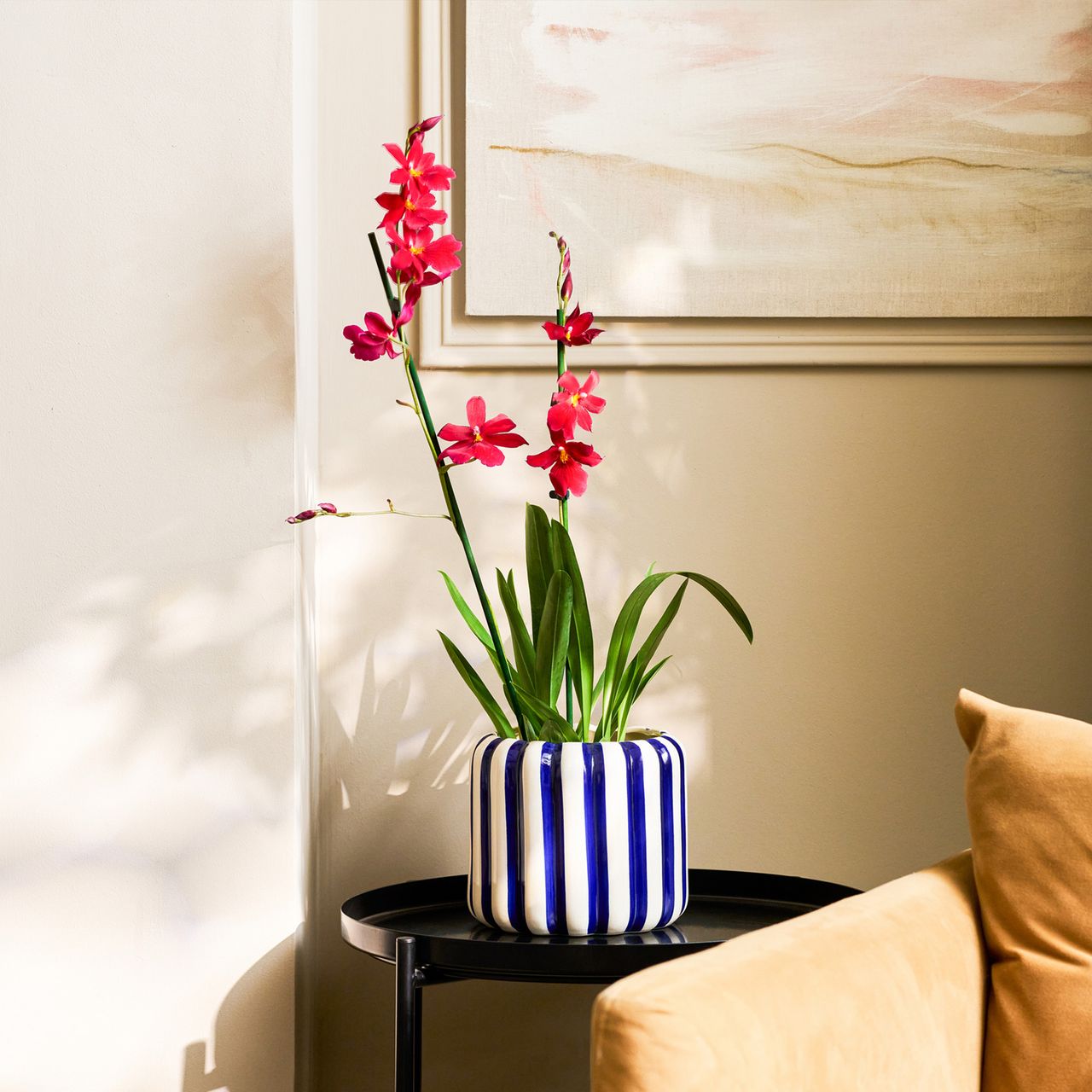
Orchid with pink blooms in a blue and white striped pot in a neutral modern living room patch plants.

Knowing what to do with orchids in April can make a huge difference in their performance throughout the rest of the year.

Caring for an orchid includes everything from watering and fertilising to repotting and pruning; however, in April, feeding takes priority. Starting a fertilising regime in April will ensure that the plant has all the nutrients it requires as it begins to grow and produce blooms.

'Orchids have a bad rap; they are often thought of as hard to care for, but actually they are pretty resilient plants that can flower time and time again,' says The Little Botanical co-founder, Morag Hill.

1. Give the orchid a health check

(Image credit: Getty Images)

The first thing to do with orchids in April is to give the plant a health check. A houseplant MOT will set them up for the year ahead. This is also important to do when you first buy an orchid, like these from Crocus.

'Look for signs of pest infestations and remove any damaged leaves or old sheaths. Most species should not be in bloom, so prune the stem that previously had blooms on it back to the node,' says Angharad James, Brand Manager at Baby Bio. Just remember to sharpen your secateurs and clean your garden tools before doing this.

When assessing your orchid, take a look at the roots. If you can see overcrowding, with tight tangles or white roots growing out of the container, then it might also be time to repot your orchid.

'You can repot your orchid at any time of year, but spring is an especially good time, as you should start to see green root tips and hopefully the new shoots of flowering stems. You should ideally repot your orchid every two years (to maintain the structure of its potting medium),' says Kelly Dyer, plant doctor at Patch Plants.

2. Start feeding your orchid

(Image credit: Patch Plants)

'April marks the start of the orchid’s active growing season, so regular feeding becomes important,' says Asta Foufas, head florist at Arena Flowers.

'Choosing the best orchid fertiliser comes down to a few key things: balanced nutrients (NPK), gentle formulation (low/urea-free nitrogen), and matching the growth stage (growth vs flowering). Orchids are sensitive, so lighter, specialised feeds are always better than strong general fertilisers.'

Angharad James from Baby Bio seconds this. 'April is the ideal time to begin feeding regularly to ensure its soil is enriched with all of the nutrients your orchid needs to grow stronger roots, brighter blooms and more luscious leaves. We recommend using an orchid feed like Baby Bio Orchid Food with every watering for the brightest blooms.'

However, when feeding, be careful not to overfeed your orchid. 'This kills more orchids than underfeeding,' adds Asta. Following the instructions on your specific feed is essential.

Shop for houseplant feed

3. Resume regular watering of your orchid

(Image credit: Patch Plants)

Alongside increasing feeding your orchid in April, you also need to resume a regular watering schedule for your orchid. However, it's important to remember that less is more.

'Orchids need far less water than people think,' says Morag Hill, co-founder of Little Botanical. 'Every 2 weeks, an egg cup full of water is usually plenty. Look at the roots, silvery-grey is usually a sign your orchid is ready for watering, while green roots mean it’s nicely hydrated.'

'You're aiming for consistently moist. Too wet and the roots will rot, too dry and the roots will shrivel up. They hate hard water and won't enjoy the chemicals in tap water, so it's best, where possible, to use rain or filtered water. Orchids also hate cold water, so room temperature water is best,' advises Kelly Dyer, plant doctor at Patch Plants.

Strategies for watering an orchid vary – so it is worth taking the time to find out which works best for you. Kelly recommends 'Submerging the nursery pot in water up to where the leaves start, waiting for any air bubbles to escape to the top of the pot. You then want to let it drain freely before popping it back in its decorative pot.'

Alternatively, if you often overwater your orchids, investing in a self-watering orchid pot, like this Orchidea pot from Amazon, is an ideal solution.

If you give your orchids the right care in April they should reward you with glorious blooms that keep coming back.

Sign up to read this article
Read news from 100's of titles, curated specifically for you.
Already a member? Sign in here
Related Stories
Top stories on inkl right now
One subscription that gives you access to news from hundreds of sites
Already a member? Sign in here
Our Picks
Fourteen days free
Download the app
One app. One membership.
100+ trusted global sources.