
Get all your news in one place.
100's of premium titles.
One app.
Start reading
Homes & Gardens
Homes & Gardens
Ellen Wells

What to Do With Agapanthus in July – 6 Expert Tips For Longer Lasting Summer Blooms

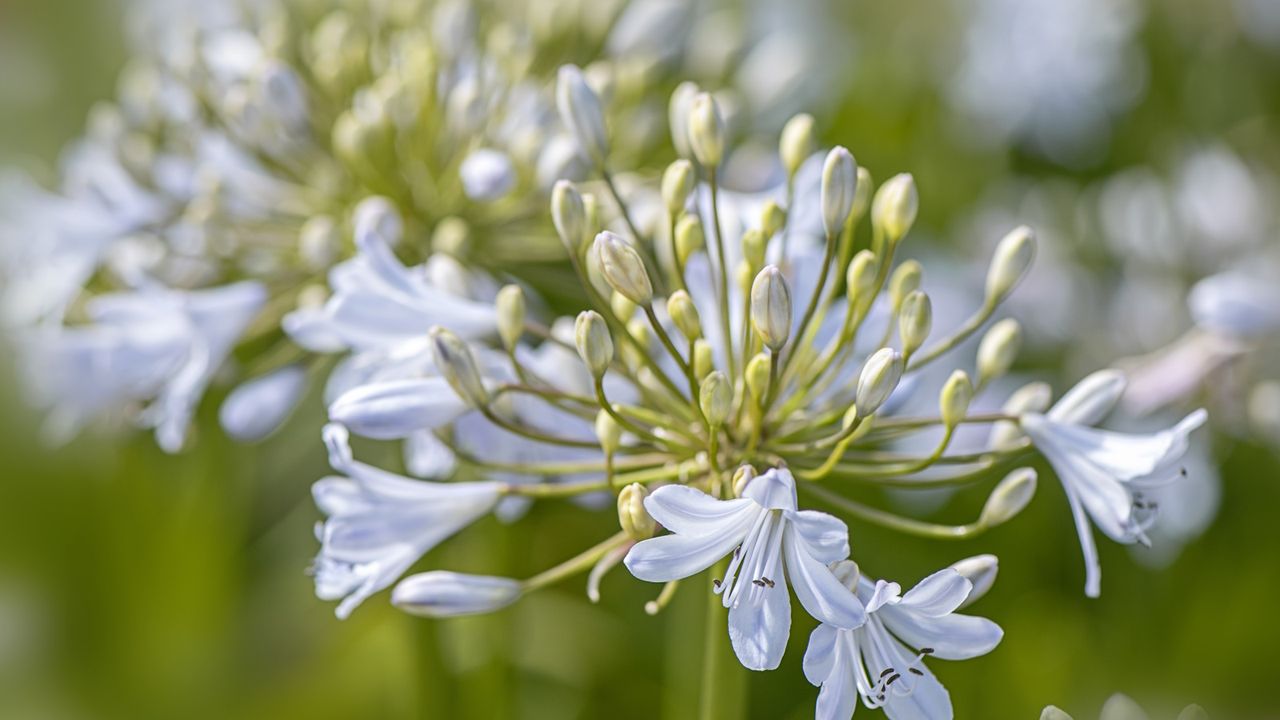
Pale lilac agapanthus bloom.

Agapanthus is at its best in July and August. The tall flower stems of this beautiful summer-blooming relative of the amaryllis rise above strappy green foliage and open into rounded clusters of trumpet-shaped blooms. July is the perfect time to keep these plants looking their best, and to make sure they have everything they need to continue performing well through the rest of the season.

Although agapanthus is generally considered an easy-care perennial in USDA Zones 8-11, a little midsummer care can make a difference to flowering and overall plant health. The key is to avoid overdoing it. Too much fertilizer, too little sunlight, poor drainage, and inconsistent watering can all affect how well these sun-loving plants perform.

Whether you're growing agapanthus in a flower border or as a container plant, July is mainly about maintaining good growing conditions, removing spent blooms, and keeping an eye out for problems. Here we share six expert tips on how to grow agapanthus and keep them looking their best for as long as the summer allows. And in case you're planning on adding more of these low-water beauties to your yard, my top pick are the bi-color 'Ever Twilight'™ Agapanthus from Fast Growing Trees.

1. Don't Overfeed Agapanthus in July

(Image credit: iBulb)

If your agapanthus is already growing strongly and flowering well, there is generally no need to give it a heavy dose of fertilizer in midsummer. In fact, applying too much fertilizer, particularly one high in nitrogen, may lead to lots of leafy growth at the expense of the flowers.

‘Agapanthus generally does not need heavy feeding in midsummer,’ said Linda Vater, garden expert for Southern Living® Plant Collection. ‘If it is already thriving, avoid pushing it with excessive fertilizer, particularly one high in nitrogen, which can encourage foliage at the expense of flowers.’

For container-grown agapanthus, Vater recommends planning ahead rather than trying to compensate for missed feeding with a heavy midsummer application.

‘For container-grown agapanthus, a light application of balanced, slow-release fertilizer in spring supports growth and flowering throughout the season. Always follow the fertilizer label instructions.’ A product such as Proven Winners’ Premium Continuous Release Plant Food available at Home Depot incorporated at time of planting your agapanthus will keep your plants performing all season long.

Linda also advises that if you didn't feed your container agapanthus plants in spring, resist the temptation to overfertilize them now. Check the fertilizer label and the needs of your particular agapanthus variety before applying additional nutrients. A plant that is struggling to flower may not need more food at all.

2. Deadhead Faded Flowers to Keep Agapanthus Flowering

(Image credit: Alamy/GKSFlorapics)

Once the flower heads begin to fade July, begin trim off, or deadhead, spent blooms. Removing dead flowers keeps plants looking neat and can help direct the plant's energy toward continued flowering.

Deadhead agapanthus once the flowers begin to fade by cutting the flower stalk back to the base of the plant,’ Vater suggests. ‘Removing spent flower heads can help keep the plant looking tidy and continue directing energy to flowering.’

Cut the entire flower stalk down as close to the base of the plant as possible, taking care not to damage the surrounding leaves. Continue checking plants regularly throughout summer and remove fading flower stems as necessary.

Depending on the variety, agapanthus flower stems can reach 2–4 feet tall and may occasionally need a little support if heavy blooms or summer rain cause the stems to flop. Plant supports such as these Metal Plant Props available at Lowe’s can help keep flower stems upright without detracting from the display.

Deadheading isn't essential for every agapanthus to keep flowering, however. Some newer varieties have been selected for repeat flowering. Linda highlights Ever Twilight™ Agapanthus as one example, noting that it ‘blooms early and reblooms from spring to fall without the need for deadheading.’

3. Water Agapanthus Consistently, But Don’t Leave Wet

(Image credit: Getty Images/Jacky Parker Photography)

Agapanthus is often described as drought-tolerant once established, but that doesn't mean it should be left completely dry during the growing season if you want the best flowering performance.

‘Agapanthus prefers well-drained soil and consistent moisture while actively growing,’ Vater says, ‘but it does not like to remain wet.’

She explains that an agapanthus newly planted in beds needs regular watering while it establishes its roots. Once established, agapanthus plants are generally better able to cope with periods of dry weather, although consistent moisture during active growth can help support flowering.

The goal is to water deeply when plants need it, then allow the soil to dry out somewhat before watering again. Poor drainage is a bigger concern than occasional dryness, as constantly wet soil can stress plants and potentially lead to root problems.

Container-grown agapanthus needs closer attention in July. Pots and containers dry out much more quickly than garden soil, particularly during hot weather.

‘Plants growing in containers usually need to be watered more often since pots dry out quickly, especially when it’s hot. Let the soil dry out a bit before watering again, and ensure that the container has good drainage,’ Vater says. Wayfair has a wide selection of decorative self-watering containers, that will both keep your agapanthus well-hydrated and looking fabulous on a patio.

Check the moisture level of container plants regularly rather than relying on a fixed watering schedule. A container that feels dry may need watering, while one that is still damp can wait. A well-draining yet moisture retentive potting soil such as Miracle-Gro’s Moisture Control Potting Mix available at Ace Hardware can go a long way in keeping your potted agapanthus from drying down too quickly.

4. Give Agapanthus Plenty of Sunlight

(Image credit: Clive Nichols)

‘The best way to support continuous flowering is to provide plenty of sunlight, well-drained soil, and consistent moisture during active growth,’ Vater recommends.

If an established plant is producing lots of healthy leaves but few flowers, Vater suggests taking a look at its position. Too much shade is one of the first things to consider.

Agapanthus generally flowers best when it receives plenty of sun, so a plant that has become shaded by nearby shrubs or trees may struggle to bloom as well as it once did.

5. Watch for Slugs and Snails

(Image credit: Getty Images/Tereshchenko)

Agapanthus is generally trouble-free, but it isn't completely immune to garden pests. According to Linda, snails and slugs can sometimes feed on the leaves.

‘Agapanthus typically does not have major pest issues, but sometimes snails and slugs will eat the leaves, especially when it is damp,’ she says. ‘Keeping the soil well-drained and making sure there is good air flow can help avoid most problems.’

Inspect plants regularly, particularly after wet weather. Look for characteristic holes or ragged damage to the leaves. Good growing conditions can help reduce the likelihood of problems, and keeping the area around plants tidy can make it easier to spot pests.

Agapanthus is also generally considered unappealing to deer and rabbits, making it a valuable choice for gardens near the habitat of these browsing mammals.

‘Deer and rabbits typically avoid agapanthus due to its thick leaves,’ Vater explains. ‘However, their feeding habits may vary by region and available food sources. When food is scarce, they may eat almost any plant.’

So, while agapanthus is not usually at the top of the menu for deer and rabbits, no plant should be considered completely deer- or rabbit-proof.

6. Don't Rush to Divide if Overcrowded

(Image credit: Getty Images/Jacky Parker Photography)

Agapanthus can form large clumps over time, and container-grown plants in particular may eventually become too crowded. But there's no need to divide a plant simply because it has filled its pot.

‘When grown in containers, agapanthus may eventually become crowded as the clump expands,’ Vater says. ‘This isn’t necessarily a problem because agapanthus can tolerate being somewhat root-bound, but if the plant becomes excessively crowded or flowering declines, it can be divided when appropriate.’

If your agapanthus is flowering well, there is generally no reason to disturb it in July simply because the roots have filled the container. If flowering has declined and the plant has become restricted within the pot, division may be worth considering. Of course, the time to divide can depend on the variety and your local growing conditions.

For July, Vater suggests assessing your agapanthus’s situation and plan ahead. Keep overcrowded specimens on your radar and check the care recommendations for your particular variety before dividing. That way, you can choose the most appropriate time to tackle the job.

What to Shop

With plenty of sunshine, good drainage, sensible watering and regular removal of spent flower stems, your agapanthus should continue to provide a beautiful display for the rest of the season. The best July care is often less about doing more and more about getting the basics right.

Of course, after all this attention to peak performance during the summer, you’ll want to be sure you winterize your agapanthus well for continued blooms next year, regardless or your USDA zone.

If you love inspiring garden ideas, outdoor advice, and the latest news, why not sign up for our newsletter and get the latest features delivered straight to your inbox?

Bloom Booster White Agapanthus Fiskars Micro-Tip Snips
Sign up to read this article
Read news from 100's of titles, curated specifically for you.
Already a member? Sign in here
Related Stories
Top stories on inkl right now
One subscription that gives you access to news from hundreds of sites
Already a member? Sign in here
Our Picks
Fourteen days free
Download the app
One app. One membership.
100+ trusted global sources.