Get all your news in one place.
100's of premium titles.
One app.
Start reading
The Conversation
The Conversation
Aimee Drane, Senior Lecturer and Clinical Academic in Faculty of Medicine, Health & Life Sciences, Swansea University

What the unique shape of the human heart tells us about our evolution

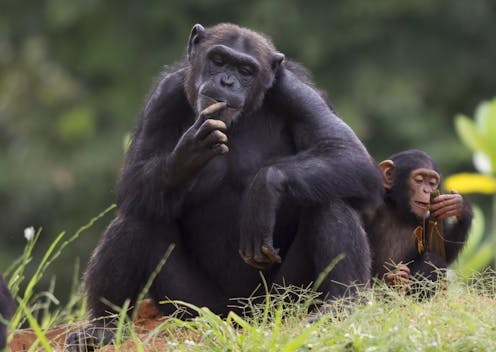
Human hearts differ from those belonging to our closest relatives like the chimpanzee. anek.soowannaphoom/Shutterstock

Mammals, from the mighty blue whale to the tiny shrew, inhabit nearly every corner of our planet. Their remarkable adaptability to different environments has long fascinated scientists, with each species developing unique traits to survive and thrive.

Despite such vast biological diversity, it was believed until recently that the structure and function of the heart across mammals was the same. But research from my colleagues and I reveals that the human heart is an outlier, distinctly different from those of our closest relatives, the great apes, including chimpanzees, bonobos, orangutans and gorillas.

Sign up to read this article
Read news from 100's of titles, curated specifically for you.
Already a member? Sign in here
Related Stories
Top stories on inkl right now
One subscription that gives you access to news from hundreds of sites
Already a member? Sign in here
Our Picks
Fourteen days free
Download the app
One app. One membership.
100+ trusted global sources.