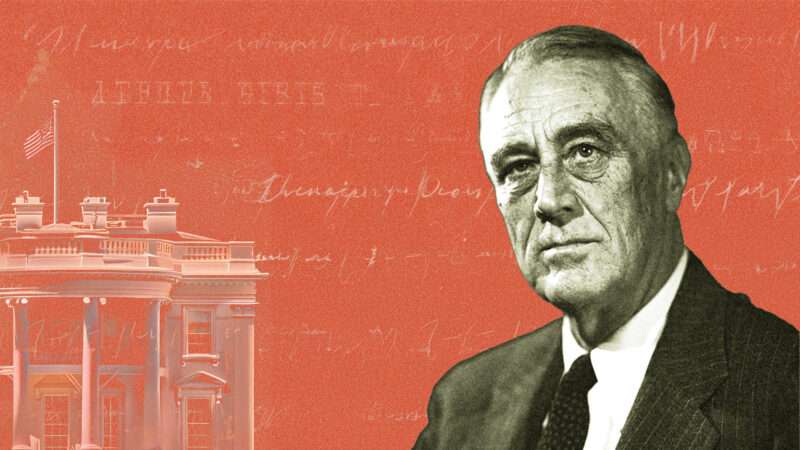
The basic facts of the U.S. Supreme Court's 1944 decision in Korematsu v. United States, which upheld President Franklin Roosevelt's wartime internment of Japanese-Americans, are well-known but still worth a sketch. That is because the case serves as an all-too-timely warning about how judicial deference to executive power has warped American law.
On February 12, 1942, Roosevelt issued Executive Order 9066, which authorized the forced removal of Japanese-Americans from their homes and communities on the West Coast "by virtue of the authority vested in me as President of the United States, and Commander in Chief of the Army and Navy." Fred Korematsu, a U.S. citizen of Japanese descent, argued that Roosevelt's actions violated his constitutional rights. But the Supreme Court took a different view, ruling 6–3 that the forced removal and internment of Japanese-Americans was a perfectly lawful exercise of the president's powers.