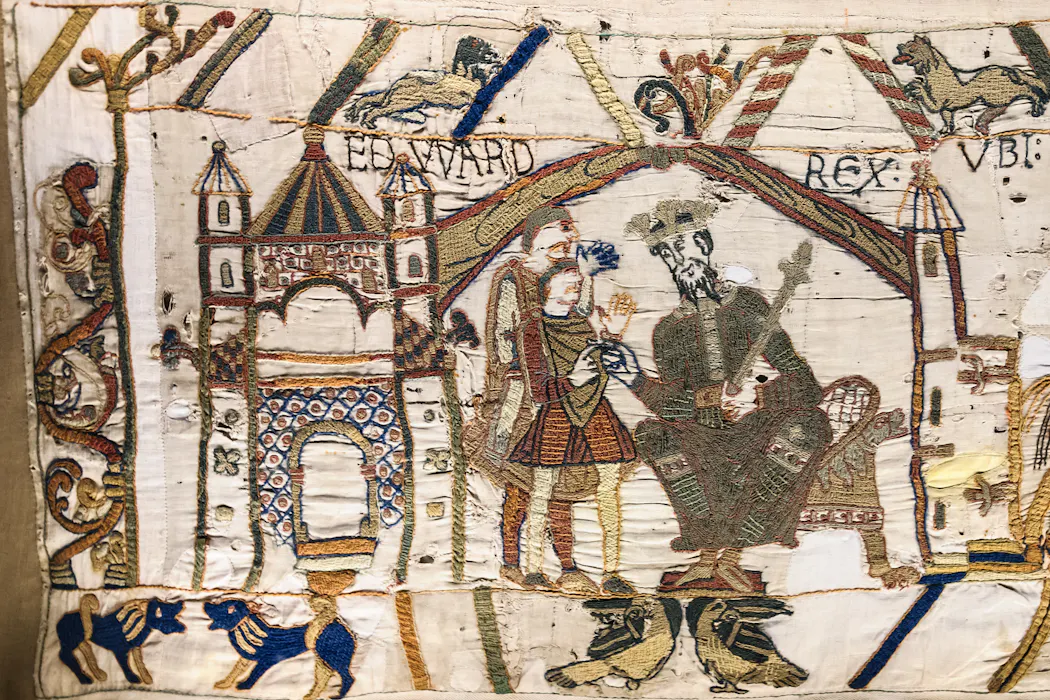
For many, the Bayeux tapestry conjures up images of clinker-built ships, prancing horses, the Normans feasting on chicken on the eve of the battle of Hastings, and the arrow in King Harold’s eye that ended centuries of Anglo-Saxon rule.
But for the architectural historian, it is the 33 buildings represented on the Bayeux embroidery that catch the eye. These buildings range from palaces and religious buildings to two-storeyed houses and simple dwellings. They give the beholder some idea of what the 11th-century built environment looked like on either side of the Channel, even though the representations are formulaic, general impressions – as was the normal way to depict buildings in the era.