
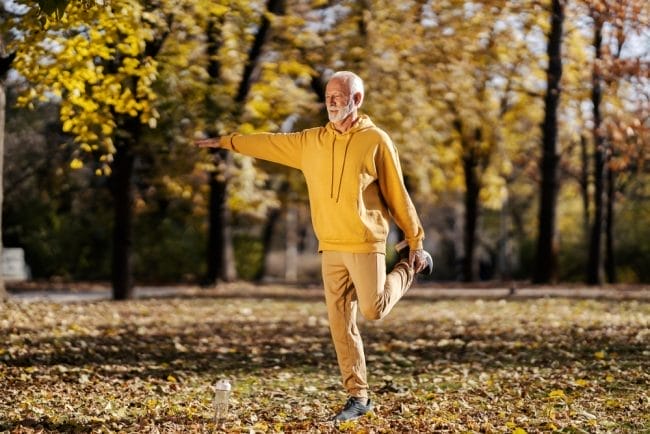
Walking through your home with confidence is something you probably take for granted until you feel that first, brief moment of unsteadiness. You might brush it off as being tired or having a stiff knee, but your body is trying to tell you something important. It is not your fault that the aging process affects your equilibrium, but the system of your health depends on how you respond to these signals. Recent research has uncovered a simple, ten-second test that can reveal more about your long-term health than many expensive hospital screenings. Honestly, your ability to stand on one leg might be the best predictor of your future vitality. Let us reveal what the science says and how you can use this knowledge to stay independent for years to come.
The Surprising Science of Longevity
A major study published in the British Journal of Sports Medicine found that a person’s ability to balance on one leg for ten seconds is a powerful predictor of death risk. For adults in middle to later life, failing this simple test was associated with a nearly doubled risk of premature death over the next decade. Surprisingly, this correlation held true even after researchers accounted for age, weight, and existing health conditions like heart disease. This hidden system of balance is a reflection of your overall neurological and muscular health. You can read the Harvard Health analysis of the study here. It is a wake-up call for anyone who thinks balance is just about avoiding a fall.
Why Balance is the Great Health Filter
Balance is a complex task that requires your brain, eyes, ears, and muscles to work in perfect synchronization at all times. When one of these systems starts to fail, your balance is often the first thing to show the strain. This is why the 10-second balance test is such an effective screening tool; it tests the entire chain of your physical health in a single move. On the other hand, standard health screenings often focus on individual organs rather than the integrated function of the whole body. By paying attention to your balance today, you are getting an early warning sign that something in your system needs your attention. It is an empowering piece of data that you can collect for free in your own hallway.
The Dangerous Reality of the Falling Risk
Falls are the leading cause of injury-related death for adults over 65, and they often begin with a subtle loss of balance that goes unaddressed. A single fall can lead to a cascade of health issues, including fractures, a loss of mobility, and a decrease in social engagement. The 10-second balance test helps identify those at high risk before the first accident even happens. Honestly, the system counts on you not noticing your decline until you are already in the emergency room. By testing yourself regularly, you can intervene with physical therapy or balance exercises long before a fall occurs. You have the power to stay on your feet and stay in control of your life. Check more research on balance and mortality here.
How to Perform the Test Correctly at Home
The test used in the research is simple: stand barefoot on a flat surface with your arms at your side and your gaze fixed forward. Lift one foot and tuck it behind the calf of your standing leg, then try to hold that position for ten seconds. You are given three attempts to reach the mark on either leg. Surprisingly, the research showed that the ability to complete this test drops off rapidly after age 60, with only about half of those in their early 70s being able to pass. On the other hand, if you can pass, it is a strong sign that your biological age may be younger than your chronological age. Always perform this test near a wall or a sturdy piece of furniture to catch yourself if you wobble. Safety is the first priority during your self-assessment.
Reclaiming Your Balance and Your Independence
The best part of this discovery is that balance is a skill that can be improved at almost any age with consistent practice. You can use this knowledge to build a targeted exercise routine that focuses on leg strength and core stability. It is an empowering move to take charge of your longevity through simple, daily habits like standing on one leg while you brush your teeth. Validating your physical health through these tests allows you to live with less fear and more confidence in your body. Do not let the aging process steal your mobility without a fight. You have the strength and the facts to stay independent and active for as long as possible. The future of your health is literally in your own hands and on your own feet. Stay vigilant and stay balanced.
Have you tried the 10-second balance test yet? Leave a comment below and tell us how you did!
What to Read Next…
- Georgia HB 1019: New Senior Stabilization Act Proposes 10% Rent Cap for Residents 62+
- Seniors: Stop Using Your Debit Card at These Places — Fraud Is Exploding
- 7 Silent Symptoms of Heart Failure Most Seniors Ignore
The post What the 10-Second Balance Test Can Reveal About Senior Health, According to Research appeared first on Budget and the Bees.