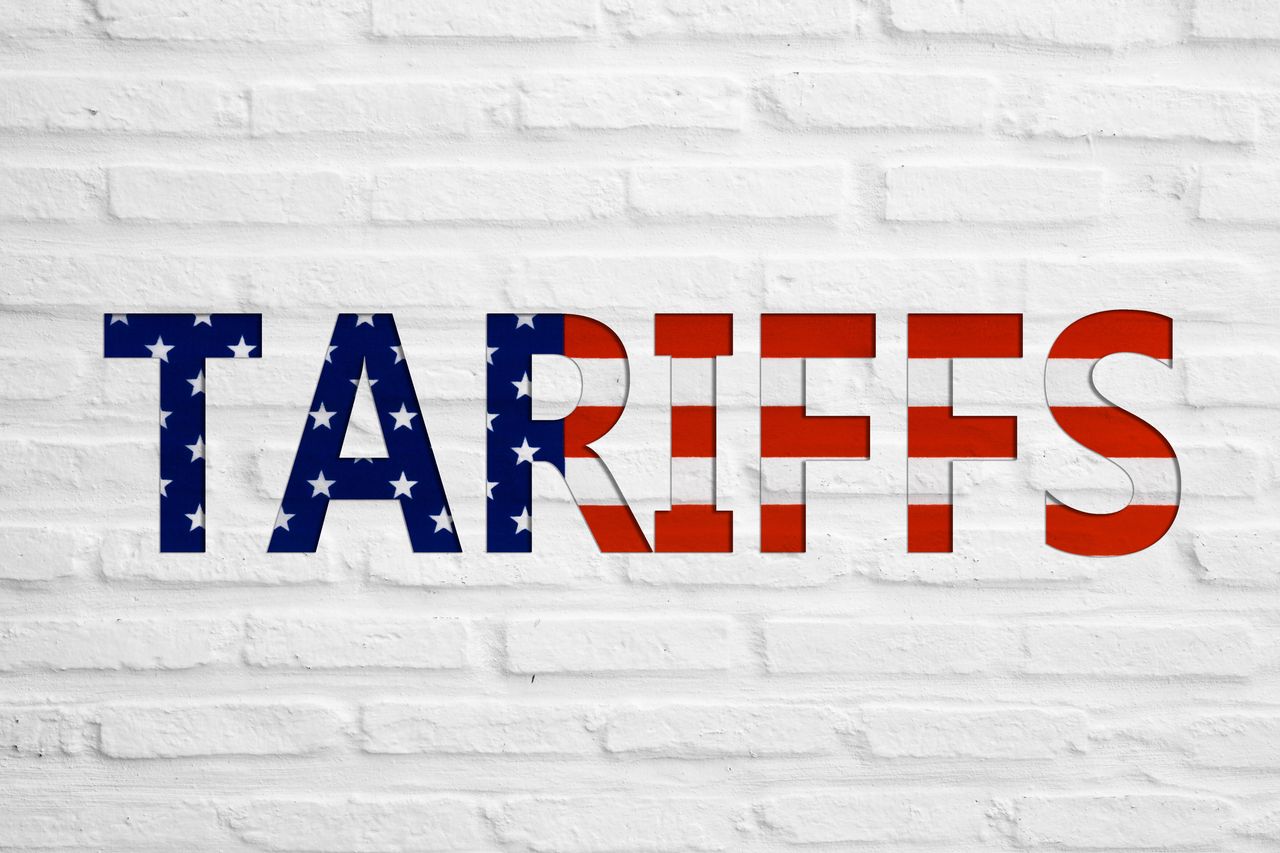
Tariffs have been a core part of President Donald Trump's economic strategy, with frequent announcements and revisions since the start of his second term.
He has argued that these taxes on imported goods and services are crucial for reducing the United States' trade deficit and enhancing U.S. manufacturing.
But Trump’s tariff policy has entered a new phase following a landmark United States Supreme Court ruling that struck down many of his broadest import taxes.
While some tariffs at first remained in place, some are now being replaced, and U.S. Customs is working to issue billions in refunds. Here’s where things stand.
Trump tariffs: What's happening
As of late July 2026, the U.S. tariff landscape is no longer defined by a single sweeping policy. Instead, it has become a patchwork of active tariffs, invalidated measures, and potential replacements following the Supreme Court’s February 20, 2026 ruling.
That 6-3 decision found that the Trump administration overstepped its authority by using the International Emergency Economic Powers Act (IEEPA) to impose broad, across-the-board tariffs on imports.
Those "reciprocal tariffs," first rolled out in April 2025, had applied to dozens of countries and hundreds of categories of goods.
While the ruling immediately disrupted that framework, it didn't eliminate tariffs. The Trump administration is already exploring new ways to replace the levies, while federal agencies figure out how to process potentially tens of billions in tariff refunds.
Which tariffs were blocked by the Supreme Court
The Supreme Court decision primarily affects the broad global tariffs introduced in April 2025, often referred to as the “Liberation Day” tariffs.
As a result:
- Sweeping “reciprocal tariffs” applied to most countries are no longer enforceable.
- Tariffs calculated using trade deficits as justification have been invalidated.
- Federal agencies had to review those tariffs and determine how to implement the Court's decision.
What tariffs are still in effect?
Despite the Supreme Court striking down broad IEEPA duties, several major tariffs remain active, generally because they rely on different legal authorities.
And...in late July 2026, President Trump moved to re-impose and expand tariffs using alternative legal authorities.
- Following the expiration of temporary surcharges, the Trump administration announced new baseline duties of 10% to 12.5% under Section 301 of the Trade Act of 1974, covering dozens of trading partners.
- At the same time, the White House escalated specific trade disputes, invoking Section 338 of the Tariff Act of 1930 for the first time in history to place 50% retaliatory tariffs on Canadian goods .
Because the White House is regularly shifting its approach to keep duties active, we've broken down the current landscape by trade authority rather than individual country lists.
Authority / Trade Tool |
Typical Duties |
Primary Target Scope |
Status (as of late July) |
|---|---|---|---|
Section 301 (Unfair Trade Practices) |
10% – 25%+ |
Global baseline rates (dozens of economies) & China |
In effect |
Section 338 (Retaliatory Measures) |
Up to 50% |
Targeted foreign trade disputes (e.g., Canada) |
Active / Implementation underway |
Section 232 (National Security) |
Up to 50% |
Critical sectors (steel, aluminum, auto parts) |
In effect |
Note: Specific rates will likely continue to fluctuate.
IEPPA tariff refunds: Who is getting money back?
One of the most significant operational tasks following the Supreme Court decision will be returning over $100 billion collected under the invalidated IEEPA tariffs.
Are tariff refunds actually happening? Generally, yes. Following orders from the U.S. Court of International Trade (CIT), U.S. Customs and Border Protection (CBP) established an official system — the Consolidated Administration and Processing of Entries (CAPE) platform — to return unlawfully collected duties.
CBP has been issuing payments on a rolling basis, but recovery depends on which phase an importer’s claim falls under:
- Phase 1 (Active since April 2026): Covers unliquidated entries and recent import entries. CBP has already disbursed billions of dollars back to Importers of Record for these claims.
- Phase 2 (Active since late June 2026): Handles claims flagged for complex customs reconciliation.
- Phase 3 (Launching as of late July 2026): Targets older, "finally liquidated" entries, which require more detailed documentation and administrative review.
Tariff refund eligibility generally depends on:
- Whether the tariffs were imposed under IEEPA authority
- Whether the importer of record filed a legal challenge or preserved a claim
- Documentation showing payment of tariffs tied to invalidated measures
That means not all businesses that paid tariffs will automatically receive money back. The federal government is issuing refunds on a rolling basis, but the total recovery effort remains a massive undertaking.
Given the volume of import claims, the payout process is expected to stretch well into the future as complex filings, batch reviews, and remaining court challenges play out.
Tariff economic Iimpact: prices, inflation, and uncertainty
Even with some tariffs struck down, the broader economic effects are still unfolding.
Higher prices: Tariffs function as taxes on imports, often leading to higher costs for goods like cars, appliances, and furniture
Inflation pressure: Some economists warn that tariffs contribute to broader price increases across the economy
Business uncertainty: Some companies delay hiring, investment, or expansion due to unclear trade policy
Mixed employment effects: Some domestic industries benefit from protection, while others that rely on imports face higher costs
Additionally, the inconsistent and historic nature of these tariff decisions has unsettled markets and caused confusion.
For example, on April 3 of last year, the U.S. stock market experienced its worst single-day decline since the pandemic during a sell-off following President Trump's tariff announcement. Wall Street sometimes uses the term "TACO trade" (Trump Always Chickens Out) to describe the on-and-off impacts of tariffs on the market.
Meanwhile, many economists, former allies, and even some in his own party have argued that Trump’s tariff policies harm the U.S. economy by increasing costs for businesses and consumers, exacerbating inflation, and potentially slowing economic growth.
For example, in a CBS interview, investor and philanthropist Warren Buffett described tariffs as "an act of war, to some degree."
Trump's former Vice President, Mike Pence, posted on X (formerly Twitter), stated that the tariffs were "the largest peacetime tax hike in U.S. history."
Last year, in a Fox Business interview, Sen. Ted Cruz (R-Texas) said, "I'm not a fan of tariffs," adding, "If the result is our trading partners jack up their tariffs and we have high tariffs everywhere, I think that is a bad outcome for America."
In an interview around that same time, Sen. Rand Paul of Kentucky said, "I believe that economically, it's a misconception to think that tariffs will benefit the nation."