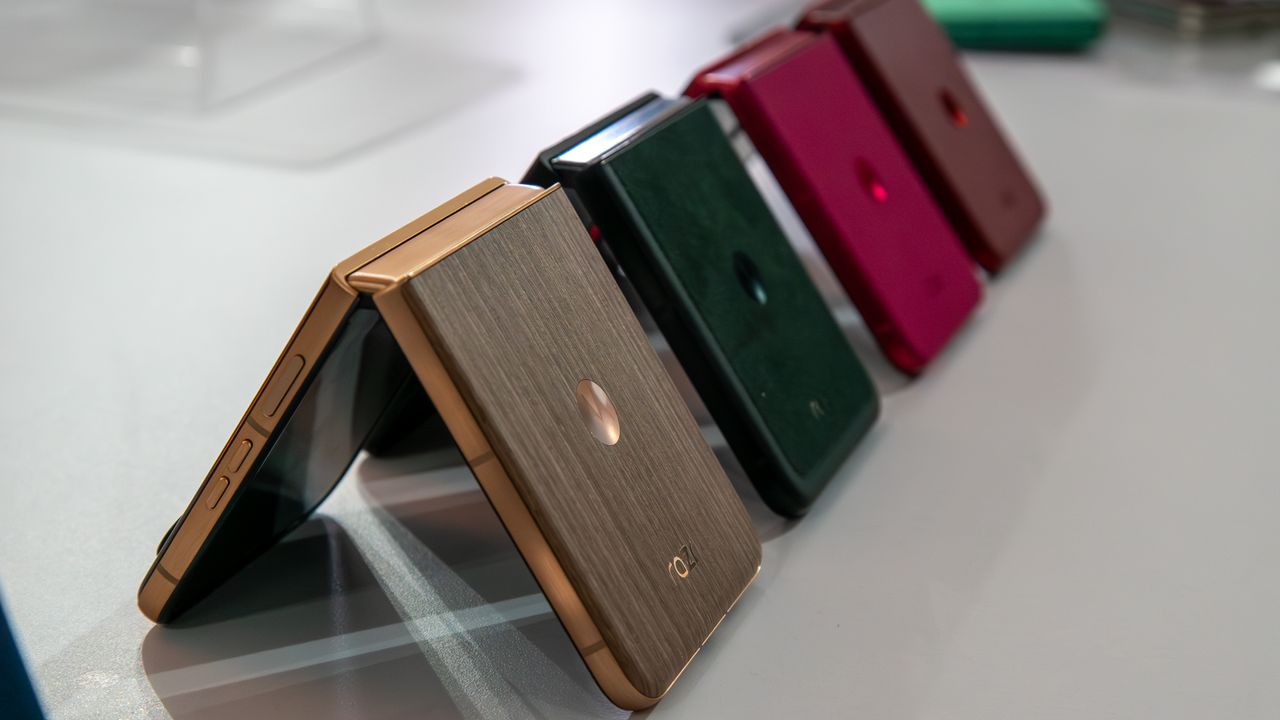
Motorola has continued to prove it can exceed my expectations in 2025, and while all my hopes for the company did not come to pass, it still made some compelling moves. Motorola launched one of the most impressive flip phones we've ever seen, and even launched its own AI suite to compete with the likes of Google, Samsung, and others.
So, with 2026 right around the corner, there are still plenty of ways I would love to see Motorola improve, especially as Apple and Samsung continue to dominate while the Pixel grows in popularity.

So with that, here's what I expect and hope to see from Motorola in 2026.
Motorola may finally expand its foldable range

Given the success of the Razr series and Motorola's growing market share, I fully expect the company to continue focusing on improving its lineup. In 2025, we saw the company expand the Razr lineup with three models: the base, Plus, and Ultra models. It's a similar strategy to Samsung's S series phones, though Motorola's is slightly different: each model comes with significantly different specs to target different price points.
With the 2026 Razr series, I imagine Motorola will continue this three-phone strategy, although if it does, it should focus on price points and a better way to differentiate the Plus model. The Razr Plus 2025 was essentially a relaunch of the Razr Plus 2024 with minor adjustments and the same chipset, so it would be nice to see Motorola offer a true upgrade in 2026, perhaps with the Snapdragon 8 Gen 5.
Meanwhile, the Razr Ultra 2026 should launch at a lower price while still offering premium specs, such as the Snapdragon 8 Elite Gen 5. Memory prices may make it difficult to lower prices, but Motorola has always done a good job of undercutting the competition. Plus, no matter how good its phones are, I believe Motorola isn't quite at the level it needs to be to demand consumers pay more for its phones than a comparable Galaxy phone.

On that note, Motorola recently teased a book-style foldable phone, which could mean the company is finally ready to take the leap and challenge Samsung in other ways. While we haven't seen any leaks or rumors of a foldable phone, now is probably the perfect time to jump in, as this form factor has finally overtaken flip phones in terms of market share, and there is likely a higher ROI with these devices.
As for what to expect, I imagine Motorola will use alternative materials like vegan leather or even wood to help its foldable stand out against competitors like the Galaxy Z Fold 7 or the Pixel 10 Pro Fold. I also expect premium specs, with the phone priced much higher than the Razr Ultra 2026, although exactly how Motorola prices it will be crucial to its success.
Motorola still needs a true competitor to Samsung and Google

While we could see a new book-style foldable from Motorola, the company has not had a good track record of bringing standard flagships to the U.S. There have been rumors of a Motorola Edge 70 Ultra or something of the like, but it's unclear if it will make it to North America, and Motorola may stick to a sub-flagship phone instead.
Motorola would do well to capitalize on its growing popularity and launch a standard premium flagship in the U.S. to compete with phones like the Galaxy S26 Ultra. Consumers have not fully embraced foldable phones, and Motorola could still undercut competitors with a powerful yet traditional smartphone. Plus, the Edge Plus 2023 was pretty well-received, so I would love to see a follow-up.
Oh, and Motorola needs to improve its software update promise to remain competitive with its peers, many of which offer twice as many updates as Motorola's most premium models.
Motorola should focus on Gemini

Like every major Android OEM, Motorola has been working on improving its suite of AI features. Moto AI has some compelling features, although its performance and usability ultimately pale in comparison to the likes of Google's Pixel series or Samsung's Galaxy AI.
In my experience, Moto AI is just too slow to be useful, and the overall implementation feels fairly clunky, aside from perhaps the notification summaries. Plus, the AI Key feels like a wasted opportunity that Motorola should improve on and include with more phones in 2026.
While it's unlikely Motorola will abandon Moto AI, the company would do well to take a Samsung-like approach and focus some of its efforts on Gemini integration over its own chatbot. In fact, Motorola can take some of its good ideas and rework them for Gemini.
For instance, Motorola could give users the option to default to Gemini when using its AI Key, so they can easily call the AI from any screen without remapping the power button. Furthermore, Motorola could let users set Gemini as the AI of choice when using Look & Talk, giving it a unique edge over the Pixel.
This way, Motorola can still focus on improving other AI features across its UI while leveraging the AI with the most consumer mindshare. Samsung already uses Gemini to help sell its phones, and it would be in Motorola's best interest to do the same.