Dear readers, we have arrived in 2026 with only thing in this world assured – that England are terrible at cricket. But maybe Australia are no good as well. Our first great read of the year will introduce you to a man who knows better than most.

1. ‘I wish I’d faced these poor modern teams’
At 97, Neil Harvey has “given up public appearances” (according to his son) but still fancies his chance with bat in hand in the current era of world cricket. Harvey toured England with Don Bradman’s Invincibles 78 years ago to kick off a 15-year Test career that netted more than 6,000 runs at an average of 48.
The once dashing Australian left-hander shares his memories of arriving in war-damaged London with “a great bunch of fellas” and the one big disappointment of his career.
The final word on Bazball: Harvey, who reckons he used to score runs relatively quickly, is not a fan. “I’d like to see them pull their hooves in.”
How long will it take to read: Three minutes.
2. Photos that define the century
“The 21st century began in earnest, at least in the western mind, on a day that no one had circled in their diaries,” writes Jonathan Freedland. That day was of course 11 September 2001, when two passenger jets flew into the twin towers of the World Trade Center in New York.
Those images are for ever etched in our minds, but what other shots from the past 25 years chronicle modern history in the making? These 46 photos tell the story of the 21st century so far.
Go behind the lens: Sam Smith, who took the photo of Saddam Hussein’s statue being toppled, explains why he was happy with the shot but not the finality it represents.
How long will it take to read: Fifteen minutes.
Further reading: The photographs that defined 2025 – and the stories behind them
3. ‘Bob tastes like a milk chocolate Easter egg on my tongue’
It wasn’t until she was 28 that Monique Todorovski learned there was a name for people like her who tasted people’s names – lexical-gustatory synaesthesia. Todorovski talks Katie Strick through how the phenomenon works, and the compromises she and her husband had to make when deciding their children’s names.
***
“There was a boy called Kevin in my primary school class and, whenever I’d hear his name, I’d see an image of bacon – which is odd, because I didn’t know about the actor Kevin Bacon back then.”
How long will it take to read: Two minutes.
Further reading: Our The way I feel series asks other synaesthetes to explain how they perceive the world.
4. Why the US is still a Fast Food Nation
Eric Schlosser’s book Fast Food Nation outlined the dangers of a food system controlled by a handful of multinational corporations. “They did not like it,” Schlosser writes in the 25th anniversary edition, in which he outlines how the profits – and dangers – of mass producing meat and milk have only grown.
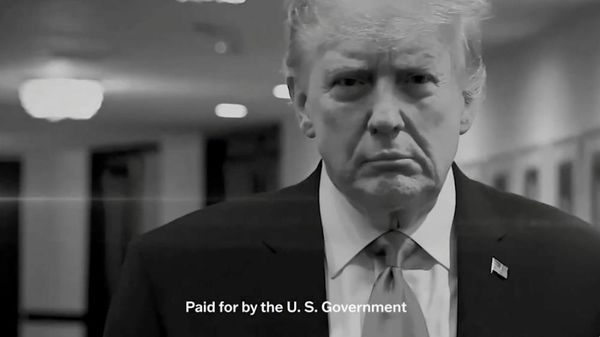
An unlikely source of hope: Donald Trump tweeted about the ills of the “industrial food complex” late in 2024. “If a politician who drinks 12 Diet Cokes a day, serves McDonald’s food at the White House, [and] stages campaign events at McDonald’s restaurants now feels the need to criticise industrial food,” writes Schlosser, “a seismic shift has occurred in US popular opinion.”
How long will it take to read: Ten minutes.
5. On the cultural frontline of Trump’s war on ‘woke’
“I think we can all agree we live in unusual times,” says Kim Sajet, the former director of the US National Portrait Gallery. She walked away from her post last year, two weeks after Donald Trump decreed online (with no authority to do so) that he was terminating her position for being a “highly partisan” supporter of DEI initiatives.
Sajet was collateral damage in the US president’s crusade to cast American history as nationalist and triumphalist, with reflection on darker aspects of its past downplayed. “The goal,” according to one senior employee of the Smithsonian Institution, “is to reframe the entire culture of the United States from the foundation up.”
When self-censorship approaches dark comedy: One Smithsonian staffer removed the word “diversity” from texts and replaced it with the synonym “variety” to avoid the ire of the Trump circle. But in that case, “diversity” was being used in a strictly scientific context: the “diversity” of astronomical objects.
How long will it take to read: Ten minutes.
Sign up
If you would like to receive these Five Great Reads to your email inbox every weekend, sign up here. And check out out the full list of our local and international newsletters.