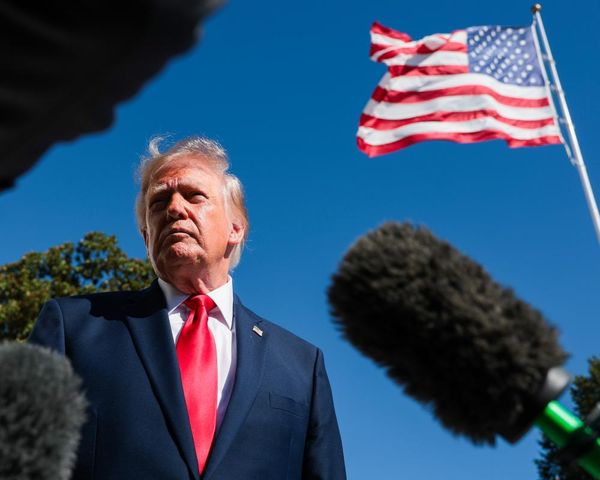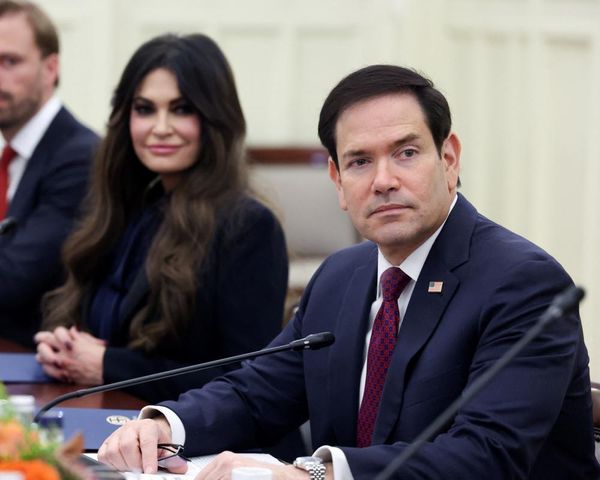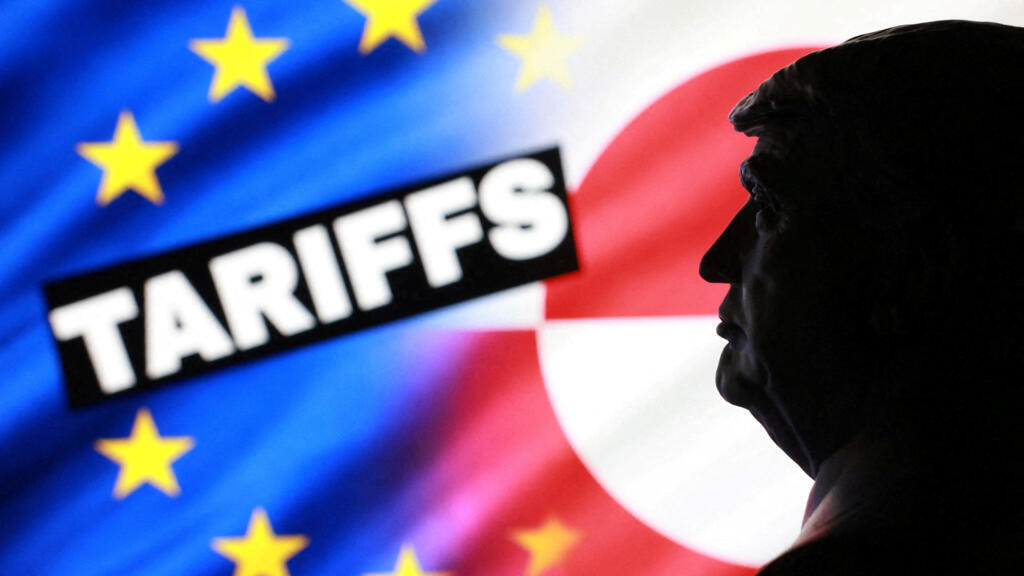
Europe is weighing up its toughest trade response as tensions with Washington flare over Greenland – but Brussels insists it would rather talk than trade blows.
After US President Donald Trump threatened to impose tariffs of up to 25 percent on a string of European countries unless Greenland is ceded to the United States, the European Union finds itself contemplating a powerful – and so far unused – weapon in its trade arsenal: the so-called "anti-coercion" instrument.

The warning from Trump was met with shock across Europe over the weekend. The US president said the tariffs would target EU members Denmark, Finland, France, Germany, the Netherlands and Sweden – as well as non-EU Britain and Norway – unless Denmark hands over Greenland, an autonomous territory within the Danish kingdom.
The remarks triggered alarm in European capitals and prompted leaders of the 27-nation bloc to call an emergency summit in Brussels on Thursday evening – a sign of how seriously the EU is taking what it sees as one of the most severe crises in transatlantic relations in years.
European allies hit back at US threat to start trade war over Greenland
Talk first, but tools ready
Publicly, Brussels is striking a careful tone. EU trade spokesman Olof Gill said the bloc’s “priority is to engage, not escalate”, stressing that contacts with Washington were continuing at all levels.
“We are trying to be calm, to be firm, to be serious, to be responsible, because that’s what, in our view, leadership looks like,” he told reporters.
Still, the message comes with a clear caveat. If the threatened tariffs are imposed, Gill said, the EU “has tools at its disposal and is prepared to respond”.
Those options range from putting the current tariff deal with the United States on ice, to re-imposing suspended EU tariffs on €93 billion worth of US imports. Beyond that lies the most eye-catching measure of all – the anti-coercion instrument, often dubbed Brussels’ “bazooka”.

What is the anti-coercion instrument?
Formally adopted in 2023, the anti-coercion instrument was designed to deter economic pressure on EU member states by third countries. The EU defines coercion as a state applying – or threatening to apply – trade or investment measures to interfere with the bloc’s or a member state’s legitimate sovereign choices.
The tool has never been activated, but its reputation is formidable. Supporters describe it as a “nuclear option” because it allows the EU to retaliate with wide-ranging trade measures across its 450-million-strong single market.
That could include restricting imports or exports of goods and services, or limiting US companies’ access to lucrative public procurement contracts in Europe. American technology firms are seen as a potential target, given the United States runs a services surplus with the EU, and Brussels has previously drawn up lists of US services that could be hit.
The instrument was conceived after Lithuania accused China of blocking its exports in 2021 following Vilnius’ decision to allow a Taiwanese diplomatic office to open – a case that sharpened EU thinking on how to push back against economic pressure.
France to step up Greenland deployment with land, air and sea forces
How would it be triggered?
Both the European Commission and EU member states can request activation, but it would require backing from at least 55 percent of member countries, representing 65 percent of the EU’s population.
Even then, the process is deliberately measured. The commission would have up to four months to investigate the alleged coercion, followed by an eight-to-ten-week period for member states to approve any proposed response.
Only after that could concrete measures be prepared, potentially taking effect within six months. Brussels says these timelines are indicative rather than fixed.
In other words, the instrument is not designed for instant retaliation. Yet simply launching an investigation would send a strong political signal that the EU is ready to stand its ground, even against a close ally.
Macron warns of 'cascading consequences' if US seizes Greenland
That signal is precisely what some European leaders and lawmakers want to send.
French President Emmanuel Macron has raised the prospect of deploying the instrument if Trump follows through on his threat, according to aides.
Valerie Hayer, leader of the liberal Renew group in the European Parliament, has gone further, openly calling for its use.
“The United States is making a miscalculation that is not only dangerous but could be painful,” she said, describing the tool as the EU’s “economic nuclear weapon”.
(with newswires)