Get all your news in one place.
100’s of premium titles.
One app.
Start reading
Motorsport
Motorsport

What is success for Cadillac in F1 2026?

Cadillac becoming Formula 1’s 11th team has been one of the most drawn-out and reported storylines in years, dating back long before its entry was formally approved in March 2025.

The initial plan was for the American outfit to form an entry with Andretti Global, but that application was rejected as Formula One Management believed it wouldn’t add to the series.

This gave rise to increased tensions between F1 and Michael Andretti over the aggressive campaigning by Mario’s son to overturn the decision, before he ultimately stepped down from the project.

So a revised bid later came, this time led by Dan Towriss’s TWG group and the green light was eventually given for the Cadillac F1 Team to enter in 2026.

Now that the time for its debut has come, following pre-season tests in Barcelona and Bahrain, what does success look like for the General Motors brand this year?

‘Earning respect’ is key

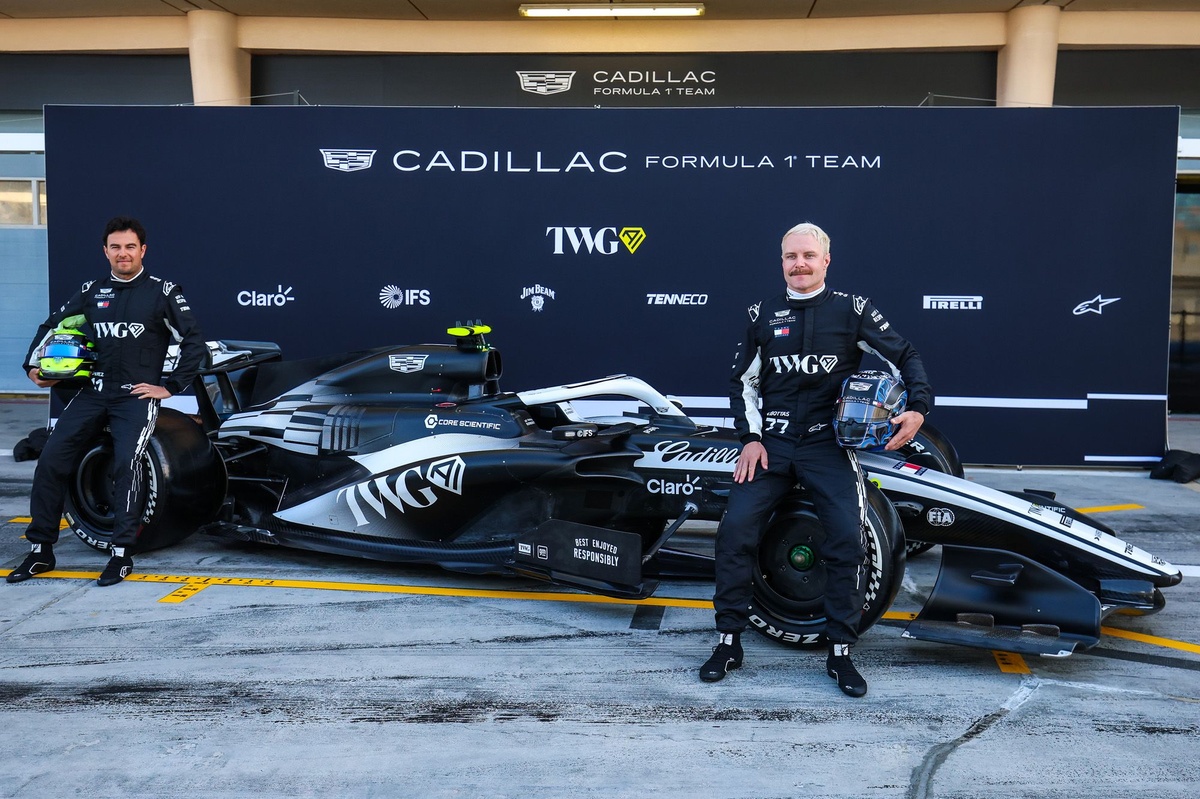
Valtteri Bottas, Cadillac Racing (Photo by: Joe Portlock / LAT Images via Getty Images)

A quick glance at history shows just how big of a task lies ahead for Cadillac in establishing itself as an F1 outfit. Looking at the early 2010s, for example, Lotus/Caterham, Virgin/Marussia/Manor and HRT all came in, but very quickly vanished having scored a grand total of three points combined, and that was cause for concern in F1 quarters. 

If F1 was to allow an 11th team to enter the fray, it must show signs of being able to stay for years to come, and that is the primary aim at Cadillac. Nobody should expect it to fight at the front from the off, or even the midfield, given the championship is as strong as it’s ever been with each team having at least a decade's worth of experience. 

“It’s quite a challenge to come in and expect to beat people,” said team boss Graeme Lowdon. “If you were the owner of one of those teams and a new team turned up and beat them, you’d be pretty apoplectic to say the least. I think people have just got to realise that it is a really, really difficult sport.”

That was shown in Bahrain testing, which Cadillac came out of looking set for a battle against Aston Martin to avoid the wooden spoon; there wasn’t a day when problems didn’t seem to strike either team, thus limiting running.

On Cadillac’s side, its car just lacks general downforce, though that should be expected considering its rivals have years on the squad with its development tools. Either way, it’s a good job that the Melbourne opener in March isn’t what’ll dictate success this year, because there’s widespread belief that mid-season development is of greater importance with the sweeping regulation changes.

“We’ve got a very robust process for that,” said engineering consultant Pat Symonds, when asked about car development. “Something very impressive actually with the team, we have the budget to do it.

Graeme Lowdon, Team Principal of Cadillac Formula 1 Team and Pat Symonds, Executive Engineering Consultant of Cadillac Formula 1 Team (Photo by: Clive Mason/Getty Images)

“Within the budget cap we know what we've got to do. We've already planned out quite an aggressive development programme. Even in Melbourne you'll see a car that's reasonably different to this one in many areas, as you will up and down the pitlane. So I'm pretty confident we can deliver on that.”

What also helps Cadillac's development is having two grand prix winning veterans as its driver pairing: Sergio Perez and Valtteri Bottas. Both have experience being involved in the development phases of title-winning machinery, and the expectation is that they will bring said know-how into Cadillac. 

“The great thing is we're getting accurate feedback straight away,” said Lowdon. “These guys are so experienced with multiple different teams, working with multiple different engineers and different cars, different power units, different chassis.

“And yes, I know the ‘26 car is very different, but when a driver's giving you feedback in particular about handling and everything else, we're not wasting any time at all. We're getting super accurate, thoughtful, and valuable feedback straight away. That was fundamentally what we were looking at.“

So what do the drivers think? Perez believes the key is “to [out]develop the teams ahead of us” knowing it’ll be a tough start, but that does beg the question as to what’ll be considered good work come the Abu Dhabi finale.

“A successful year for us as a team is that we see clear progress,” said Bottas. “It is really not about where we start from because I think the team has already done an incredible job to be here, to have a car, to be running. So yeah, not about where we start from, [it's] where we end up.

Valtteri Bottas, Cadillac Racing (Photo by: Steven Tee / LAT Images via Getty Images)

“Seeing that progress, making the car faster, making the car more reliable, becoming better as a team, all these things, we just want to get better and better. So I think that's a good starting point and an aim for this year.”

It thus comes down to what the team and drivers see as progress. From the outside, a point or two – Haas, for example, scored 29 points in its debut year – would be a good indication of that, but obviously points can be won through luck. So a constant improvement in qualifying lap times will be a big indicator; yet, even bigger than that will be how Cadillac is viewed by its competitors.

“One thing that's really important is that we earn the respect of the other teams,” said Symonds. “That's particularly important to me because I think we deserve that respect and that doesn't just go with the car, it goes with our whole operation.

“It was very gratifying in Barcelona that we got a lot of compliments from other teams, just about our garage layout, how we prepared the cars and everything like that.”

It’s not like the other 10 squads immediately welcomed the prospect of an 11th team with big, open arms – fearing that it would cut revenue – so the American outfit needs to reach a point where it is seen as part of the furniture. A lot of that is done through its off-track work to present itself as a professional organisation – not like its many predecessors who quickly came and gone. 

But Lowdon is confident of achieving exactly that: “The way that we've gone about solving problems as a team has been really in a very calm manner. In the garage, you see that. It's very easy to assess it in the garage, but also in the engineering meetings.

Cadillac pushed down the pitlane (Photo by: Kym Illman / Getty Images)

“Actually, it's one of the attributes about the team that I really noticed, first of all, at the shakedown in Silverstone. We kind of walked in the garage that morning, and what I saw was a calm, collected Formula 1 team ready to go to work, and if you've got that as a platform, you can really, really build.

“Whereas if you walk in a garage and there's mayhem and chaos and whatever, you might still go fast or whatever, but you'll hit a ceiling eventually. And we've always said that.

“As a team, we've got bold ambition. We're realistic and we're grounded, and we know how difficult this game is, but we didn't want to just be here. We really want to try and build something, and I feel that we've got that. I think the car reflects the team.”

Laying foundations for upcoming factory project

The future is exactly what Cadillac is building for, and 2026 is about laying the foundations to ensure the years ahead look bright. This is because everything is gearing up towards 2029, when it’ll end its Ferrari customer tag with the introduction of in-house power units, and this desire for independence can only be applauded. 

That’s because it puts Cadillac in full control of its F1 project and how much potential it can have. Meanwhile, fellow American squad Haas has adopted a contrasting business model which entails buying more Ferrari parts than any other customer team and, although that has proved sustainable, it obviously limits how much success the minnow constructor can achieve.

“The thing that we've perhaps done a little bit differently to, let's say, the last new team that came in, is that I think we're great believers in the fact that we should be in charge of our own destiny and that we are a works team – we're heading to be a works team,” said Symonds.

The nose of the Haas F1 car (Photo by: Simon Galloway / LAT Images via Getty Images)

“So, when you look at our car, you'll see we haven't just bought all the components that we can. We elected that as we were taking the Ferrari engine, we would take the Ferrari gearbox [as well] but we didn't take the whole back end as some other people may have done. We felt that we needed to do our own gearbox carrier, our own rear suspension, etc.

“So, although there are a number of parts that you can still take quite legally, we chose not to do that because, as I say, I think being in charge of your own destiny, understanding the philosophy behind your design is very, very important if you want to progress. It's hard to progress someone else's philosophical design unless you understand all the nuances that go with it.”

This therefore makes the off-track work even more important, because there’s no point in having a barnstorming debut year if the operation isn’t sustainable as a whole. So it comes down to Symonds’ earlier comment about wanting to earn respect in 2026, and with Lowdon claiming that “we hit all of our timelines” – something Aston and Williams were unable to do – then the early signs are positive that it can do exactly that.

Sign up to read this article
Read news from 100’s of titles, curated specifically for you.
Already a member? Sign in here
Related Stories
Top stories on inkl right now
One subscription that gives you access to news from hundreds of sites
Already a member? Sign in here
Our Picks
Fourteen days free
Download the app
One app. One membership.
100+ trusted global sources.