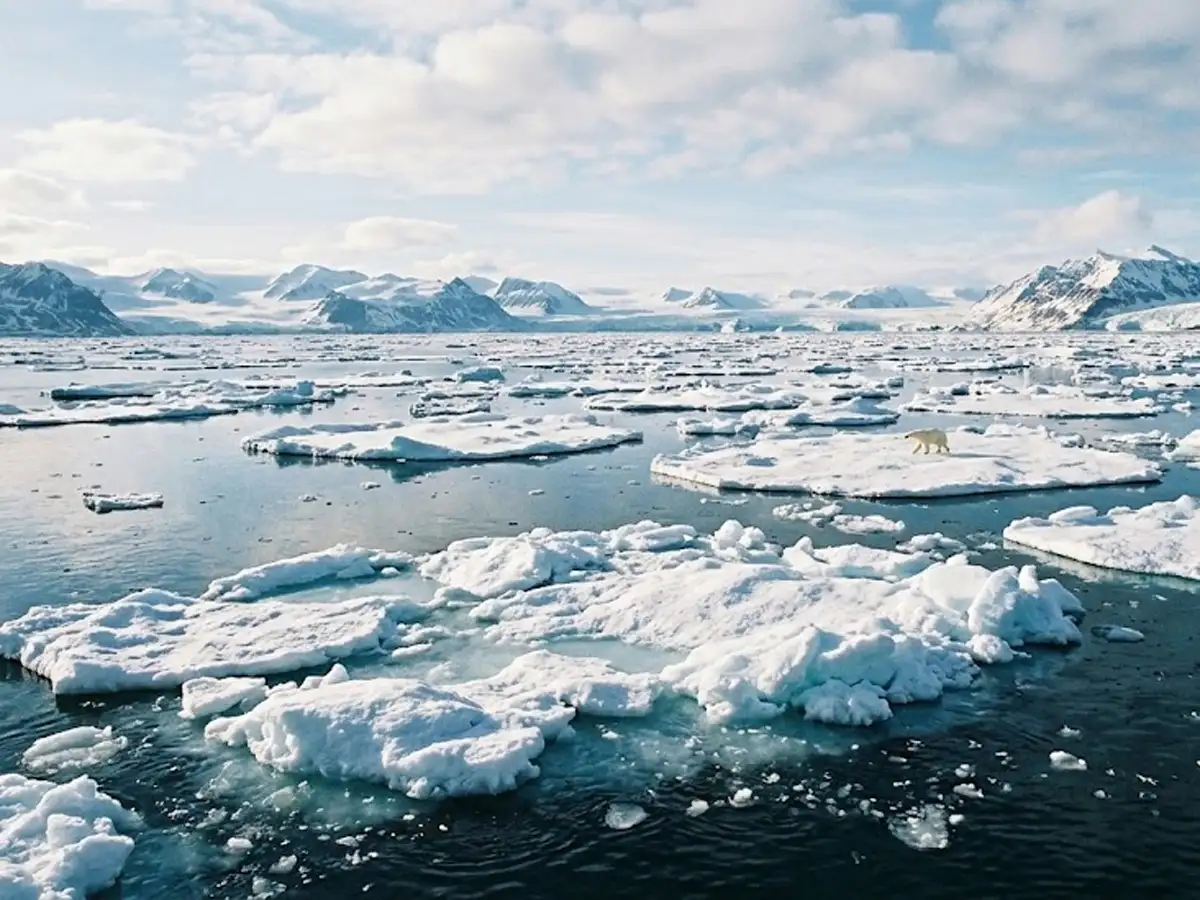
The Arctic is often pictured as a vast, frozen landscape, but its sea ice keeps reacting to weather changes. Recently, scientists have discovered that the timing of the weather changes is almost as important as their intensity. When consecutive cyclones come into action, their cumulative effect may turn out to be even higher than the effect of a single cyclone. According to a recent study, as quoted by Science Daily, these back-to-back storms, a phenomenon called 'serial cyclone clustering', may lower the amount of the Arctic sea ice twice as much as an isolated cyclone. Their effects can also last about two and a half times longer.