A recent CNN polling analysis suggests that voter identification requirements enjoy wide public backing in the United States, cutting across party lines and racial groups.
According to data cited by CNN’s chief data analyst Harry Enten, more than three-quarters of Americans consistently say they support requiring a photo ID to vote, with similar levels of support recorded over several years.

The polling shows that 83 per cent of Americans supported photo ID requirements in the most recent survey, broadly in line with figures dating back to 2018, which ranged from the mid-70s to low-80s.
Support was strongest among Republicans, at 95 per cent, but a substantial majority of Democrats, around 71 per cent, also favoured voter ID laws.
CNN’s breakdown by race showed similarly high levels of approval. About 85 per cent of White respondents supported photo ID requirements, along with 82 per cent of Latino respondents and 76 per cent of Black respondents. Enten noted on air that the issue does not show the sharp partisan or racial divisions often associated with other election-related debates.
The renewed attention to voter ID has been amplified by public comments from entertainer Nicki Minaj, who questioned why voter identification remains a subject of political debate in the US. CNN presenters pointed to polling data to argue that public opinion is largely settled in favour of requiring identification at the polls.
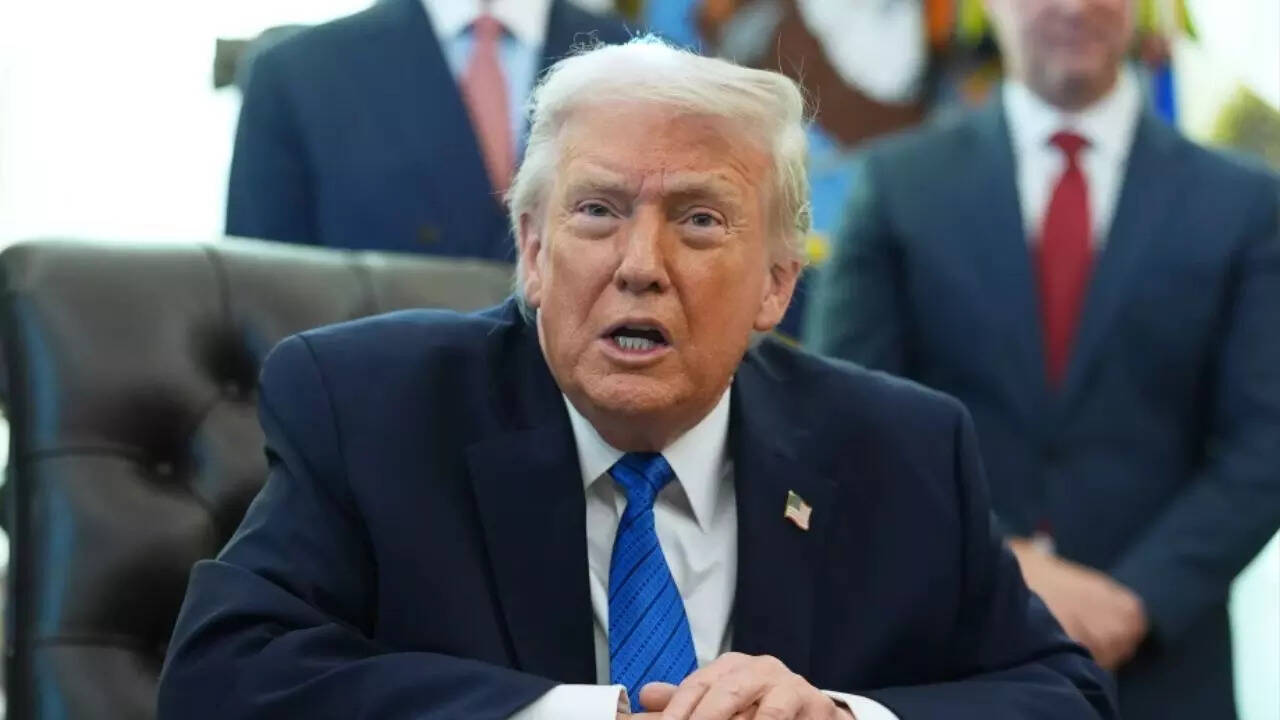
The findings have fed into a broader political conversation around election integrity ahead of the 2026 midterm elections. Former president Donald Trump has suggested nationalising certain election standards, while Republican lawmakers have introduced legislation that would expand identification and citizenship requirements for voters in federal elections.
What is the SAVE Act? Here are key things to know
At the centre of the current debate is the Safeguard American Voter Eligibility (SAVE) Act, sometimes referred to as the SAVE America Act. The legislation was introduced by Republican Representative Chip Roy of Texas, with a companion bill sponsored by Senator Mike Lee in the Senate.
The SAVE Act would require individuals to provide documentary proof of US citizenship when registering to vote in federal elections. Acceptable documents would include a US passport, a birth certificate, a certificate of naturalisation, or similar official records. In most cases, the bill requires these documents to be presented in person at the time of registration.
The updated version of the bill, reintroduced in early 2026, also adds a requirement for voters to present a valid photo ID when casting a ballot in federal elections.
In addition, it directs states to use federal databases to identify and remove non-citizens from voter rolls and establishes criminal penalties and civil liability for election officials who register voters without the required documentation.
What suporters and critics say
Supporters of the SAVE Act argue that the measures are necessary to reinforce public confidence in elections and ensure that only eligible citizens can vote. They maintain that uniform national standards would close gaps in the current system.
Critics, including Democrats and voting rights groups, counter that voting by non-citizens is already illegal under federal law and occurs extremely rarely. They warn that strict documentation requirements could prevent eligible citizens from registering, particularly those who do not have ready access to passports or whose birth certificates do not reflect name changes due to marriage or court orders.
The bill does not include federal funding to help states implement the changes, a point election administrators have raised as a concern. As Congress continues to debate the proposal in 2026, voter ID and proof-of-citizenship requirements remain a key flashpoint in the wider discussion on election access and integrity.