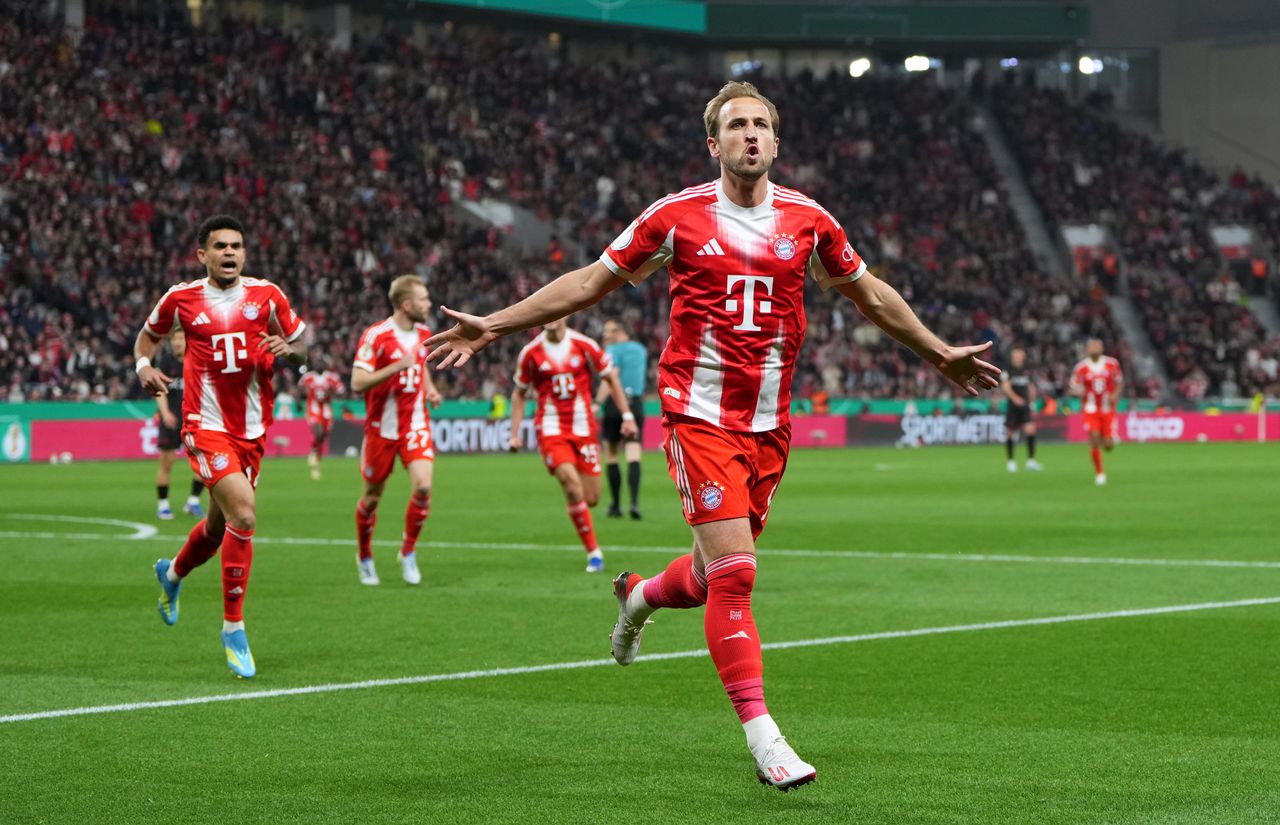
Bayern Munich have become a formidable attacking force under Vincent Kompany, regularly putting teams to the sword in Germany and in European competition.
Their Bundesliga title was confirmed with a 4-2 win over Stuttgart in mid-April, a victory that saw their goals tally for the league season climb to 109 in just 30 games.

Bayern score goals, a lot of them, and many of them come at the Allianz Arena: in 15 Bundesliga home games this season, they have netted 60 times, an average of four per game.
Why do Bayern play the can-can after scoring?

Given they score so often, Bayern’s goal music has become a talking point in 2025/26.
They put four past Real Madrid in the second leg of their Champions League quarter-final last week, and after each goal, the can-can music blared through the speakers.

The can-can is associated with Jacques Offenbach’s opera, Orpheus in the Underworld, a 19th-century piece of music.
Many German clubs play classical music after scoring, often based on their regions.
Bayern began playing the can-can after goals in the early 1990s, when they played at the Olympiastadion.
The reason that particular piece of music is played is not entirely clear, other than the fact it has a jaunty and celebratory feel.
For the team on the receiving end of the goal, too, it can be a slightly jarring sound, almost mocking if they find themselves on the receiving end of a thrashing (not uncommon at the Allianz).

Other German clubs have used the can-can as their goal music, including second-tier side Bochum and Bayern’s rivals Borussia Dortmund for a period in the '90s.
Regardless of the history behind it, the can-can has become synonymous with Harry Kane, Luis Diaz and co. plundering goals at the Allianz Arena.
European champions Paris Saint-Germain will hope they are not hearing it play when they face Bayern in their Champions League semi-final.