Get all your news in one place.
100's of premium titles.
One app.
Start reading
International Business Times UK
Michael Toledo

What Is a Tiger Cat? 'Weird' Spotted Feline Mistaken for Another Species Hid a 1.4-Million-Year Secret

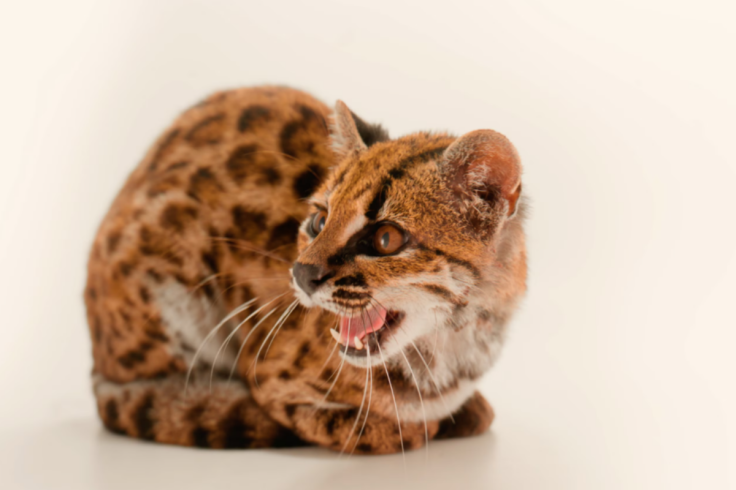
A mysterious spotted tiger cat from Bolivia has been identified as a new species, Leopardus tilcayo, after genomic analysis revealed its 1.4-million-year evolutionary secret (Credit: Official National Geographic Website)

A mysterious spotted feline once dismissed as a 'weird cat' has turned out to be something scientists had not documented before: a new species whose evolutionary lineage separated from other tiger cats around 1.4 million years ago.

The animal, now identified as Leopardus tilcayo, was first encountered by researchers in Bolivia in 2016 after spending about a year with a local man who had mistaken it for a domestic kitten. Genetic research has now established its distinct place on the feline family tree, according to a study published in Current Biology.

What Is a Tiger Cat?

Tiger cats are small, spotted wild felines belonging to the Leopardus genus and found in the Americas. They should not be confused with domestic cats that happen to have striped or spotted coats.

For years, scientists classified many of these animals as Leopardus tigrinus, a species first described in 1775 and also known as the tigrina, oncilla, tigrillo or little spotted cat.

That understanding has changed dramatically as genetic research has uncovered hidden differences between populations.

'What we once thought to be a single species, we've started to see that it was actually a species complex,' geneticist Eduardo Eizirik said.

'Weird Cat' Found in Bolivia Raised Questions

The story of Leopardus tilcayo began in 2016, when Bolivian biologist and National Geographic Explorer Paola Nogales-Ascarrunz received an unusual call from the Senda Verde wildlife sanctuary.

A local man had reportedly found the animal as a kitten on a road near a forest and taken it home, believing it was a domestic breed. After about a year, its wild nature became clear and it was transferred to the sanctuary.

Nogales-Ascarrunz was immediately fascinated by its unusual appearance, including a small face, rounded ears, long whiskers and distinctive leopard-like spots.

'I took a hundred pictures of it,' she recalled. 'I was so fascinated.'

She initially believed the animal was Leopardus tigrinus. But in 2019, while preparing a booklet about Bolivia's cats, she noticed that its large rosettes looked markedly different from those on a reference animal from neighbouring Brazil.

DNA Exposed a 1.4-Million-Year Secret

Years later, advanced genomic analysis provided the evidence researchers needed.

Nogales-Ascarrunz worked with Eizirik, of the Pontifical Catholic University of Rio Grande do Sul in Brazil, and Jonas Lescroart, from the University of Antwerp, to investigate where the mysterious Bolivian cat belonged.

Researchers compared complete genomes from 38 individuals across the Leopardus genus. Their analysis showed that L. tilcayo was genetically distinct from other tiger cat species.

Most strikingly, researchers estimated that its lineage diverged from the others about 1.4 million years ago, an evolutionary distance comparable to that separating modern lions and extinct cave lions.

Why the New Tiger Cat Is Called Leopardus Tilcayo

Researchers proposed the name Leopardus tilcayo because 'tilcayo' is what local people in Bolivia have traditionally called the animal.

Nogales-Ascarrunz said residents could not identify a particular meaning behind the word, instead explaining that the name had been passed down through generations.

So far, scientists can only confirm that the newly identified tiger cat inhabits Bolivia's Yungas forest ecoregion on the eastern slopes of the Andes.

Major questions remain unanswered, including what L. tilcayo eats, how it reproduces and how many individuals survive in the wild.

Tiger Cat Discovery Raises Conservation Questions

The finding also changes scientists' understanding of tiger cat diversity. Research has progressively separated animals once grouped together as L. tigrinus, with the latest study recognising five tiger cat species.

That distinction could have important consequences for conservation. A population previously considered part of one widespread species may instead belong to several species with much smaller distributions.

'Once three species become five species, each population is reduced,' Small Wild Cat Conservation Foundation director James Sanderson said.

Scientists have not yet established the wild population of Leopardus tilcayo, leaving its conservation status and potential threats among the questions researchers still need to investigate.

Sign up to read this article
Read news from 100's of titles, curated specifically for you.
Already a member? Sign in here
Related Stories
Top stories on inkl right now
One subscription that gives you access to news from hundreds of sites
Already a member? Sign in here
Our Picks
Fourteen days free
Download the app
One app. One membership.
100+ trusted global sources.