
Get all your news in one place.
100’s of premium titles.
One app.
Start reading
Android Central
Android Central
Technology
Brady Snyder

What I want to see from AI in 2026, from Samsung glasses to OpenAI hardware

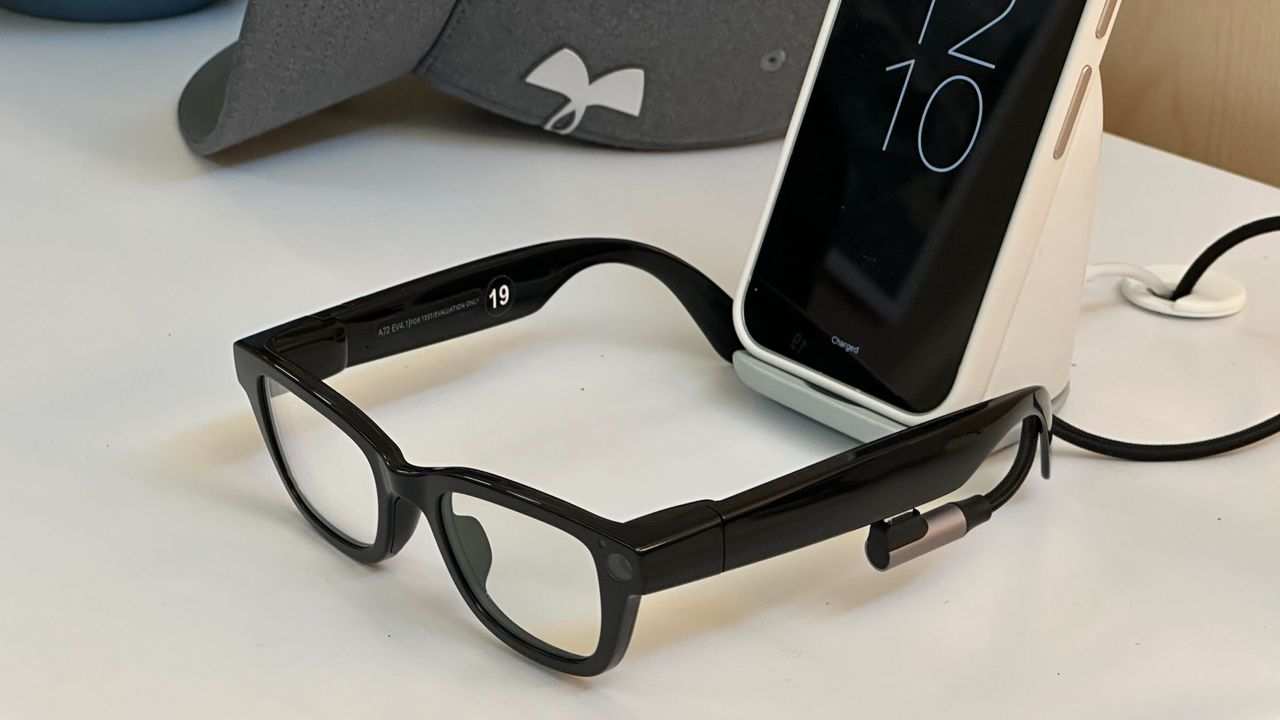
Android XR prototype glasses in front of a Pixel smartphone.

Artificial intelligence experienced growth in 2025, with companies offering strong challenges to OpenAI for the first time.

Google used its corporate might to release more AI-powered features than any other company, Meta used its stockpile of cash to acquire top talent, and OpenAI made big bets looking toward the future. At the same time, smaller companies Perplexity and Anthropic took significant strides, but still look more like acquisition targets than serious threats. And then there's Microsoft, a company that may have tied its horse to OpenAI and an AI PC strategy too soon.

Looking ahead to 2026, I'm predicting a year of reckoning. Multiple companies made promises that they'll have to deliver on next year, like Samsung's smart glasses or OpenAI's upcoming hardware product. Additionally, the results of pending lawsuits and possible AI regulation could loom over the industry in 2026. Here's everything I'm expecting from the AI industry next year, plus what I want to see.

Brand deals and lawsuits will set the tone for AI in 2026

(Image credit: OpenAI)

In my AI report card for 2025, I noted that it's hard to judge OpenAI's year because the company prioritized its future over its present. The biggest OpenAI move came just a few weeks before the new year — it inked a deal with Disney that'll see the entertainment giant invest $1 billion in equity into OpenAI. As part of the move, OpenAI will get exclusive access to Disney's intellectual property with over 200 licensed characters. Starting in early 2026, users will be able to generate Sora videos with Disney characters.

It's a big move for both companies, as the three-year licensing agreement gives OpenAI the legal use of Disney characters, with Disney presumably receiving financial kickbacks in return. OpenAI impressively got Disney to throw money its way as part of the deal, too. Perhaps most importantly, Disney sent Google a cease-and-desist letter over the company's use and generation of copyrighted material by its AI models.

How this all plays out will certainly guide the AI industry in 2026. For now, I can still generate Disney characters with Google AI models, which raises a ton of questions. Will Disney slap Google with a full-on lawsuit over its alleged copyright violations? Does legal access to Disney material give OpenAI the edge it needs over competitors as the AI race tightens? Is Disney really making enough money from this deal to justify giving up its most valuable assets to an AI company?

I'm looking forward to all of these questions being answered in 2026. This is just one of the developments involving brand deals and legal challenges for AI companies in 2026. There are multiple lawsuits filed by brands such as the New York Times, Ziff Davis, Thomson Reuters, and others that aim to force governments to decide whether training AI models on copyrighted material is legal.

In 2026, I want to see these legal questions answered, ideally with a bit of much-needed AI regulation in the mix. I'm also curious whether competitors like Google or Meta try to copy OpenAI's deal with Disney — next year could quickly become the race to secure brand deals with IP holders.

Less AI slop and more thoughtful features

(Image credit: Nicholas Sutrich / Android Central)

It goes without saying that not every AI feature is bad, but many are. AI-generated content hit new lows in 2025, prompting Merriam-Webster to select "slop" as its word of the year, defined as "digital content of low quality that is produced usually in quantity by means of artificial intelligence." In 2026, I want to see less slop and more truly useful features.

Brands, if you're reading this, stop sticking AI where it doesn't belong. I don't need Meta AI in my Instagram search bar or my WhatsApp DMs. I certainly don't need an infinite-scroll feed of AI slop in the Meta AI app required to manage my collection of Ray-Ban Meta and Oakley Meta smart glasses.

Meta is an underrated player in the AI industry, especially given its NBA-style contracts for top engineering talent, totaling hundreds of millions in compensation over multi-year deals. Next year, it needs to stop getting in its own way. Create thoughtful AI features that users seek out willingly, and remove the slop shoved into apps that are awesome otherwise.

Meta certainly isn't the only company doing this; it's simply the worst offender. Other AI companies should watch and learn what not to do, making sure to only include features in their best apps that make sense.

I want to see what Samsung, Google, and OpenAI are cooking

A still from the Android Show: XR Edition showing Juston Payne wearing the Google prototype glasses. (Image credit: Google)

I mentioned Android XR as something to watch in my AI preview article for 2025, and I'm bringing it up again in 2026. That puts quite a bit of pressure on Google, the one building the software platform, and Samsung, the one curating the hardware. Eventually, the Android XR teasers and demos that keep trickling out aren't enough, and we need to see results. We finally got Samsung's Galaxy XR headset in 2025, but I'm looking forward to Samsung's upcoming pair of smart glasses even more.

I use Meta smart glasses because they're the best available right now, in my opinion, not because I'm particularly attached to Meta as a company. If Google or Samsung made a better or comparable pair of smart glasses that fit better into the Android ecosystem, there's a strong likelihood I'd be compelled to switch. That's why, in 2026, I need to finally see what Google and Samsung are cooking up. Are these companies going to challenge Meta on day one, or will their initial offerings feel lightyears behind?

As for what Samsung's XR glasses could do to win me over, expanded prescription lens support, better open-air speakers, sharper camera quality, and more comfortable frame designs are at the top of my wishlist.

(Image credit: Nicholas Sutrich / Android Central)

Oh, and I'd also love to see what OpenAI is working on with Jony Ive on the hardware front. Gemini is slowly catching up to ChatGPT, and I think it's because Google has products and services people use every day, giving it unparalleled integration avenues. OpenAI can't build the next Android or replace Google Search and Workspace overnight, so its best option is to make an AI hardware product that actually catches on.

As an iPod kid at heart, I have skeptical faith in Ive. But like Google and Samsung, OpenAI will need to show me something tangible in 2026 to make me a believer.

AI models like Gemini 3 and GPT-5.2 are so good these days that the updates are starting to feel incremental. The next thing to watch is how these AI models will be implemented. For example, whether a brand deals with IP holders like Disney or hardware releases like XR glasses will define the next stage of the AI race. Whether the courts or legislators will take any steps to regulate the AI industry or protect copyrighted material.

In other words, 2026 is going to be an important year for AI, one way or another.

Sign up to read this article
Read news from 100’s of titles, curated specifically for you.
Already a member? Sign in here
Related Stories
Top stories on inkl right now
One subscription that gives you access to news from hundreds of sites
Already a member? Sign in here
Our Picks
Fourteen days free
Download the app
One app. One membership.
100+ trusted global sources.


