Donald Trump’s decision to boycott Cop30, withdraw the US from the Paris agreement and illegally terminate a slew of investments in renewable energy will not change the reality of climate breakdown for Americans.
In what has become an annual reporting tradition, I found myself in Arizona reporting on heat-related deaths during yet another gruelling heatwave, when temperatures topped 43C (110F) on 13 out of 14 straight days in Phoenix. Before embarking on this trip, I spent weeks combing through hundreds of autopsy reports, which I obtained from two county medical examiners using the Freedom of Information Act. Each death report gave me a glimpse into the person’s life, and I used clues from the case notes to track down friends and loved ones in the hopes of better understanding why heat is killing people in the richest country in the world.

More on what my reporting taught me about America’s ongoing climate crisis, after this week’s climate headlines.
Essential reads
How cyclones and monsoon rains converged to devastate parts of Asia – visual guide
The environmental costs of corn: should the US change how it grows its dominant crop?
‘Those who eat Chilean salmon cannot imagine how much human blood it carries with it’
In focus
In Mohave county, a vast sprawling desert area that borders California and Nevada, about 70% of confirmed heat-related deaths occur indoors, with low-income residents living in RVs and mobile homes most at risk. I went to meet the family of Richard Chamblee, who died just two days after his central air conditioning broke.
Richard was clinically obese and bed-bound in the living room as the temperature hit 46C but his family could not afford to immediately replace or repair the AC system. They tried their best to keep him cool: they bought a window AC unit and installed it next to Richard’s bed, and positioned fans, ice packs and cold drinks at his bedside. But their mobile home is old, open-plan and poorly insulated; Richard overheated, struggling to breathe. His core temperature measured 42C when he was rushed to the emergency room, but doctors were unable to cool him down. His wife, Sherry, who works three jobs, told me: “We had no idea the heat could be so dangerous so quickly inside. It just happened so fast.”
Richard was just 52. He was a devout Baptist and loved playing video games.
Another person who made my heart ache was Hannah Moody, a super-fit, inspiring social media influencer who regularly posted about her passion for the outdoors. Hannah went out on a desert hike and didn’t come home. Rescuers found Hannah, 31, the following day, just 90 metres from the car park, where her body temperature measured 61C. Hannah was among 555 suspected heat deaths this year alone in Maricopa county, home to Phoenix, America’s fifth-largest and hottest city. This year’s death toll comes on top of another 3,100 confirmed heat-related fatalities over the past decade.
One of the most troubling things I have learned over these past few years is that the US does not have a reliable way of counting heat deaths. The nation’s 2,000-plus coroner and medical examiner offices follow no single protocol, and in many cases, whether heat is listed as a factor depends entirely on the experience and qualifications of who certifies the death. Maricopa county is considered the gold standard for investigations, yet my reporting suggests that even they could be undercounting heat-related deaths, specifically for people who are homeless.
Every single heat death is preventable, but the US chooses not to know just how many people are dying and why. “No one dies from a heatwave,” Bharat Venkat, the director of the University of California, Los Angeles’s heat lab, told me. “The way in which our society is structured makes some people vulnerable and others safer.” In other words, it is not just the heat. It is inequality – who has access to shelter, healthcare, money and social support – that often determines who lives and who dies.
What we do know is that the US is the biggest historical greenhouse gas emitter, and that today it is second only to China, so this country’s own culpability in the climate catastrophe now killing Americans did not begin with Trump.
But his rolling out of the red carpet for fossil fuel billionaires while rolling back hard-won regulations and investments in the green transition has been both barefaced and unprecedented.
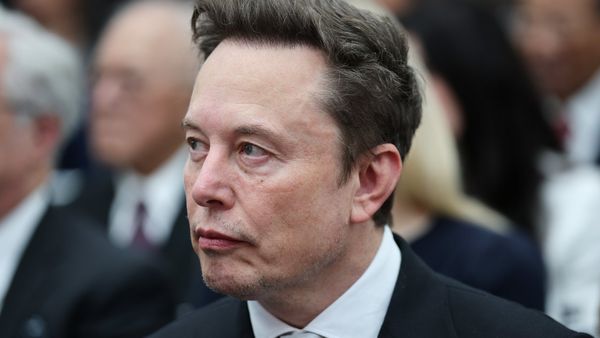
On a recent reporting trip (my last for the Guardian) to Virginia and West Virginia, folks seemed genuinely confused after Trump and his buddy Elon Musk terminated billions of dollars in Biden-era clean energy and climate adaptation grants and incentives earmarked for Appalachia. The historic cash injection was meant to help revitalise and strengthen former coal communities, which overwhelmingly support Trump and are being increasingly hit with destructive floods.
Trump’s lawless policymaking upended investments to support Appalachia’s transition from extractive industries to solar and other non-fossil energy technologies, which would have created thousands of jobs for a region that was broken first by coal then by the opioid epidemic. The cuts include cancelling money approved by Congress for a new fire station and solar-powered resilience hub in Dante, a mountain holler, population 600 (down from 3,000 when coal was king), which has been hit by days-long power outages and catastrophic flooding in recent years.
Across Appalachia, Arizona, and the entire US, communities are being hit by Trump’s wholesale cuts to food stamps, medical care, and climate resilience programmes. Yet these same communities continue to be bombarded with misinformation and disinformation at church, through social media and right-wing broadcasters, and many remain skeptical about the role fossil fuels, climate change and capitalism plays in the economic hardship and environmental destruction wrecking their lives.
Read more:
Americans are dying from extreme heat. Autopsy reports don’t show the full story
‘Deeply demoralizing’: how Trump derailed coal country’s clean-energy revival
‘It happened so fast’: the shocking reality of indoor heat deaths in Arizona
To read the complete version of this newsletter – subscribe to receive Down to Earth in your inbox every Thursday