Get all your news in one place.
100's of premium titles.
One app.
Start reading
Latin Times
Latin Times
Politics

What Happens to Lindsey Graham's Senate Seat? South Carolina Faces Rapid Election Timeline

The death of Sen. Lindsey Graham does more than leave a vacancy in the U.S. Senate. It also sets off an unusually fast political process in South Carolina, where state law requires both an interim appointment and an expedited election to determine who will appear on the November ballot.

Graham's death also comes as Republicans are already navigating uncertainty surrounding another longtime Senate fixture, Sen. Mitch McConnell of Kentucky. The 84-year-old former Senate Republican leader has been hospitalized since mid-June with undisclosed health issues and has not returned to Capitol Hill. While GOP leaders have said McConnell remains engaged in Senate business through phone calls, the lack of public information about his condition has fueled widespread speculation. McConnell, who announced last year that he will retire at the end of his term, is not seeking reelection in 2026, meaning Republicans are simultaneously preparing for two high-profile Senate transitions.
Graham, 71, died Saturday after what his office described as a "brief and sudden illness." The Republican had already secured his party's nomination for a fifth Senate term in the June primary, making the process to replace him more complicated than a typical Senate vacancy.

Under South Carolina law, Gov. Henry McMaster must appoint a temporary successor to serve in the Senate until the winner of the November general election is sworn into office. The appointment is expected to ensure South Carolina continues to have full representation in the Senate while the election process unfolds.

At the same time, because Graham had already won the Republican primary, state law requires the GOP to hold a special primary election to choose a new nominee for the November ballot instead of allowing party leaders to simply name a replacement.

The timeline moves quickly.

The filing period for Republican candidates opens on the second Tuesday after Graham's death and remains open for one week. The special primary is then held on the second Tuesday after filing closes, with a runoff two weeks later if no candidate wins a majority. The Republican nominee must be certified at least two weeks before the Nov. 3 general election to appear on the ballot.

Senior political analyst Chuck Todd noted on X that the accelerated schedule means "the filing deadline and special GOP primary election will all happen before Sept. 1," compressing what is typically a months-long campaign into just a few weeks.

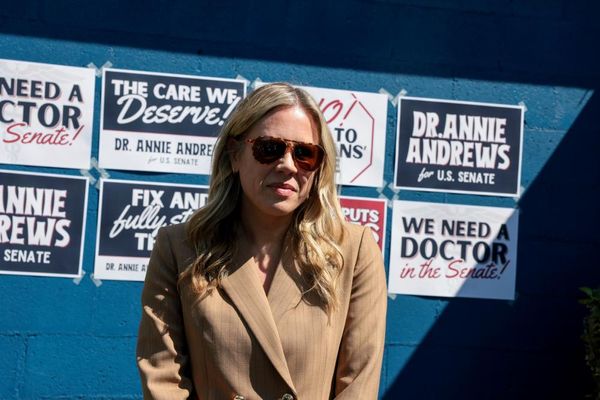
The Democratic nominee, Dr. Annie Andrews, had already secured her party's nomination and remains on the November ballot. The Republican who emerges from the special primary will face Andrews in the general election.

The vacancy also temporarily narrows Republicans' majority in the Senate until McMaster names an interim replacement. Graham had served in the Senate since 2003 and was chairman of the Senate Budget Committee at the time of his death.

Attention is now turning to who McMaster may appoint and which Republicans will enter what is expected to be one of the fastest and most closely watched Senate primaries in recent South Carolina history. While no official candidates had announced campaigns Sunday morning, political observers immediately began speculating about several prominent South Carolina Republicans who could seek either the interim appointment or the GOP nomination.

Sign up to read this article
Read news from 100's of titles, curated specifically for you.
Already a member? Sign in here
Related Stories
Top stories on inkl right now
One subscription that gives you access to news from hundreds of sites
Already a member? Sign in here
Our Picks
Fourteen days free
Download the app
One app. One membership.
100+ trusted global sources.