Get all your news in one place.
100’s of premium titles.
One app.
Start reading
Reason
Reason
Politics
Josh Blackman

What Happens If A Religion Precludes A Person From Supporting Zionism?

The anti-semitism maelstrom on the right continues to swirl faster by the day. And, in what has become a familiar posture, I keep getting stuck in the eye of the storm. I have come to regret my participation in the National Conservatism Conference and had to resign from the Heritage Foundation. Both of those entities have not taken the needed steps to distance themselves from the growing tides of antisemitism on the right. Now, another one of my affiliations has been swept up. 

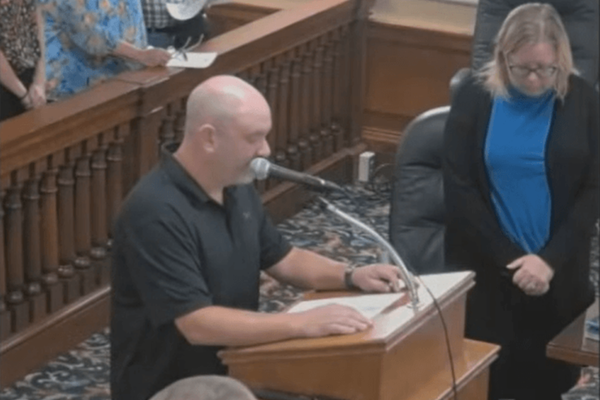
On Monday, February 8, the White House Religious Liberty Commission held a public meeting in Washington, D.C. The theme of this session was anti-semitism. I am on the legal advisory board of the Commission. Though I was not able to attend, I played a small role in the planning process. When this commission was formed last year, I could not have fathomed how the ecosystem on the right would radically change. I now think the Carlson-Roberts exchange will come to be seen as the moment the dam broke.

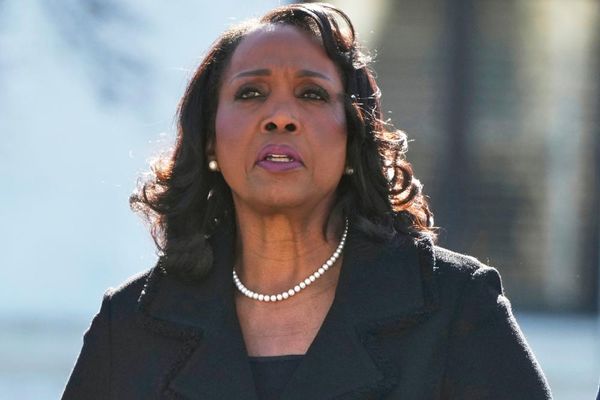
The meeting garnered attention because Carrie Prejean Boller, a commissioner, asserted that her Catholic faith is incompatible with Zionism. She said, "Catholics do not embrace Zionism, just so you know." You can see the fireworks around the 1:30:00 mark at C-SPAN. I don't profess any expertise on this point. Fellow commissioner Ryan Anderson, who is a leading Catholic intellectual, argued that Boller's position is wrong as a matter of doctrine. He read from Second Vatican Council's Nostra aetate and Popes John Paul II and Benedict XVI. I found this article by EWTN to be extremely insightful:

Catholic teaching does not explicitly oppose Zionism, the movement supporting Jewish self‑determination in a homeland in Israel. Israel is seen as God's chosen people through whom God revealed himself and prepared the way for the coming of Jesus Christ. The Catholic Church universally condemns antisemitism. The Church recognizes Israel's fundamental right to exist.

But let's not fight the hypothetical. Let's assume there is a religion that rejects the modern conception of Zionism. In other words, the person firmly believes it is a mortal sin for the modern Jewish state to exist in Israel. They believe the world will suffer if Israel is allowed to exist. Think of a group like the Westboro Baptists. Moreover, this religion teaches that only one people--the Jewish people--are unable to have a homeland in the biblical land of Israel. Other religions can have their own states--even in the Holy Land--just not the Jews. The prophecy is silent about Muslim, Christian, or Hindu states. Further, let's assume that this belief is sincerely held. (I am skeptical that all of these assumptions can ever be true, but go with it for now.) To make things simple, we will call this faith the Church of Anti-Zionism.

How should a proponent of religious liberty approach this issue? And let's use a familiar hypothetical. A baker in Colorado is a devout member of the Church of Anti-Zionism. A Jewish customer walks into his shop, and asks for a cake to celebrate Yom Ha'atzmaut, Israeli Independence Day. The cake will include an outline of the map of Israel with the present-day boundaries, an Israeli flag, and figures of rabbis praying at the Western Wall. The baker refuses to bake the cake. He will make other Jewish-related cakes. For example, he will make a Bar Mitzvah cake or a cake for a Jewish wedding. Just nothing about the modern state of Israel. Indeed, the baker would make a cake depicting Ancient Israel before the crucifixion, but no representation of a Jewish state after. The customer brings suit under the Colorado public accommodations law. The baker seeks an exemption from the public accommodations law on Free Exercise grounds. (To simplify the hypothetical, the baker does not bring Free Speech claims, and as we all know, Colorado lacks a RFRA.)

What happens? Here, the baker's religion precludes any support of the modern Jewish state in Israel. Does a sincerely held belief in the Church of Anti-Zionism warrant an exemption? Can this case be materially distinguished from the claim brought by Jack Phillips of the Masterpiece Cakeshop? (Forget for a moment how the Court punted on the issue based on findings of animus.)

Throughout this hypothetical, I have repeatedly assumed that this belief is sincerely held. Asserting sincerity in the context of anti-semitism will be very difficult. Why? There is always a double-standard. Anti-Zionists assert that one, and only one people are not entitled to a religious homeland: the Jews. Catholics can have a religious country and Muslims can have a religious country and Hindus can have a religious country, but not the Jews. But under my hypothetical, the opposition to Zionism is premised on a specific religious teaching concerning the Jewish people, and their biblical claim to the holy land. The Church of Anti-Zionism has no teachings at all concerning these other faiths. Here, the double standard argument would not work.

Still, I think such a religious claim will be so gerrymandered to address a particular problem that it is unlikely to ever pass the sincerity prong. I see this faith as akin to the church of marijuana or the church of abortion, or some such gospel of convenience. Jack Philips's beliefs on marriage date from immemorial. The Church of Anti-Zionism would have a more recent vintage, and seems conjured to address a political point.

It should be simple enough for Catholics to explain why Boller (who apparently became a Catholic less than a year ago) is wrong on the theology. I understand it is also problematic for one person--especially someone with no formal training--to assert what the teachings of the Catholic Church are.

There is great irony that the rejection of a single religion's right to have a homeland would itself be a religious belief. Boller's testimony was just a test run. My cynical take is that the views advanced by Boller and others are not religious at all. But that analysis merely delays an inevitable reckoning. I think people on the woke right will increasingly dress up anti-semitism in the garb of religious liberty, in the same way that people on the woke left dress up anti-semitism in the garb of political ideology. There is always a reason to blame the Jews. 

For now, religious leaders who are experts in doctrine need to speak up, and do so loudly, to prevent their faiths from being hijacked down a road we have sadly traveled far too many times.

Update: Boller was removed from the Commission. Lieutenant Governor Dan Patrick posted on X:

Carrie Prejean Boller has been removed from President Trump's Religious Liberty Commission. No member of the Commission has the right to hijack a hearing for their own personal and political agenda on any issue. This is clearly, without question, what happened Monday in our hearing on antisemitism in America. This was my decision.

The Commission has done outstanding work through five hearings. Two more are scheduled. The testimony has been both illuminating and heartbreaking. Under the Biden Administration, Americans of all faiths had their religious liberty not only stolen from them but were often punished for standing up for their faith, in education, the military, the private sector, and even the ministry.

This spring, the Commission will deliver one of the most important reports in American history directly to the President.

The President respects all faiths. He believes that all Americans have a right to receive the great inheritance given to them by our founding fathers in the First Amendment.

I am grateful to President Trump for having the vision and boldness to create this Commission. Fighting for the Word of God and religious freedom is what this nation was founded upon. Leading this fight will be one of his greatest legacies.

Dan Patrick
Lt. Governor of Texas
Chair of the President Trump's Religious Liberty Commission

The post What Happens If A Religion Precludes A Person From Supporting Zionism? appeared first on Reason.com.

Sign up to read this article
Read news from 100’s of titles, curated specifically for you.
Already a member? Sign in here
Related Stories
Top stories on inkl right now
Our Picks
Fourteen days free
Download the app
One app. One membership.
100+ trusted global sources.