
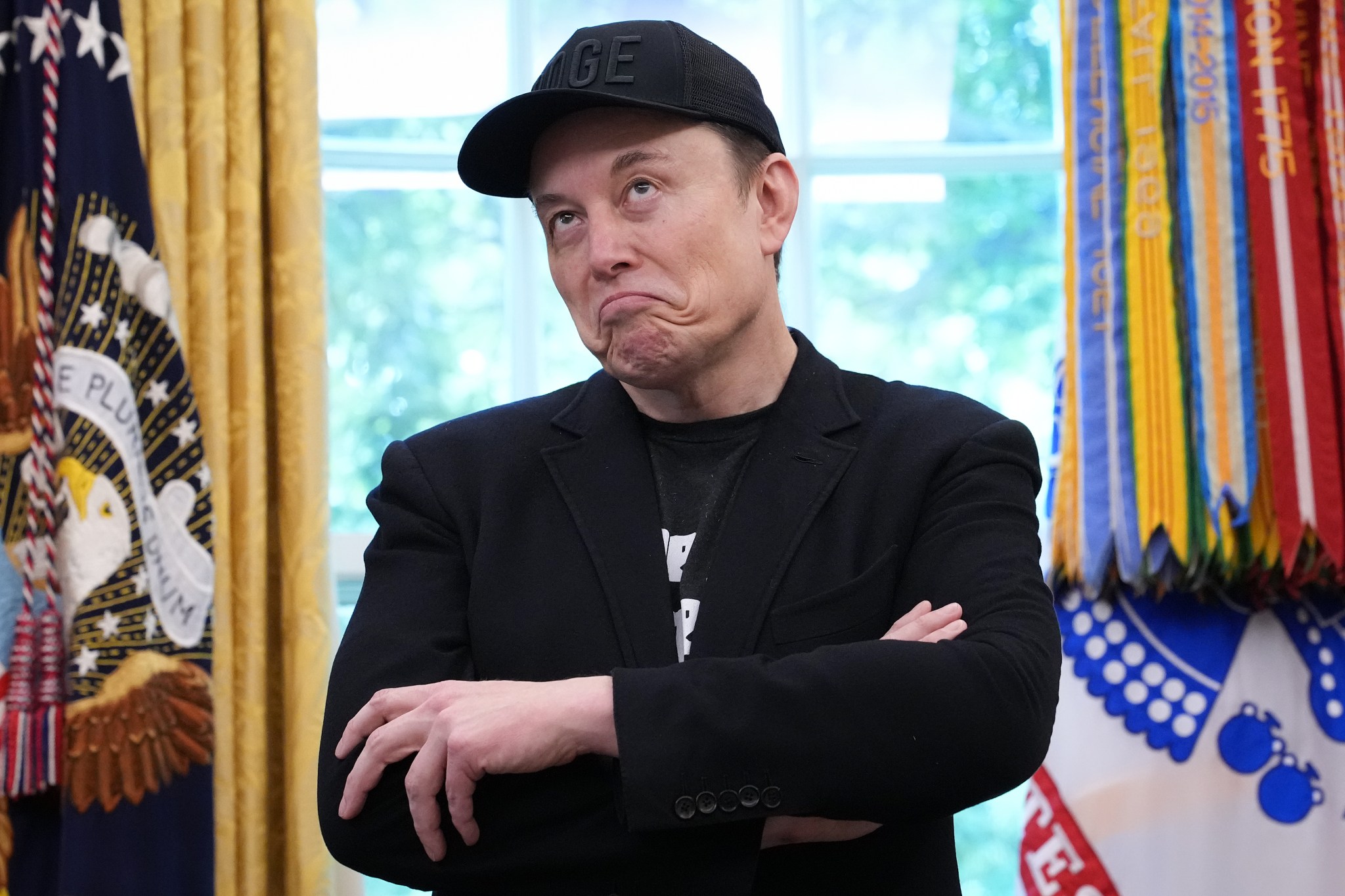
For Tesla investors, Elon Musk’s involvement with Donald Trump has been a car wreck that’s unfolded in two chapters: one in slow motion, the next on dizzying fast-forward. During Musk’s 130 days running DOGE, a crusade whose dogged aggression virtually defined the administration’s mindset in the early months, the EV chief infuriated European customers by backing far-right politicians. And as Tesla sales dropped in the likes of Germany and France, and severe competition shrank its market share in China, Musk neglected tackling Tesla’s mounting problems and doubled down, famously battling to slash departments and headcount from the White House. In his absence, Tesla’s stock and earnings tanked.
Bad as that episode proved for Tesla, it at least provided a potential upside. “Even before DOGE, Musk clearly had too many spoons in too many pots through SpaceX, Neuralink, X, and his other ventures; then he got even more preoccupied by putting another spoon in another pot,” says Eric Talley, a professor of law and business at Columbia University. “But being in the White House also included a bit of an insurance policy for Tesla … Sitting close to the seat of decision-making was a big potential advantage.”















