
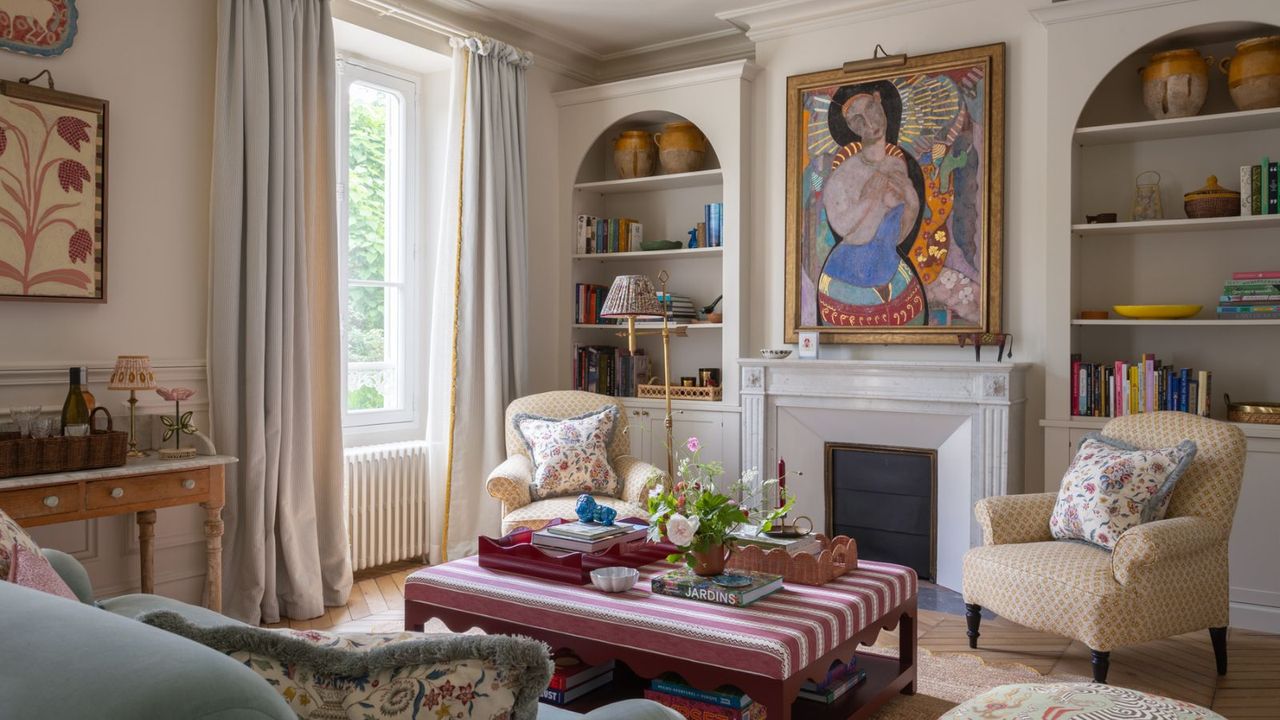
If you’ve ever found yourself wondering how to actually have good taste – usually while staring at a room that almost works (but somehow just doesn't) – you’re not alone. I’ve certainly been there.
It’s one of those phrases that gets thrown around in interiors, but the more designers I speak to, the clearer it becomes that the idea of 'good taste' has very little to do with interior design trends, achieving some kind of Pinterest perfection, or a secret formula – and even less to do with copying someone else’s ideas.

In fact, good taste is far more personal than we’re led to believe.
So, if you're trying to figure out what really separates a good home from a great one, consider this your insight into an interior designer's own good taste.
How to Have Good Taste, According to Interior Designers

But what really is 'good taste'? Well, it's pretty hard to define.
'To me, good taste is less about style, trends, timeless design, but more about the harmony of the storyline,' says designer Kristen Pena of Kristen Pena Interiors. 'Taste is about how each piece speaks to one another, how each layout balances those pieces, and about a point of view.'
'Can it be learned? I feel that the more exposure to good design helps people have better taste, but I think it really takes an instinctual, guttural feeling to know when it is right or not right.'
To help you fine-tune your taste levels, I'm breaking down everything designers consider in good taste – from learning to trust yourself to the art of editing.
1. Get to Know Your Personal Style

One of the biggest misconceptions around good taste is that it’s something you can acquire by imitation. But, to put it simply, good taste starts with knowing yourself.
As Birdie Fortescue explains, 'good taste is subjective and personal. There is no right or wrong. It isn’t always about following interior design rules, but more about understanding what feels right for you and your home.'
In my experience, the homes with the strongest sense of style aren’t trying to look like anything else. They’re rooted in personality, comfort, and practicality that only come from knowing how you want your home to function, feel, and look.
Molly Torres Portnof of DATE Interiors says it's time to reframe the idea of good taste entirely.
'Let's remove the word 'good' from here on out and instead, focus on exploring your personal taste,' she advises. 'A space should be the physical embodiment of your character. Learning this is so much more valuable than chasing what's 'good'.'

'A home that feels like you should be the ultimate goal,' Molly adds. 'Spaces that are balanced, functional, beautiful, warm and welcoming are the ones with the best taste.'
While the principles of interior design – scale, proportion, flow – can certainly be learned and refined, personal taste itself develops more slowly. Designer Kathy Kuo believes that good taste comes from tuning into your instincts and identifying patterns in the things that you love.
'I’m a big believer in following your gut, especially when it comes to decorating your home,' she says. 'Trends come and go, but what will always feel true is your inner compass.'
'Start tuning into what catches your eye, the colors, patterns, and silhouettes you find yourself drawn to over and over again,' Kathy continues. 'As you take stock of which design elements light you up, slowly and intentionally pepper them into the design of your home. In many ways, good taste is actually personal taste, and having the confidence to trust what you love.'
2. Master the Fundamentals

But while it's clear that good taste is deeply personal, the homes that feel most successful tend to share a set of fundamentals, says Kailee Blalock from House of Hive Design Co.
'To interior designers, good taste isn’t about spending the most; it’s about having discernment,' she explains. 'Good taste comes from understanding proportion, editing confidently, and choosing pieces that feel true to the architecture and to the person living there.'
'It’s the ability to mix old and new, create contrast without chaos, and layer materials that feel natural rather than overly manufactured,' Kailee continues. 'Ultimately, good taste shows up in the choices people don’t notice at first: scale, lighting, textiles, patina, and thoughtful spacing, because the room simply feels right without trying too hard.'

'What people sense as good taste is often a feeling of balance,' adds Courtney Branna, principal at Champalimaud Design. 'Does the rug pattern compete with the wallcovering? Do the furniture styles clash? The fun of it is that there are no rules, and sometimes we surprise ourselves with how seemingly unusual choices make sense in a very special and personal way.'
Similarly, designer Alexis Vitale of the Vitale Design Group adds that a well-designed space reveals itself slowly.
'If everything makes sense immediately, it probably lacks depth,' says Alexis. 'Good taste comes from understanding proportion, texture, and balance, not from copying someone else’s home.'
3. Don't Chase Trends

One lesson I've personally learned over countless years of home renovations is that the quickest way to make a home look dated and out of touch is to fill it with the latest trends. A room decorated with the color of the year (remember Millennial Pink?) or the current must-haves might feel exciting at first, but in a few months or years, it often feels outdated.
Instead, the homes I love most are those that evolve naturally, collecting pieces over time and giving each one space to breathe.
Elaine Bauer Brooks of Bauer Brooks Interior Design Studio urges you not to chase fads. 'My number one rule about good taste was absolutely nailed by Kelly Wearstler, who recently commented on chasing trends. She said that what actually matters to her is, “…relevance without obedience – design that responds to the moment without chasing it.” I can’t think of a more resonant statement of philosophy about taste and responding to trends.'
Trendy items can still have a place, but they work best when layered over a solid foundation of well-chosen, timeless pieces. This also means that quality matters, too.

Mary Beth Sullivan of MB Sullivan Design echoes my love of collecting over time. 'Invest in quality over quantity. Nothing shouts bad taste like poorly made mass-produced decor,' she says. 'Take your time, save up, shop auctions and thrift stores… quality pieces will stand the test of time. It is the big box decor that is an instant red flag.'
Designer Katharine Pooley adds: 'I have always gone against the grain of following trends. Creating a timeless space, one that is beautiful and functional, is key, and with life’s travels and adventures, simply adding to it is always a joy and allows for elevating it further,' she says. 'Trends come and go for a reason; it’s worth investing in a style that stands the test of time.'
Whether it’s a bespoke cabinet, an antique find, or a hand-painted vase, choosing objects that are made to last not only elevates a space, it also ensures your home grows more interesting over the years.
4. Edit, Layer and Let Things Shine

Editing, in particular, is an underrated skill. Sean Symington notes that good taste comes as much from what you remove as what you add.
'It’s about understanding balance and proportion,' he explains. 'It comes from editing as much as adding. Homes with good taste often feel calm, even when they’re richly layered. We always encourage people to focus on what they genuinely respond to, rather than what they think they should like. It’s not about perfection, but about confidence and consistency.'
The idea is that you don’t need to strip a room back to make it tasteful, nor do you need to fill every corner to make it feel complete.

Elaine Bauer Brooks agrees, adding: 'edit yourself, don’t be afraid of negative space, put some air in it. This practice is challenging but exudes quiet confidence.'
'Layer without loading: homes are meant to look, feel, and be lived in, and I get it – comfort is important. Honor that with pillows, throws, accessories, personal items, and creature comforts. But keep it edited and call it junk when it’s junk,' she advises. Too many items, no matter how beautiful, can overwhelm a space; restraint allows each piece (and the room itself) to breathe.
'Good taste isn’t about following trends or filling a space with expensive pieces – it’s about refinement and attention to detail,' Jennifer Davis of Davis Interiors explains.
'Good taste is knowing when to edit, when to layer, and when to let a space breathe,' she continues. 'It’s the difference between something that looks styled for the moment and something that feels intentional, enduring, and deeply personal.'
Shop Tasteful Home Decor
Natural, neutral, and full of texture – a jute woven rug is a designer favorite for good reason, thanks to its organic warmth and durability.
Never underestimate the power of a good side table to add an unexpected element to your scheme. Providing warmth and shape, this turned wooden table will make a charming spot for a lamp, books, and your favorite mug.
Timeless with a twist, this oak wood dining chair with paper cord detailing and little wooden balls on the back plays into your personality. It's available in timeless wood finishes, but this earthy green will pair with a rustic wooden tabletop so well.
Is there anything more tasteful than traditional plaid? Designed by Heidi Caillier for Lulu and Georgia, these effortless drapes feature structured pleats and a woven print that looks at home everywhere from cabins to cottages.
In kitchens and bathrooms, choose unlacquered finishes that will naturally develop a patina over time to give your spaces a beautiful, vintage look. This wall-mounted hanging rail is a stylish addition to any kitchen.
This curated collection of 25 decorative blue plates does all the thrifting work for you. Sure, that might be the fun part, but in this set, you're guaranteed to find vintage designs that will make the most beautiful wall display.
'While there are basic tenets of design, like scale, proportion, color, and flow, the taste part takes time to develop,' Molly Torres Portnof adds as a final tip. 'Allow yourself time to explore what you like and, more importantly, why you like it. What makes you happy, comfortable, creative, energetic, and relaxed?'
So whether you’re starting from scratch or refining a space you already love, the next time you decorate, ask yourself: does this feel true to me? Does it fit naturally in the space? And is it something I’d be happy to live with for years to come? Follow these instincts, and over time, your home's natural style will evolve.