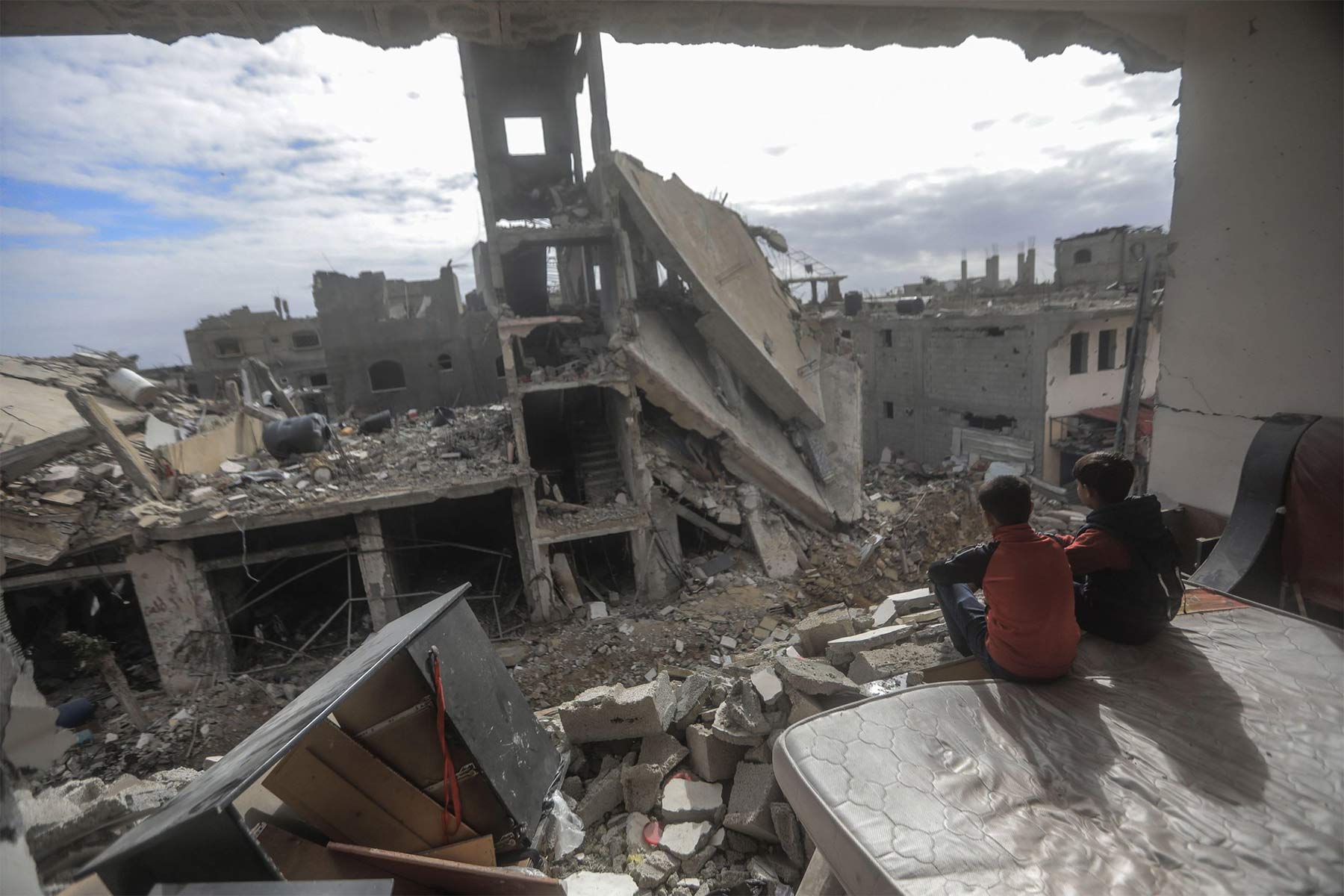
When Hamas and Palestinian Islamic Jihad fighters attacked southern Israel on October 7, killing at least 1,200 and taking 240 hostages, many pointed to it as an act of resistance against a settler state and, as such, a form of self-defence. Israeli prime minister Benjamin Netanyahu promised “mighty vengeance,” describing Hamas as an “enemy”; Israel’s allies immediately released statements supporting the nation’s right to defend itself. As of this writing, Israel has killed more than 13,000 Palestinians, nearly half of them children. But if defence is meant to prevent further violence, it’s hard to see how any of this qualifies.
The word “defence” is loaded with emotional and psychological attachments. Defined as the act of protecting someone or something from harm or criticism, it suggests that there is always a clear aggressor and victim. Self-defence is its own justification: if a victim uses violence to protect themselves, they do so only out of necessity.