Get all your news in one place.
100's of premium titles.
One app.
Start reading
The Economic Times
The Economic Times
Team Global

What construction workers discovered beneath a South Dakota housing site became one of North America’s richest mammoth fossil localities

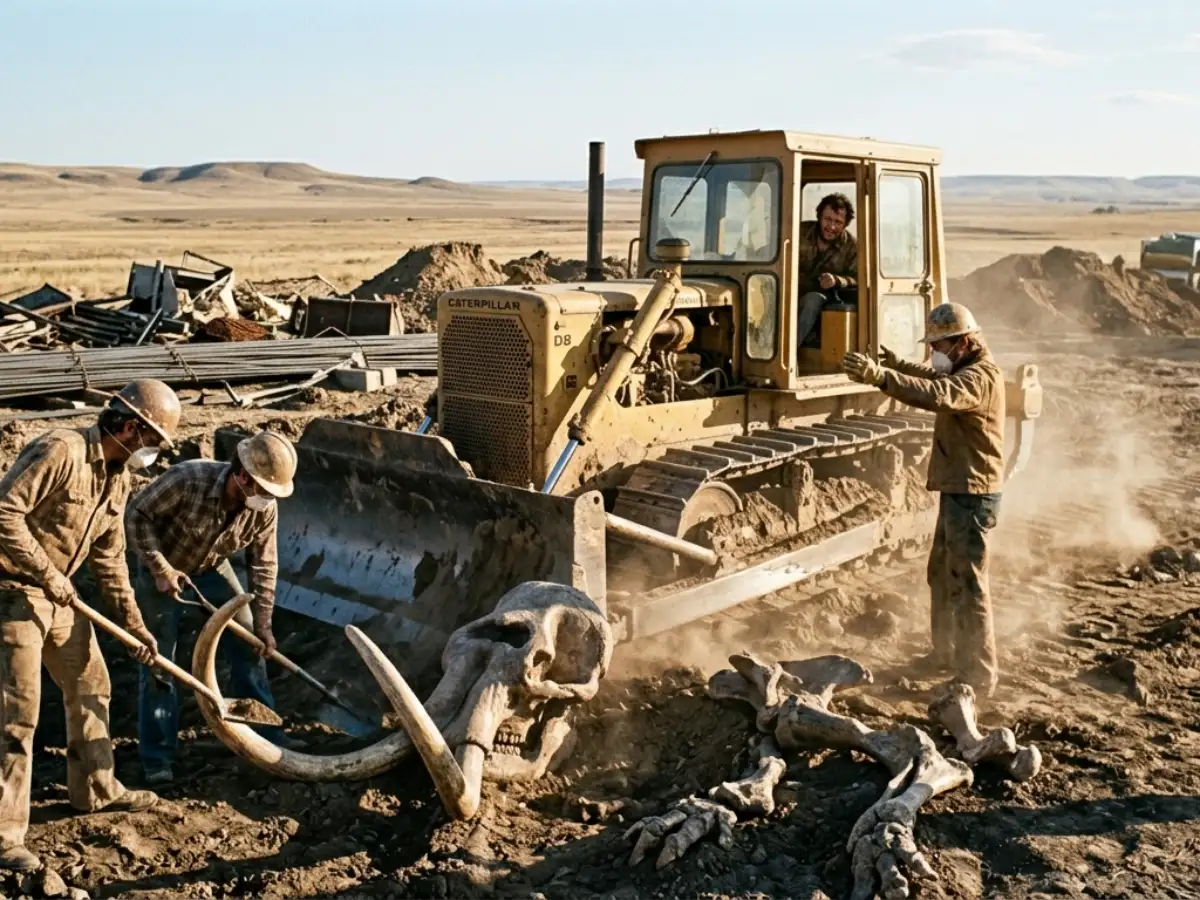
When construction workers began working on the site to clear it up in preparation for building new houses in Hot Springs, South Dakota, in 1974, they made an astonishing discovery under the soil. While George Hanson, the bulldozer driver who was removing the dirt from the site, began to see enormous bones in his excavations, Smithsonian Magazine confirms the fact that these were identified as mammoth fossils and that the discovery was investigated by the paleontologist Larry Agenbroad.

The problem that seemed to occur at first turned into what is now known as one of the greatest Ice Age fossil findings in North America. In fact, it was not a single mammoth that had been uncovered during this excavation project but rather a number of these huge mammals that existed alongside other extinct species.

The immediate significance of this finding was the sheer size and state of preservation of the fossil deposits. Most fossil digs consist of fossilized remains that have been transported by natural forces such as river flows, erosion, and even scavenging animals, spread out over time periods ranging from hundreds to millions of years. In this case, the fossil deposits consisted largely of remains deposited in the original locations where the animals had died.

Scientists believe mammoths repeatedly became trapped in the same area

The researchers who studied the site found that the mammoths probably died as a result of being caught in a natural pit, which was associated with a warm-water sinkhole during the late Pleistocene period. From the perspective of the Mammoth Site, there must have been some warm spring waters surrounded by steep slopes in the region.

These warm springs could attract animals; however, it would be difficult for them to escape after entering the area. This theory gave researchers a clue about how so many mammoths ended up in the same place. It seems like the sinkhole was catching animals continuously for years.

It was thus important not just for the fossils but also for the environmental tale that they captured. They allowed scientists to explore how factors such as landscape, water, and the behavior of creatures led to one of the most productive areas for finding mammoths in North America. As explained by Smithsonian Magazine, the find changed paleontologists' views on fossil deposits since they contained clues to multiple natural entrapments instead of one catastrophic event. In fact, the bones documented the perennial danger facing prehistoric animals.

131061908

The site remains one of the clearest windows into Ice Age North America

One of the aspects that makes this find unique is that a lot of fossilized remains have been left in situ. Unlike the practice adopted at other sites where the bones of animals have all been taken out, in the case of this site, people can view the fossils as they exist within their natural environment at the excavation site. As a result, the site has a certain immediacy about it since one can imagine the landscape conditions under which the mammoths were trapped thousands of years ago.

Another example is the Hot Springs site, which illustrates the ongoing impact of serendipitous findings on paleontology. In 1974, the construction workers were not in search of prehistoric animals; however, their discovery led to the uncovering of significant information regarding late Pleistocene communities, mammoths' actions, and fossilization processes in the interior of America. The Mammoth Site of Hot Springs continues to be one of the most famous locations for mammoth fossils in the US. At a housing construction project, the crew unearthed a fossilized pitfall trap of the Ice Age that had been buried underground for many millennia.

Sign up to read this article
Read news from 100's of titles, curated specifically for you.
Already a member? Sign in here
Related Stories
Top stories on inkl right now
One subscription that gives you access to news from hundreds of sites
Already a member? Sign in here
Our Picks
Fourteen days free
Download the app
One app. One membership.
100+ trusted global sources.