Get all your news in one place.
100's of premium titles.
One app.
Start reading
The Conversation
The Conversation
Eliza Middleton, Laboratory Manager, School of Life and Environmental Sciences, University of Sydney

What constitutes a mind? Lars Chittka challenges our perception of sentience with the smallest of creatures

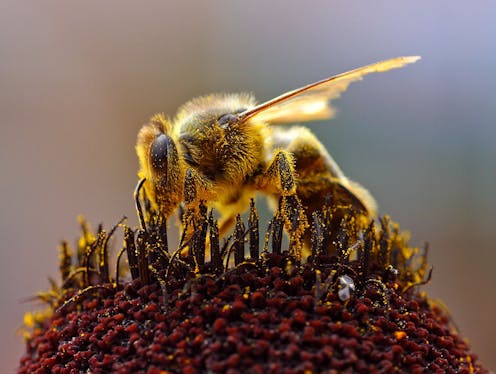
Jon Sullivan/Wikimedia Commons

At the beginning of my research career around 15 years ago, any suggestion that a bee, or any invertebrate, had a mind of its own or that it could experience the world in an intricate and multifaceted way would be met with ridicule. As Lars Chittka points out in the opening chapters of The Mind of a Bee, the attribution of human emotions and experiences was seen as naivety and ignorance; anthropomorphism was a dirty word.

Pet owners eagerly ascribe emotions to their animals, but the simple brain of a bee surely could not experience the rich tapestry that is our existence. They are far too simplistic and robotic, right?

Sign up to read this article
Read news from 100's of titles, curated specifically for you.
Already a member? Sign in here
Related Stories
Top stories on inkl right now
One subscription that gives you access to news from hundreds of sites
Already a member? Sign in here
Our Picks
Fourteen days free
Download the app
One app. One membership.
100+ trusted global sources.