
Get all your news in one place.
100's of premium titles.
One app.
Start reading
Livingetc
Livingetc
Karen Haller

What Color to Paint Your Home Office, According to Color Psychology — Whether You Need to Focus or Want a Space That Inspires Creativity

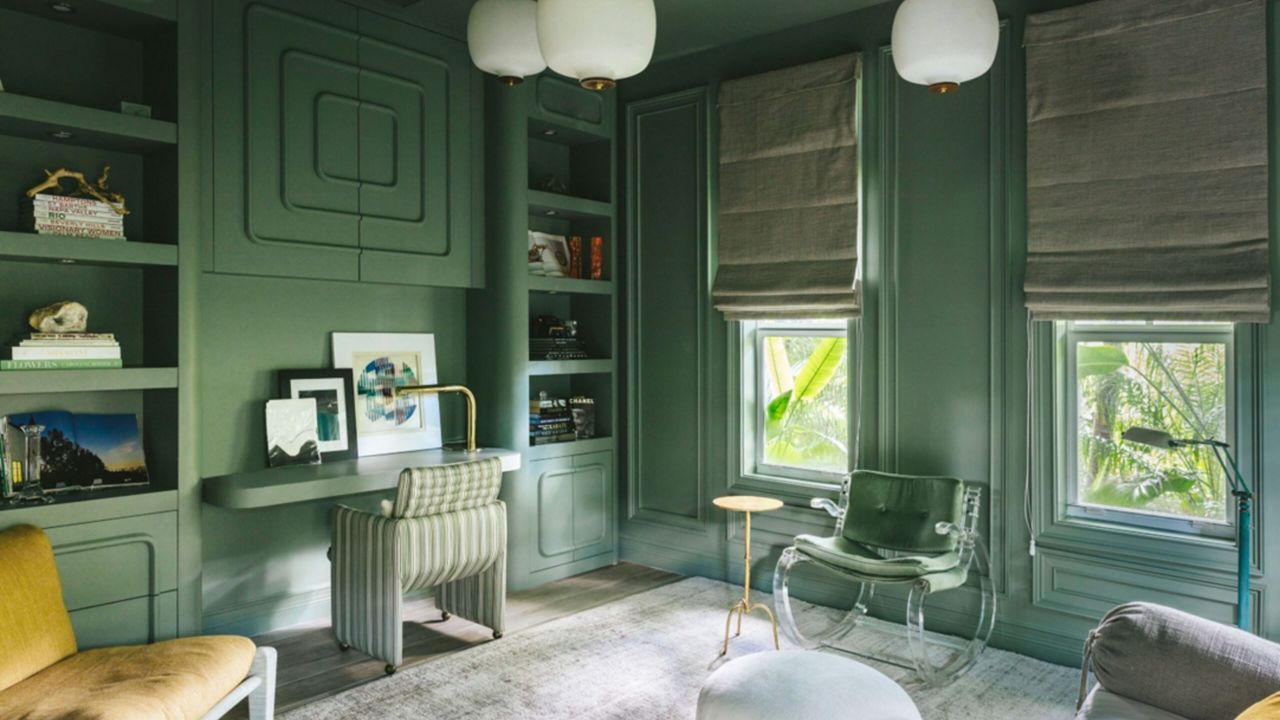
A jade green home office with the desk up against the wall with a paneled design on the cupboard doors above it, two windows with roman blinds, and multiple seats and poufs.

As more people work from home, either full-time or as part of a hybrid working arrangement, the home office has become one of the most important rooms in many homes. It's no longer simply a place for paperwork or household administration — for many, it's where a significant part of their working life now takes place. For some, it's a dedicated room used exclusively for work. For others, it's a spare bedroom, garden studio, or even a corner of the living room that needs to serve multiple purposes throughout the week.

What makes the home office unique is that it's often expected to support a wide range of activities. It might be a place for focused concentration, creative thinking, strategic planning, problem solving, online meetings, learning new skills, or managing everyday administration. Some people spend only a few hours there each week, while others spend most of their working lives within its walls. Each of these activities places different demands on us. Deep concentration requires a different environment from creative brainstorming. Leading a virtual meeting calls for a different mindset than tackling routine administrative tasks. The challenge is creating a workspace that supports the way you need to think, work, and perform throughout the day.

This is where color psychology offers a different perspective. Rather than beginning with the question, "What color should I paint my home office?", it encourages us to start somewhere else. What activities take place in this space? What behaviors do we want to support? What do we need this room to help us do? By answering those questions first, color becomes another tool for shaping the experience of working from home. Rather than choosing colors because they're fashionable or simply to create visual continuity with the rest of the home, we can choose colors that support the way we think, communicate, create, and perform.

Why Calm Isn't Always the Goal

The goal isn't simply to create a room that feels calm — it's to create an environment that helps you think, communicate, create, and perform at your best. (Image credit: Mel Bean)

Calm is often seen as the ideal quality for a home office, which is one reason colors associated with calm have become such popular choices. While calm certainly has its place, it's only one of many ways color can support the work we do.

The support we need from a workspace can change according to the type of work we're doing and even at different points throughout the day. We may need help getting started in the morning, maintaining our energy or motivation later in the day, concentrating deeply, generating new ideas, communicating effectively, or restoring a sense of balance after periods of intense work.

The colors that work best for someone spending the day analyzing data or writing reports may be very different from those that support someone developing new ideas, delivering presentations, leading client meetings, or maintaining motivation through a demanding workload.

This is where color psychology becomes particularly valuable. Rather than asking which colors belong in a home office, it encourages us to consider the type of work the space needs to support.

The particular nuance of a color, how much of it you use, and where you place it can significantly influence how you respond to it. The examples below focus on the ways different colors may positively support the work you do, but changing any of these can produce a very different response.

They each offer different psychological benefits. The most appropriate choice depends not on current interior design trends or assumptions about how a home office should look, but on the behaviors and activities you want the space to support.

1. Darker Blues — For Concentration

Decorating with navy blue, or darker blues in general, is great for a space that promotes deep thinking. (Image credit: Julie Soefer. Design: Marie Flanigan Interiors)

Darker blues can help support sustained concentration, analytical thinking, and mental discipline. They may be particularly beneficial when your work requires careful judgement, strategic thinking or prolonged focus without distraction.

Whether you're reviewing complex information, writing detailed reports, developing strategy or making important decisions, darker blues can help create a workspace that supports clear, considered thinking.

2. Lighter Blues — For Creativity

Decorating with light blue is ideal for a home office that inspires creativity. (Image credit: J.L. Jordan Photography. Design: Bethany Adams Interiors)

Lighter blues can help support open, expansive thinking, making them particularly well suited to work that requires creativity, curiosity, and the exploration of new ideas. Rather than narrowing attention, they can help create the mental space needed to see possibilities and consider different approaches.

This is why the expression 'blue sky thinking' is often used to describe thinking without constraints or preconceived limits. If your work involves developing new concepts, generating ideas, or looking at challenges from fresh perspectives, lighter blues may help support this more exploratory way of thinking.

3. Yellow — For an Optimistic Space

Designers' best yellow paints lift mood and add warmth and sunny optimism to a space. (Image credit: sdelaemremont)

Yellow can bring a welcome sense of optimism and cheerfulness to a home office, helping the working day feel lighter and more positive. Like sunshine streaming through a window, it has a way of lifting the mood of a space, making it feel more welcoming and enjoyable to spend time in.

This can be particularly valuable on challenging days when motivation is low or workloads feel overwhelming. By creating a workspace with a brighter, more optimistic feel, yellow may help you approach your work with greater enthusiasm and positivity.

4. Red — For Energy

Decorating with red isn't for the faint-hearted, but when done right, it is a worthy choice for a vibrant and energizing space that gives back. (Image credit: Ivey Design )

Red can help increase physical energy, drive and determination, making it particularly well suited to work that requires action rather than prolonged reflection. As a physically stimulating color, it can help create a greater sense of momentum, making it easier to get started, keep moving forward and tackle demanding tasks.

This can be particularly valuable if you find it difficult to get going in the morning, need an extra boost during an afternoon energy slump or want to encourage a greater sense of drive and determination. It may also support work that requires you to take the lead, put yourself forward or step outside your comfort zone.

5. Green — For Restoration

The best sage green paint shades are a timeless choice that also adds a restorative feel to your space, making it ideal for those with busy schedules. (Image credit: Bespoke Only)

Green can help create a sense of balance, reassurance, and restoration, making it particularly valuable in home offices where work feels demanding or relentless. It can help create a workspace that feels more grounded, offering a welcome respite from the pace and pressures of the working day.

If your work regularly leaves you feeling mentally or emotionally depleted, green may help create an environment that supports greater balance and perspective. Its strength lies not in driving performance, but in helping restore equilibrium throughout the day.

There isn't a single best color for a home office. Color psychology encourages us to begin by asking what we need our workspace to help us do. By answering that question first, we can make color choices that support the way we work, rather than simply the way we want the room to look.

When color is chosen with this understanding, a home office becomes more than simply a place to work. It becomes an environment designed to support the way you think, create, communicate, take action, and restore balance throughout the working day.

Living room color psychology works in the same way and will help you create a space that sets the tone for how you want this room to feel.

And for more design ideas for your home, subscribe to the Livingetc newsletter, and all the latest will be delivered straight to your inbox.

Little Greene Deep Space Blue™ (207) Pooky Lighting Aurora Table Lamp in Blue Resin Farrow & Ball No.308 Wine Dark Farrow & Ball No. 86 Stone Blue Dunelm Wavie Tiny Stripe Storage Footstool Farrow & Ball No. 89 Lulworth Blue Paint & Paper Library Chinese Emperor (478) John Lewis Scalloped Bubble Tray, Pastel Yellow Farrow & Ball Print Room Yellow Little Greene Tuscan Red™ (140) Addison Ross Cherry Lacquer Rechargeable Bobbin Led Lamp Farrow & Ball Eating Room Red Benjamin Moore Aganthus Green (472) Ruggable Aura Ombre Solid Sage Rug - 185x275 Benjamin Moore Herb Bouquet (460)
Sign up to read this article
Read news from 100's of titles, curated specifically for you.
Already a member? Sign in here
Related Stories
Top stories on inkl right now
One subscription that gives you access to news from hundreds of sites
Already a member? Sign in here
Our Picks
Fourteen days free
Download the app
One app. One membership.
100+ trusted global sources.