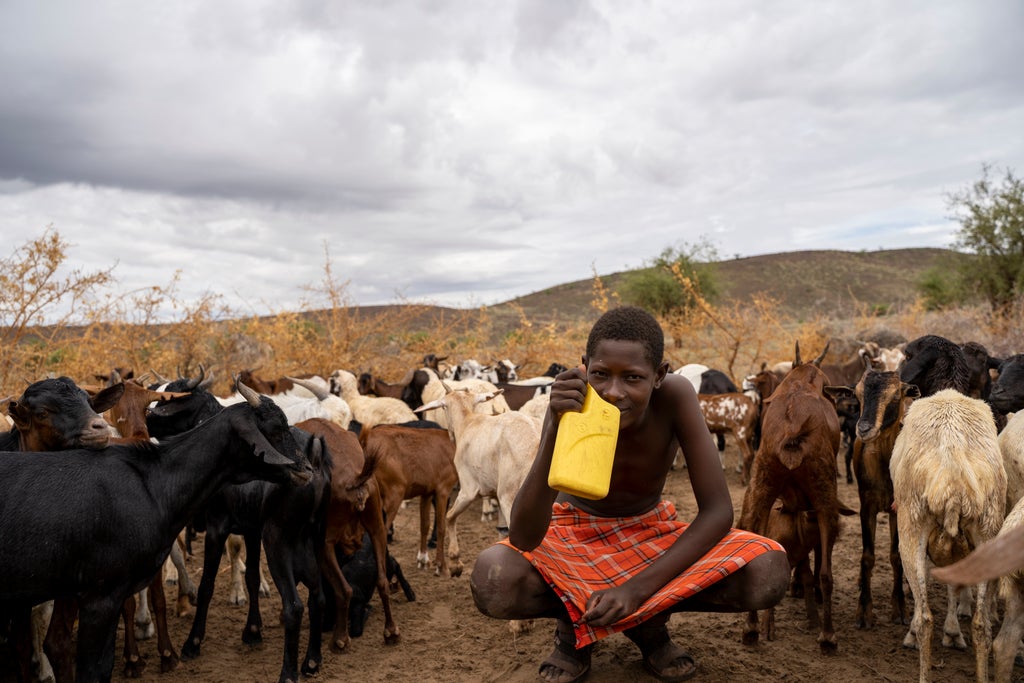
Loura Ekaale sits down on his carved wooden stool. He sips a cup of black instant coffee, a substance he has taken to calling his “medicine” – inexplicably, he claims it helps him fall asleep. I have been making it for him each afternoon, with my small gas cooker. This has become a routine for us; he roams over to my canvas tent as the sun begins to set and I boil the kettle. We sit there talking about the day as one of his sons, Lolampa, wanders in from the hills behind us, driving the family’s sheep and goats back into their enclosure.
I have known Loura for almost two years now, during which time I have regularly set up my research camp beside his family home, close to the Loriu Hills in Turkana, northern Kenya. This 68,000 sq km arid region is one of the most remote areas in Kenya. To the north is South Sudan and a disputed, lawless section of grazing land called the Ilemi Triangle, claimed by both South Sudan and Kenya. To the west is the homeland of the Karamojong in northern Uganda, and to the east is Lake Turkana itself, the world’s largest permanent desert lake.